Last year one of the catboat’s trailer tires wore out, due mostly to UV damage, and sitting on the dirt. It now has a new set of radials, for which Monte requested covers.
Today I got around to making them, out of captain navy sunbrella. Voila! The squirrels better not mess with these!
Project #2 was a new grill cover for S/V Trident’s Magma grill out of forest green sunbrella reclaimed from one of Lori’s old dodger window cover panels.
Now I guess I have no more excuses to keep me from finishing my taxes…
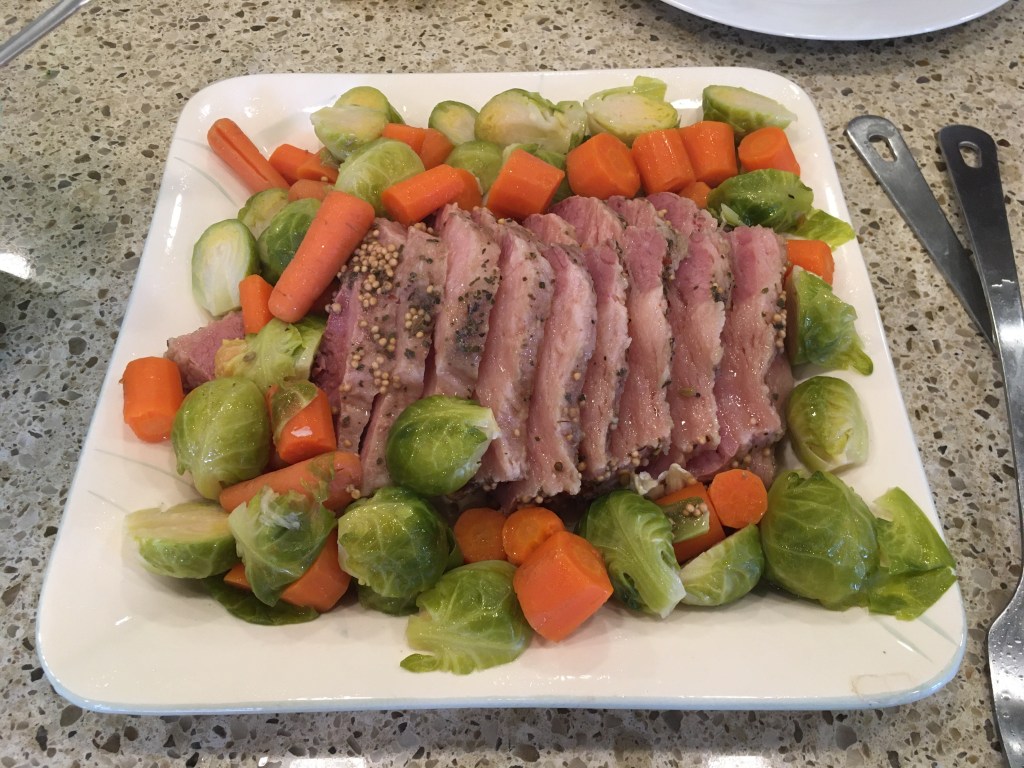
For St. Patrick’s Day, I whipped up a lovely corned beef dinner, that I think even my Limerick-born dad would have enjoyed. Instead of cabbage, I opted for Brussels sprouts; they’re like tiny cabbages 🙂
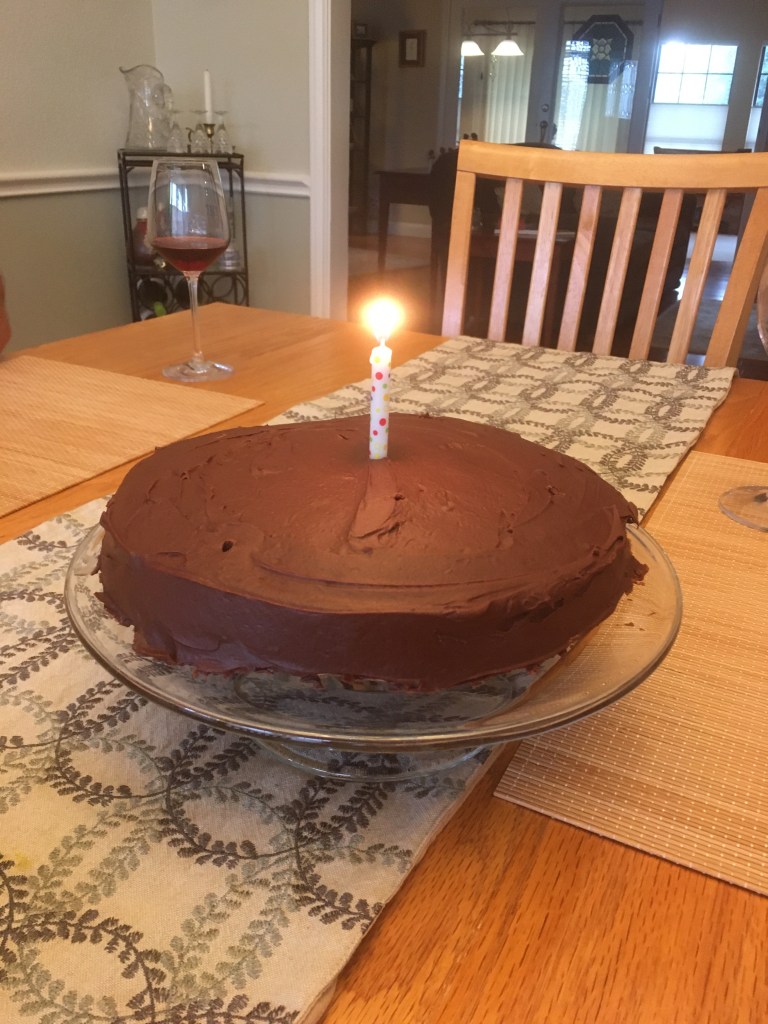
Happy birthday, Monte! Julie and Ryan brought their vaccinated selves over last night for a lovely dinner of steak and risotto, to celebrate with us. After dinner, we had cake and ice cream, and wii-ed a bit. 🙂
Today was the day to re-raise the mast on Julie & Ryan’s boat. New windex, new lights, new halyards, new topping lift, new flag halyard, new sheaves, new wiring, new switches, refurbished outboard motor, replaced bulkhead mid-ships in the salon, chain plates reinforced, and some much-mended sails and boat canvas. I can’t wait to get out on the lake with these sailors. Next up: installing the boom, mainsail, and jib. Then we’ll take her for a sail!
I grilled pork tenderloin for dinner tonight. Over charcoal. Marinated in Allegro. Indirect. 21 mins, ~7 mins per side. Measure with meat thermometer to 145 degrees F. AMAZING.
As I waited for the meat to grill, I snapped this photo of the not-quite-full moon over our winter foliage.
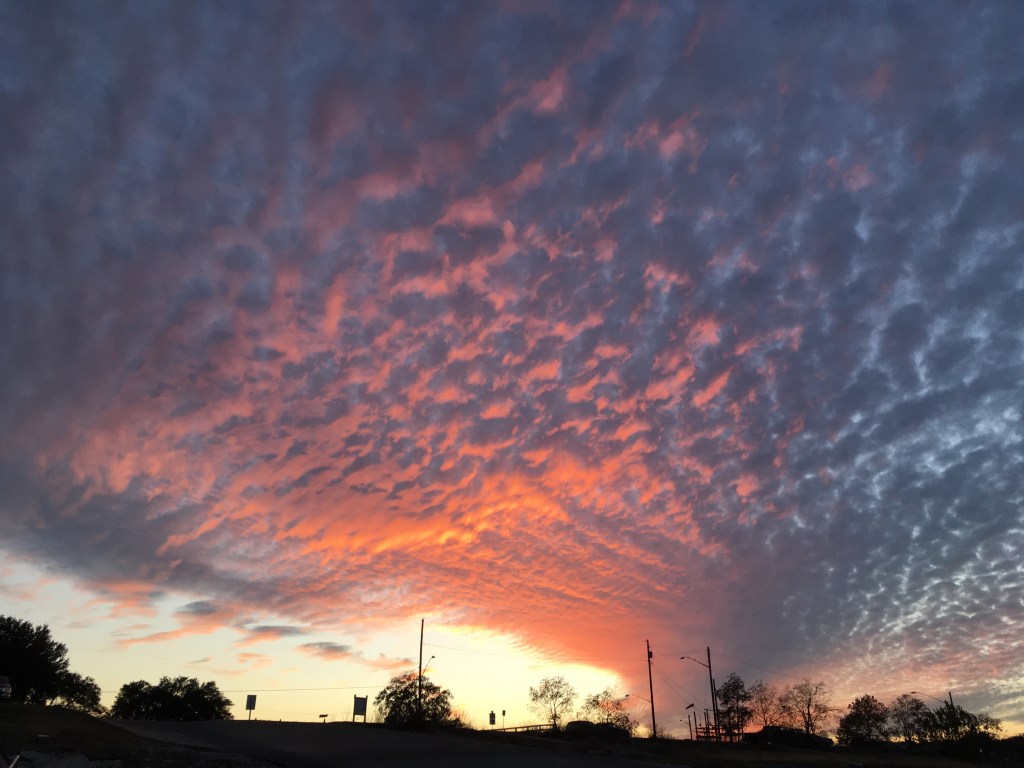
I grilled a delicious cedar plank salmon for Christmas dinner, recipe below. Julie joined us and stirred up a tasty risotto dinner. Nom nom. Sunset was fleeting, but lovely.
Grilled cedar-plank salmon:
soak a cedar plank in water for several hours ahead of grilling
slather a boneless salmon fillet with olive oil, then sprinkle generously with kosher salt, freshly ground black pepper, and a dash of garlic powder
place fillet, skin side down on the pre-soaked cedar plank
place cedar plank & salmon over direct coals for 20-30 minutes
We witnessed two momentous events over the weekend, each from many miles away.
We watched a livestream of the wedding of my nephew and his lovely new wife.
When you can’t be there in person…
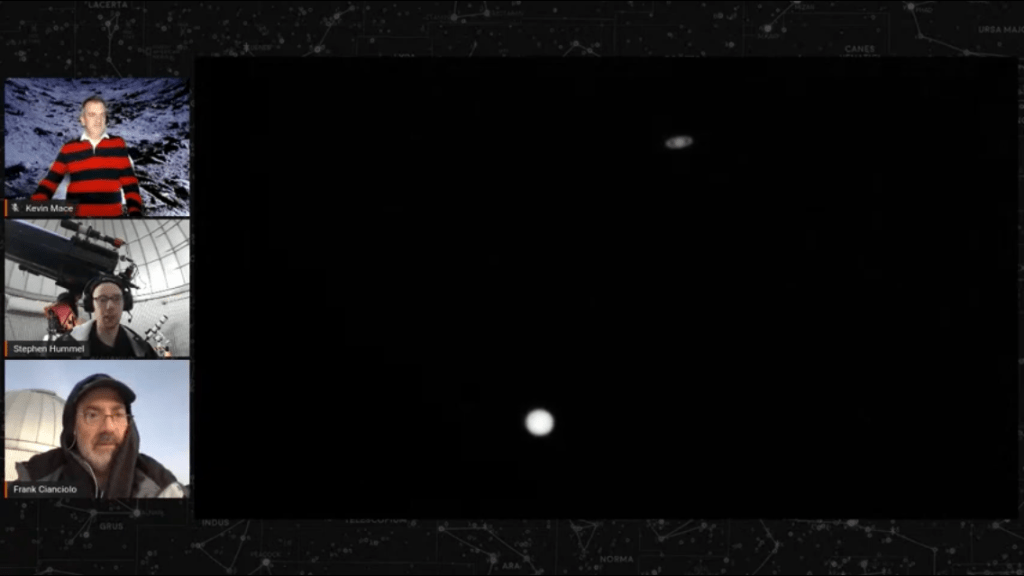
And we witnessed the rare conjunction of Jupiter and Saturn in the night sky. These 2 largest planets have not been this close since 1623, during Galileo’s lifetime. And they won’t be closer during my lifetime. To the naked eye, they appear to be a single point of light. We looked at the two planets through binoculars in the backyard. We also watched a livestream from the McDonald Observatory in west Texas, through their large telescopes. One could see the rings of Saturn, and several of Jupiter’s moons.
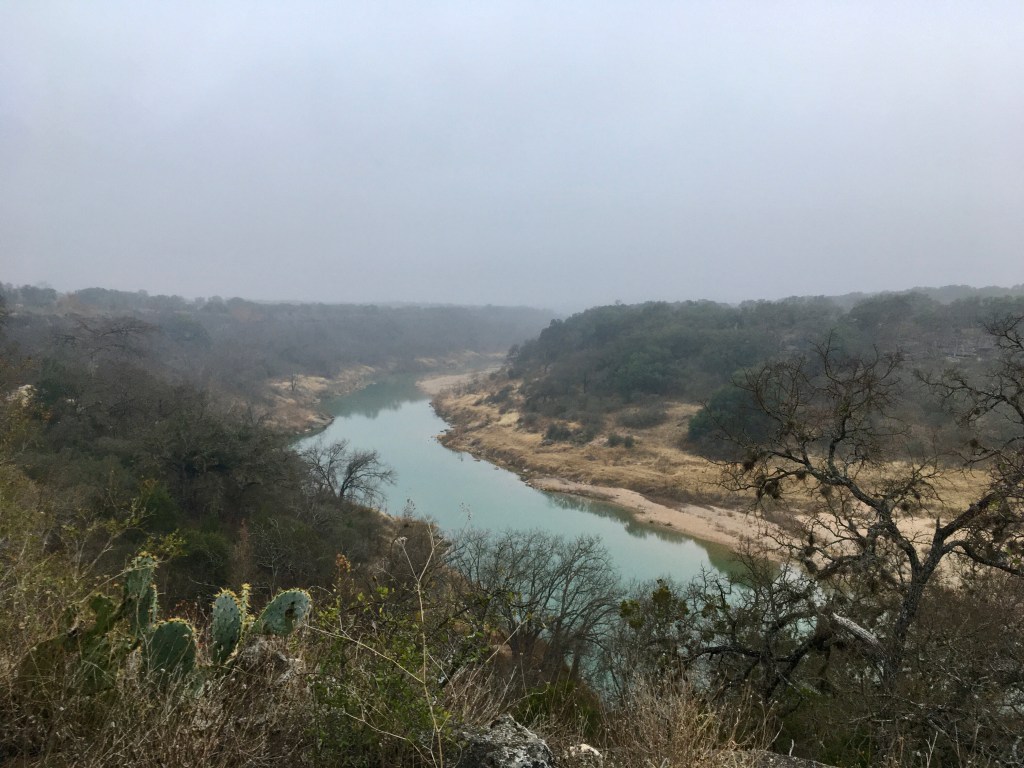
‘Tis the season of the Audubon Christmas Bird Count! I met up with Doray and a team of birders at Reimer Ranch yesterday. We hiked all day and saw so many birds. The first half of the day was cold, but by 4:30pm I had shed 3 layers. The former ranch, now a park, overlooks the Pedernales River. It’s a beautiful place to spend the day.
Our original plan, to leave the ICW and head offshore in Beaufort, was intended to avoid the challenges associated with the ICW south of there. These include transiting the dozens of ocean inlets that the ICW crosses south of Beaufort where significant shoaling always occurs, often changing the ICW channel depth, making it dangerously shallow, and passing under a number of bridges that are less than the required 65′ vertical clearance with tides than can vary from the mean water level by up to 4 feet. But, alas, the weather offshore has been unfavorable, so we continued on south.
There is a kind soul on the internet, Bob Sherer, who maintains a blog called Bob423 ICW Tracks and Routes where he provides tracks (collections of GPS points) that he has carefully taken and mapped out for maximum depths. The tracks are available for download as GPX files into chart plotting software, like the openCPN that I use on my laptop and the Garmin chart plotter that Lori has at Trident’s helm. Fortunately, Bob’s latest track is as recent as a week or two ago, so it contains safe tracks around hazards that even the Corps of Engineers haven’t moved the red and green buoys around yet. There have been reports of multiple boats running aground this week in those spots. Not wanting to be one of those boats, we have been following Bob’s track. It can be a little spooky when Bob’s green track goes outside the marked channel. But so far, so good.
Bob’s track in green, through the ICW at Snow’s Cut
The bridges are a challenge of their own, especially with the flooding in North Carolina rivers currently going on, and an especially high tide. We have had to wait for the water level to go down on some bridges before passing underneath, but even so, we have bent the springy VHF antenna at the top of the mast back as we passed under 2 of them. That’s a little too close for comfort.
Hopefully, we only have one more bridge and one more shallow spot, at Snow’s Cut, today. Then we will be at a marina in Southport tonight, and pick up Tony tomorrow and head offshore for a leg south tomorrow afternoon. We think there is a 24-hour window that will allow us to get to Charleston without weather drama. But we’ll see how that plays out.
Even with those challenges, it’s been a nice few days since Beaufort. It’s been sunny, with wind to put up a sail. We anchored one night, and were on a mooring ball last night. Very nice.
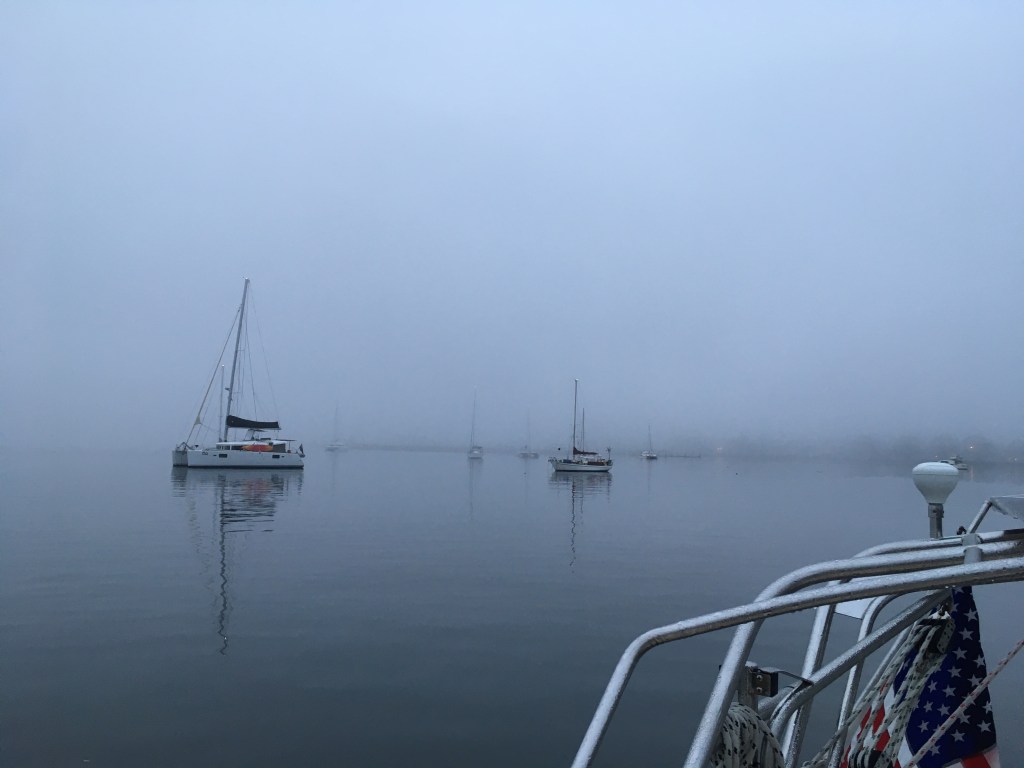
We picked up anchor at 6:15am Friday in a thick fog.
Foggy sunrise
We left before sunrise because we had a long goal of making 68 nautical miles (nm), and a backup plan to go about 45 nm instead. The challenge is being able to gain more speed than the 5 to 5.5 knots (nm per hour) of the engine. Fog can hurt. Current can hurt or help. Wind can help.
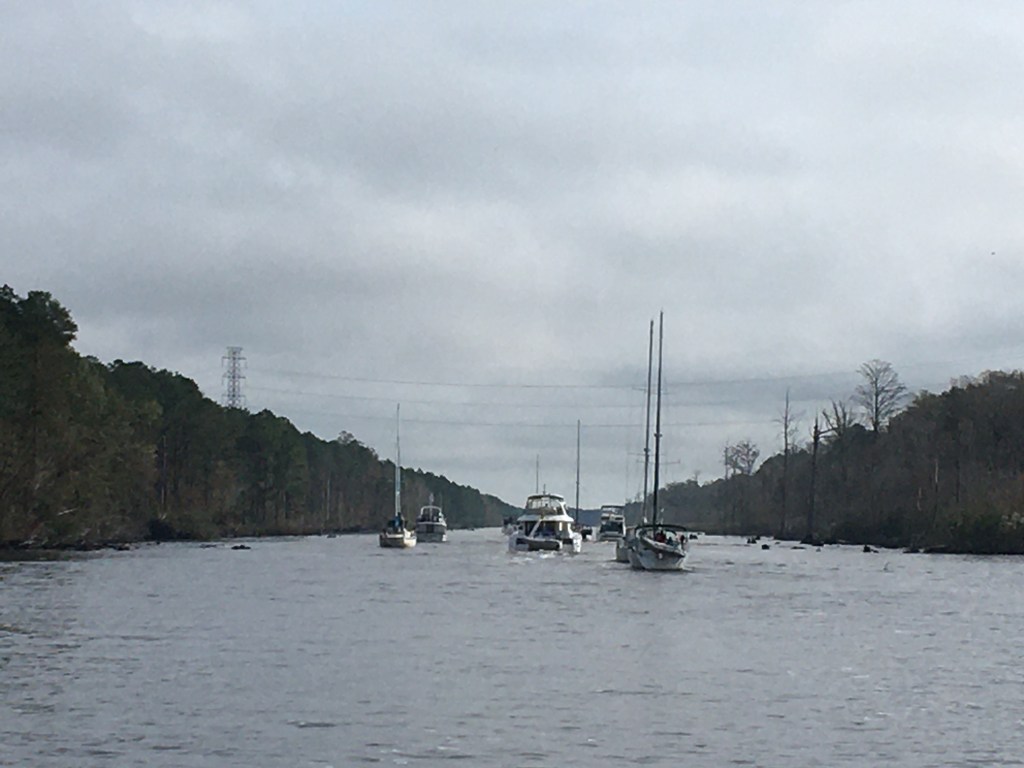
We can’t just anchor anywhere along the way because there are long stretches of the ICW that are land cuts; very narrow, and the channel takes up the whole width of the cut. And you can’t anchor in the channel.
The fog eventually cleared and we had a little boost from the wind, so we made the farther anchorage after 11 hours.
As we exited the 20-mile Alligator River – Pungo River Cut the sun was setting. We went a few miles farther, anchoring right in front of the land on the far horizon in the picture above.
Last night’s anchorage was in the Elizabeth River at Portsmouth. This is a view of the Norfolk waterfront across the river.
Today’s schedule was challenging. Ten hours of daylight to cover 60 statute miles, or around 52 nautical miles, while trying to navigate through 15 bridges and locks, 5 of which only open on the hour or half-hour, and maintaining an average speed around 5 knots.
We woke up before sunrise to be greeted by fog. We hoped it would lift quickly. We picked up anchor 15 minutes behind schedule, but only when we were able to see about a half mile.
Once underway we made up time and ended up a half hour ahead of schedule after the last bridge. The ICW was very crowded today, lots of boats passing one another only to have to wait together for the next bridge opening.
We were able to put up the jib to add a knot to our speed as we crossed Currituck Sound in the narrow channel. We needed all the time that we gained because when we made it to our anchorage it was 30 minutes after sunset.
Long day, but I loved it! Lori cooked a delicious dinner and we turned in early. More tomorrow…






 Sheila365