
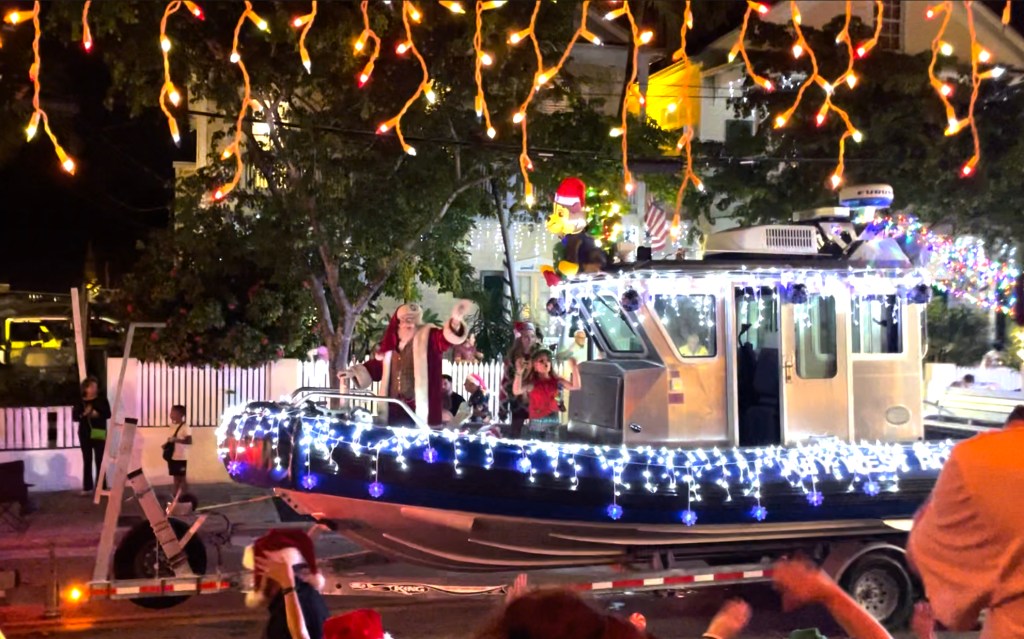
I just returned from a fun girls’ trip to Key West. The reason for the trip was to visit Dry Tortugas National Park. Mission accomplished. Here’s a peek at Key West in December.
Category: Art


Homeward.
This afternoon, we will check out of the hotel and hop on a train to Heathrow airport. I booked a room at the Sofitel at Terminal 5 for tonight so we could have a comfy last night in London, and an easy walk to our gate in the morning.
Our train leaves Greenwich at about 1pm, so we plan to spend this morning seeing a few more sights. The Painted Hall is supposed to be beautiful. It is the former dining hall of the 18th-century sailors’ hospital that the Old Royal Naval College occupies. Its ceilings and walls were painted in the 1700s with stunning scenes celebrating British history. People have compared it to the ceiling of the Sistine Chapel. This we have to see.
After paying about $50 entrance fee for both of us, it was a bit underwhelming. There was a large art installation of sorts inside that had just opened there that day.
What visitors to the Painted Hall expect to see (this is a photo of the brochure):

Nice, isn’t it? This is what we saw:

The giant lamps are nice, but I’d really rather see the ceiling. 🙂 Oh well.
That wraps up our visit to Greenwich. We’re walking to the train station, so of course it’s raining again. We transferred to the Elizabeth Line to LHR and experienced an ominous 20-minute delay about halfway there when the overhead electric lines stopped working. But we kept the faith and eventually made it to our comfy hotel room at the airport. We celebrated Halloween with Shepherd’s pie and a bottle of wine.
Our flight home tomorrow is a 10-hour direct flight to Austin. Nice and easy.

What a great trip.
Links for the curious:
The Painted Hall website to plan your visit. They have a well-done 3D virtual tour that’s worth a look, whether or not you’ve already visited in person.
Where to stay? If you want to stay at the airport, and specifically Terminal 5, Sofitel is your best bet. The Elizabeth Line from London runs to each terminal at LHR. It’s an elevator ride and an easy walk from the railway station to the hotel reception desk.
Maritime Greenwich.
We went to Portsmouth to see the Ships. We went to Salisbury to see the Stones. Now we are headed to Greenwich to see the Clocks. We took the train from Salisbury to London Waterloo Railway Station on the first rainy day of our trip. There are multiple ways to travel from Waterloo, in Central London, to Greenwich, in Southeast London. We are taking the easiest route by catching a ride on the Uber Boat run by Thames Clippers. It is a foot ferry that runs up and down the Thames. The closest ferry stop is right underneath the London Eye, the giant Ferris wheel along the river. The very short walk from the train station to the Eye took us right by the IBM London office building. It must be a new location; I remember it being in a slightly different location on my last business trip there, about a kilometer to the east.

The ferry was comfy. And we could grab a beverage and snack on board, and just enjoy the sights on the 45 minute trip over to Greenwich without getting wet on this rainy day.


The Cutty Sark is a beautifully restored clipper ship built in 1869 for the China tea trade; the last of its kind. It sits at Greenwich Pier, where we got off the ferry.

When fully rigged, the ship flew over 30,000 square feet of sail, with over 11 miles of running rigging.

The inside of ship was a tad unremarkable, with empty wide open space, as it was basically made to hold as much cargo as possible; densely stacked chests of tea, and later wool. A typical crew size was 20-25 men.

We toured the National Maritime Museum on the grounds of the Old Royal Naval College. It is the largest maritime museum in the world, and admission is free! Its exhibits pretty comprehensively cover British seafaring over the years, and across the globe.

Greenwich has long been a center of Royal activity. Greenwich Palace is no more, but it was the birthplace of Henry VIII in 1491 and his daughters, Mary and Elizabeth, who became queens. It was the Tudor base during his lifetime. Since that time, the Queen’s House was built here in 1619. It is now a museum and art gallery. Admission to the Queen’s House is also free, amazingly.


Probably the most famous painting in the Queen’s House is their Armada portrait of Queen Elizabeth I, but I didn’t take a photo. Here’s a link. It’s beautiful. It commemorates the failed invasion of Britain by the Spanish Armada.
The current grand buildings along the Thames were built in 1694 as a hospital for injured and aging seamen. The buildings’ layout was designed to not block the view from the Queen’s House to the Thames.

The seaman’s hospital closed in 1869, after which the site became the home of the Royal Naval College up until 1997. Now it is a cultural and historic site and foundation called the Old Royal Naval College, and it is the the heart of Maritime Greenwich.
We stayed at the Admiral Hardy, two blocks from the Greenwich pier, next to the Greenwich Market, and a short walk to all things in historic Greenwich.

The Admiral Hardy is a large public house that dates back to the late 1800s. They have 7 very nice rooms upstairs. Hotel guests “check in” at the bar. 🙂 Our room was very nice and large. No elevator, though, FYI. The hotel is adjacent to the Greenwich Market, full of food and retail vendors. The sign on the outside of the market’s current location says 1831. Inside it says “Est. 1737.” Either way, it’s been around a while.

At the end of our first day in Greenwich, we were a little damp and a little tired. On day two in Greenwich, we will see the Clocks!
Links for the curious:
Uber Boat’s Thames Clipper website, for an easy way to get from place to place in London via the Thames. Or you can just stay on and do a loop.
The National Maritime Museum website to plan a visit.
The Royal Museums Greenwich website to plan your visit.
Salisbury Cathedral.
We couldn’t leave Salisbury without visiting its Cathedral. Salisbury Cathedral construction began in 1220 and was completed in 1258. The pointy bits, the tower and spire, were added by 1330, but 38 years is a very short time to construct a working cathedral!

We took a tour of the Cathedral and saw its copy of the Magna Carta of 1215, one of only four surviving copies.
The Magna Carta was created in 1215 and established core rights for the people to protect them from overreach by the King. Tenets of the Magna Carta exist in British law today, as well as in the US Constitution, such as the idea that no man (or king) is above the law, and rights such as due process and speedy trial by jury.
The document is written on a single piece of sheepskin parchment, in very tiny Latin text. The overall parchment is about 18″ x 24″.

Salisbury Cathedral is beautiful and built in the Gothic style. It is special in its double transept design. Viewed from above, you’d see two north-south cross bars in the typical cross-shaped layout of a cathedral, instead of one.

Like other English cathedrals, Salisbury Cathedral experienced some damage during the Reformation and the English Civil War. But, it is said to be not as extensive as what other cathedrals experienced. Likewise, it was spared damage in WWII.


The Cathedral has a beautifully designed modern baptismal font, the design of which is echoed in several altars throughout.


On our way out, we strolled through the Cloisters of the Cathedral as the sun began to set.

After thoroughly exploring two cathedrals in two days, we were glad to head back to the hotel for our last night in Salisbury.

We took one last walk through the market square and found a lovely wine bar with nibblies for dinner.

Tomorrow… Greenwich!
Links for the curious:
Salisbury Cathedral’s website to plan your visit.
Salisbury Magna Carta history and information.
Winchester, take two.
After Portsmouth, we will stay in Salisbury for a couple of nights. But we decided to make another attempt to see the inside of Winchester Cathedral. So we boarded the train to Winchester again. This time, the Cathedral was open and glorious.

Inside the Cathedral, we were able to view the 12th-century Winchester Bible. We also took a guided tour and soaked up the history of the place. The Cathedral’s construction began under William the Conqueror in 1079 and was completed in 1532. During that period, architectural techniques evolved. The Cathedral’s construction began with Norman features (rounded arches, thick walls) on the central tower and transepts, later adopting Gothic features (pointed arches and flying buttresses) in its wide open nave.


Jane Austen is buried here, though the tribute on her gravestone omits any mention of her literary achievements.

The Cathedral was not damaged during World War II. But it experienced destruction from the British themselves during the English Reformation in the 1500s, when Henry VIII broke with the Roman Catholic Church and created the Church of England. The patron saint of Winchester Cathedral was St. Swithen. During the Reformation, a shrine to St. Swithin in the Cathedral that had become a destination for many religious pilgrims was destroyed and removed. The “Holy Hole” still remains, marking the entrance to his former shrine. I think it would be a great place for a geocache. 😮

And more destruction followed in the mid-1600s, after the Parliamentarians defeated the Royalists in the English Civil War. Not only did they execute King Charles I, but they also trashed most religious icons in churches across the country. In Winchester Cathedral, they broke statues and mortuary chests, smashed just about all the stained glass, and used the Cathedral as a stable for the army’s horses. A few years later, Charles II took his father’s throne, restoring the monarchy and a bit of order. In 1660, the current wall of stained glass at the Cathedral’s west entrance was constructed using shards of the broken, original stained glass windows.

That’s the end of the history lesson, and enough of all the death and destruction, already!
Oh, one other thing I found interesting…. At the beginning of the 20th century, the southern and eastern walls of the Cathedral were found to be sinking under their own weight. This was due to the high water table in the area and being built on peat. Since the water table couldn’t be lowered, someone would have to do the work underwater. A Navy diver named William Walker came to the rescue. From 1906 to 1911, he single-handedly dove down in water up to 20′ deep, to shore up the foundations with bags of cement, concrete blocks, and bricks. He’s remembered as “The diver who with his own hands saved Winchester Cathedral.”
At the end of the tour, we went down into the Crypt under the Cathedral floor. Unlike most other churches, this crypt is virtually empty, due to nearly constant flooding. In the 1980’s a sculpture by Anthony Gormley was installed. The statue is, more often than not, standing in water.

Ok, that is all for Winchester. Since we are bound for Salisbury by nightfall, we headed back to the train station and got back on board. More to follow on our visit to Salisbury.
Links for the curious:
Winchester Cathedral’s website to plan your visit.
And here we go!
Happy Anniversary to us!

Messing around.
While visiting Washington State a few weeks back, I took a photo of a beautiful wooden carving that was unceremoniously displayed in the corner of a building at the top of some stairs. Today I uploaded it and played around with it a little bit. I love the result. I think I’ll make some notecards with this image. 🙂
Have a great Friday!

And the original:

Spanish masters.
I enjoy visiting the Blanton Museum once or twice a year to take in their new and traveling exhibits. A new exhibit just arrived that includes some of the works of Velázquez and El Greco, and similar artists from Spain and South America who were court painters in the 1500s and 1600s. I remember learning of them and seeing some of their paintings for the first time at the Prado Museum when I was in high school. So this was an exhibit I wanted to see. The exhibit is called “Spirit and Splendor: El Greco, Velázquez, and the Hispanic Baroque” and will be at the Blanton through February 1, 2026.


Keep in mind that every Tuesday is Free Tuesday at the Blanton. But go any day that works! UT is back in session, so parking was a bit of a zoo. The Brazos Garage was full. Try the Trinity Garage; they were allowing public parking last week.
Rewind.
Over the last year or so, I’ve had big gaps between posts. I’m not sure why. Maybe things have slowed down. Maybe I’ve gotten busier. Maybe I’m more introspective. Whatever the reason, I have wanted to get back into the habit of posting more frequently.
I hope my recent post about our Portugal trip broke the logjam.
While I’ve been going through photos, I’ve found a few that I’d like to share. Just for grins, I may mix in a few among future posts, even though they may be a few months old. Bear with me 🙂
Like this one that I took back in November! 🙂 Some friends of mine live in a beautiful part of Austin along the south side of the Colorado River. Sometimes we get together at their community’s park along the river for game day. This is a mosaic that adorns their community center. Isn’t it great?!

Birthday girl!
I headed down to the University of Texas campus today to meet up with a bunch of friends to celebrate Laura’s birthday. Not all the ladies could make it, but we had a great lunch at Gabriel’s Cafe in the AT&T Hotel and Conference Center, just down the street from the UT Tower. We all enjoyed catching up with eachother. Afterwards, we walked the few blocks to the Blanton Museum. Tuesday’s are free!

I haven’t been down to the museum district since before COVID. And things sure have changed! There is a new pedestrian-only mall that goes all the way from the Capitol Building, up to the Blanton – and huge new office buildings where there used to be only a surface parking lot.

The Blanton has done much work on their grounds, and this pretty awesome feature consists of a dozen 3-story tall structures that they call Petals. They provide much needed shade.

I need to come down more often to enjoy the exhibits.
Happy Birthday, Laura!
One more show for the road.
The Texas Performing Arts 2022/2023 season is coming to a close. I worked as a volunteer usher for my eighth event yesterday, a production of the Broadway in Austin musical Hairspray – very colorful, talented singers, and great tunes. In a month or two I’ll decide whether to sign up for the next season. I very much enjoyed the shows I was able to work.

Celebrate.
This week we drove down to Houston to celebrate the birthday and anniversary of friends of ours, Asha and Shekhar.
I’ve known Asha for over 35 years, which seems strange just typing that. We were roommates way back when. We ended up moving to the same state, though different cities. She’s always reached out to remain connected over the years, and for that, I am thankful. I’ve enjoyed her family as it grew over the years, attending her wedding, and getting to know her husband and her strong, successful daughters as they’ve grown up.
Happy Birthday Asha, and Happy Anniversary Asha and Shekhar!

John Boy live.
Today I ushered for the final two shows of the Broadway in Austin play, To Kill a Mockingbird. Richard Thomas, formerly John Boy on The Waltons, played the lead of Atticus Finch. He doesn’t have the physical presence of Gregory Peck, who played in the film version released in 1962. But he made a great Atticus. I really enjoyed the show.
Fun fact: the actress who played Scout in the 60’s movie version had a different role in this production. Pretty amazing that she’s still involved with the show and its message, 60 years on.

Happy Mother’s Day!
It could happen.
After two decades in hibernation, my potter-self may make a reappearance this year. The control board on my wheel needed replacement (AMACO part # 22103G). Monte ordered one and installed it yesterday and it is operational again. Now…. to get a kiln and some clay!
Thanks, sweetie.

 Sheila365