How’s it hanging?

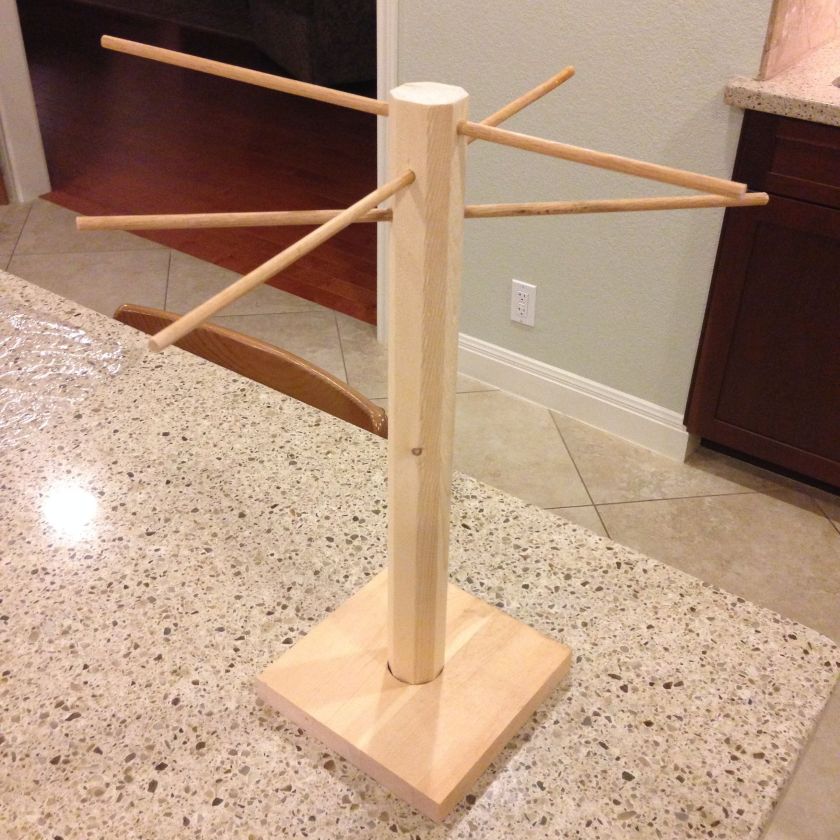
I’ve crossed off another project from my growing wanna-do list in my head this weekend.  As you may have come to know through this blog, we like to make homemade pasta.  A lot.  Spaghetti, fettucine, ravioli, waddevah.  It’s the food of the gods.  Over the holidays, I ran across a fresh pasta hanger on Amazon and it looked so simple and easy to make, that I refused to put it in my cart.  We have a gynormous wood shop out back.  So I did a little recon and found what I needed already in the shop and… voila!   Ye olde pasta hanger.  I made it without glue, so I can take it apart to store easily in the cabinet.
IMG_9852

Tonight I tried it out.  So, here’s how it went down:

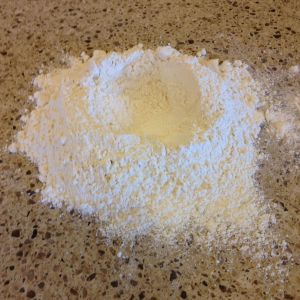
  • 2 1/4 cups flour

IMG_9848

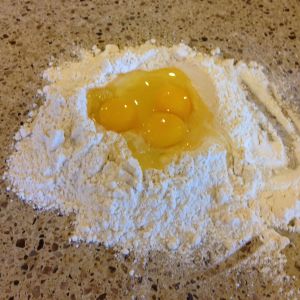
  • 3 eggs

IMG_9849

  • stir / mix with a fork, blending the egg & flour crater from the inside out.  You may not need all the flour.   When the dough stands on its own, knead by hand for 10 minutes.  Till it looks a like more or less like this:
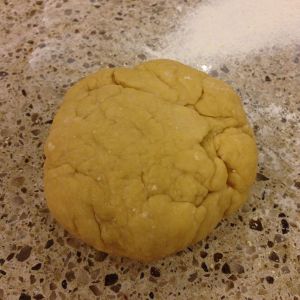
IMG_9850

  • Wrap dough ball in saran wrap and let sit at room temp for 30 mins or so.
  • Afterwards,  I cut the dough ball into 3 equal-ish sided pieces, ready to put through the pasta roller.

IMG_9854

I used our Kitchen-Aid roller, starting on setting 1 – ending on setting 5.  Rolling and dusting the dough with flour several times on each setting.  After rolling each of the three balls into a sheet at setting number 5, I cut each in half.  I found that each of my six pasta sheets ended up making about 2 ounces of pasta – a serving.  So 3 eggs + 2 1/4 cups of pasta yields approximately 6 servings.

Next, I put the fettucine pasta cutter on the Kitchen-aid
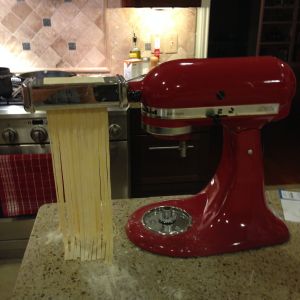
IMG_9855

I hung each section on my new, handy-dandy pasta hanger.  (Awesome!)

IMG_9858

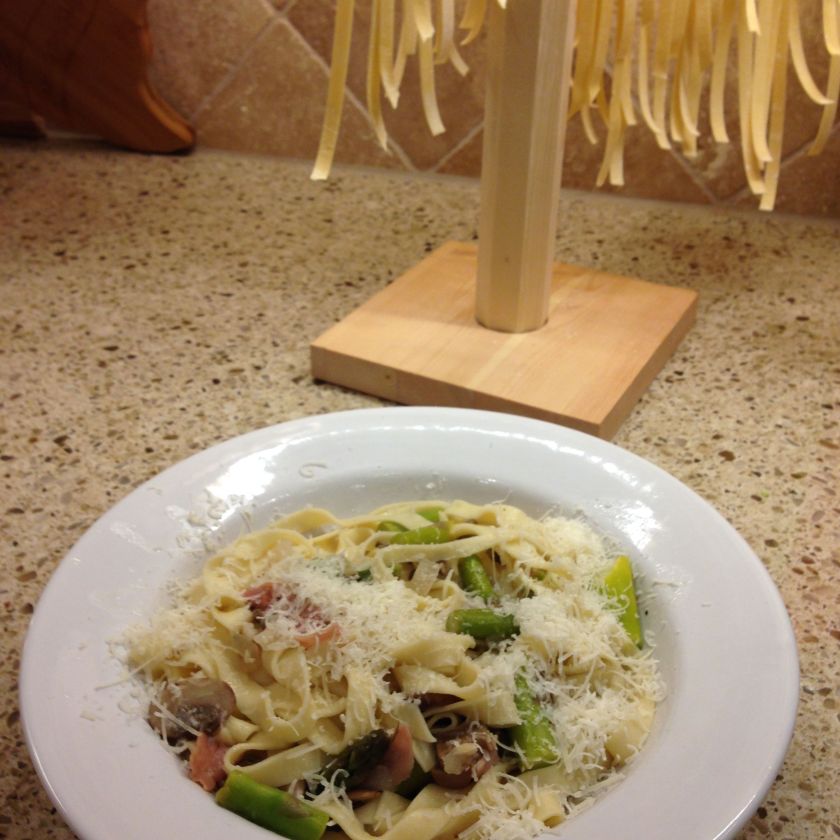
Then I threw the pasta into a pot of boiling water.  I sauteed the other bits in a skillet with some olive oil and I let the flavor develop.

IMG_9851

Yummm!

IMG_9865

The sun sets on January.

IMG_9843

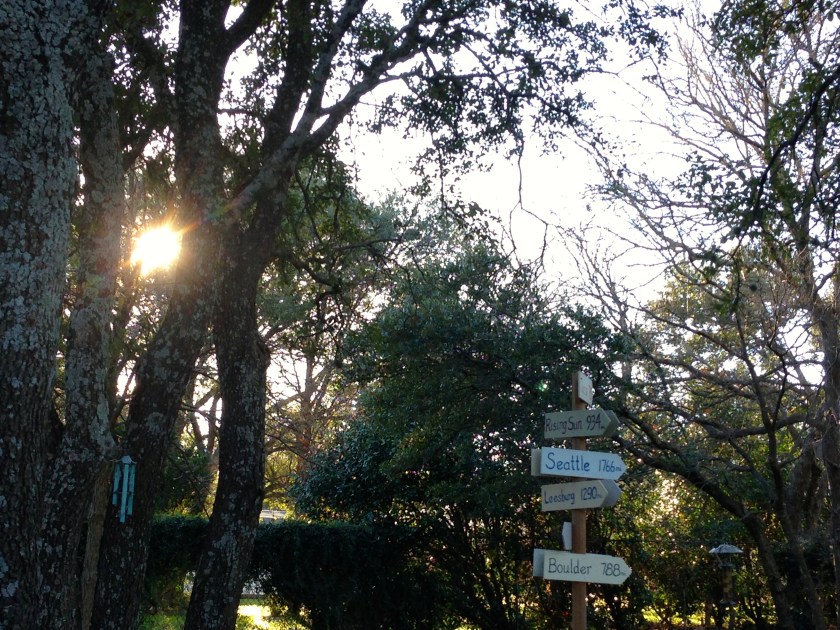
Wow.  That was fast.  January flew by.  This weekend is very un-January-like, though – sunny, with temps inching into the 80s.  I took this shot as the sun was dropping last night.  The light through the trees was gorgeous.

We’ve decided to leave the signpost up that I made for last summer’s family reunion.  It just seems right.

Got him!

This post isn’t really photoblog-worthy, except that it is a follow-up to a post from last week.  Monte had built a trap to catch the armadillos who were turning our waybackyard into a lunar landscape.    Well, we caught one!    He’s a Nine-banded armadillo.  They live to be 12-15 years old!

 I was very excited to see, from a distance, that the trap had triggered.  And after sneaking a peek, I was happy to find a dillo inside and not a skunk!  We released him in a wooded area far enough away (I hope) to keep him from returning.

We’ve reset the trap out back, in case there are others in his crew.

Us 1.  Them 0.

To catch a varmit.  

Stay tuned…


A big-girl camera!

IMG_9586

Monte has nurtured my love of photography over the years; starting with the gift of my first 35mm film SLR camera – a Nikon FM10.   On it, I learned the basics:  how to manually adjust aperture, shutter speed, film speed, focus, depth of field, flash… everything.  It was the only camera we brought on our honeymoon, to capture all those once-in-a-lifetime moments – a bit risky since we wouldn’t be able to see how they turned out until we got home.   I was thrilled to see that they all turned out to be beautifully captured images after getting the film developed.

Then he got me my first digital camera – a Nikon Coolpix 7600 point and shoot.  It was his first experience w/ digital photography as well.

Once we started making regular sailing trips in the Caribbean, I bought a Canon PowerShot D10 for underwater photography.  It turned out to be such a great camera that it has been my main, go-to camera on land or sea, and it sparked my desire to start this photoblog almost 6 years ago.

In the last year or two, pure laziness has led me to use my iPhone camera for many of the shots I post here, though I still drag the Canon along everywhere I go.

But my wish all along has been to get a “real” and quality digital camera – a big-girl camera – one that might allow me to take my photography to the next level.

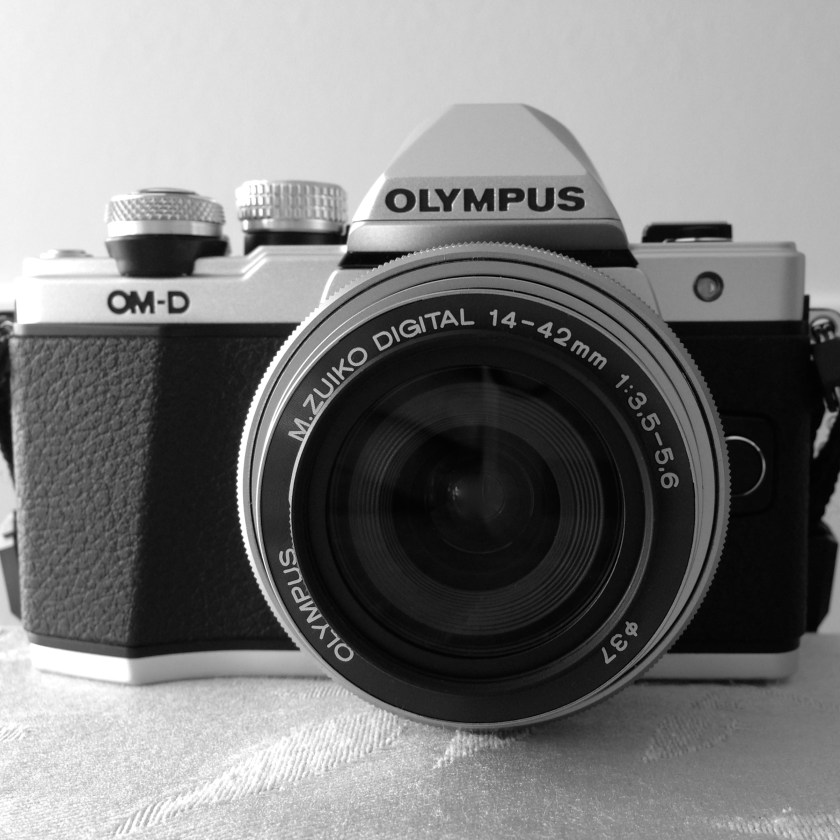
Last week, since I had a whole week off of work, Monte took me camera shopping.  He helped me pick out The One – an Olympus OM-D E-M10 Mark II.   Along with two lenses, this is the latest (and best!) gift of photography equipment from him to indulge my hobby; for which I cannot thank him enough.

All of a sudden I feel like a real photographer!

The camera is amazing.   I am taking the time to study the 170 page manual to learn about each of its features in the range of all-automatic to all-manual operational modes.   I’m only taking practice shots for now, but with the rain and lack of sunny days lately, I haven’t yet taken it for a real spin outside.

I can’t wait to see what develops.  🙂


Say cheese!

I have a running list, mostly in my head, of things I want to try.   Homemade mozzarella cheese has been on the list for quite some time.   We go through enough of it, so I wanted to give it a shot and see how it turned out.   So here we go…

The recipe I used is here.  And it is a good one.  My additional notes with pics below.

I ordered some citric acid powder and Fromase rennet tablets (vegetable-based) from my trusty Amazon account. 

1 1/2 tsp citric acid powder dissolved in 1 cup of cold water.  I used bottled spring water, since chlorinated water is a no-no.  Set aside.

1/4 tablet Fromase rennet dissolved in 1/4 cup bottled spring water. Set aside.

1 gallon whole milk.   Homogenized but NOT Ultra High Pasteurized (UHP) – another no-no.  I used HEB-brand whole milk, and I will again.

1 tsp kosher (not iodized) salt

Pour milk and diluted citric acid unit a 5-quart or larger stainless steel or ceramic NON-REACTIVE pot.  Stir well.  Aluminum or iron are bad… from a cheese-making perspective.   I have a Le Crueset enamel-over-cast iron dutch oven that was a good size, and the enamel ensures it won’t interfere with the citric acid / milk reaction.

Raise heat, slowly, to 90 degrees Farenheit.  Remove from heat.  Add diluted rennet solution and stir, most lightly, for 30 seconds.  Cover and don’t disturb for 5 minutes as the curd sets and starts to separate from the whey liquid.   The consistency of curds you’re going for is soft tofu-ish.   After 5 minutes, mine wasn’t very solidified, so I covered again and let sit for another 3 minutes.

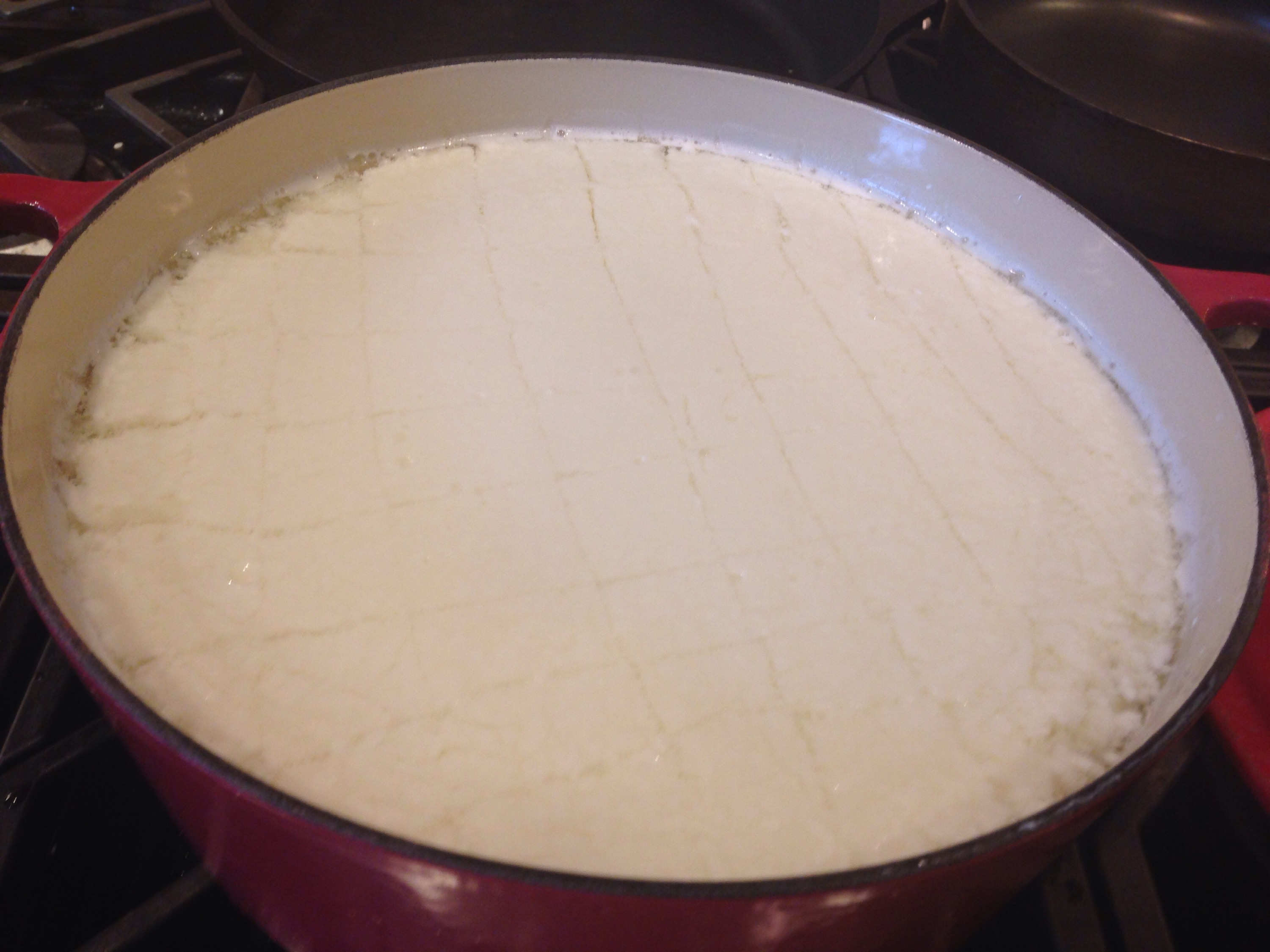
Uncover and make 1″ x 1″ cuts from top to bottom.  I used a stainless steel cake frosting spreader.

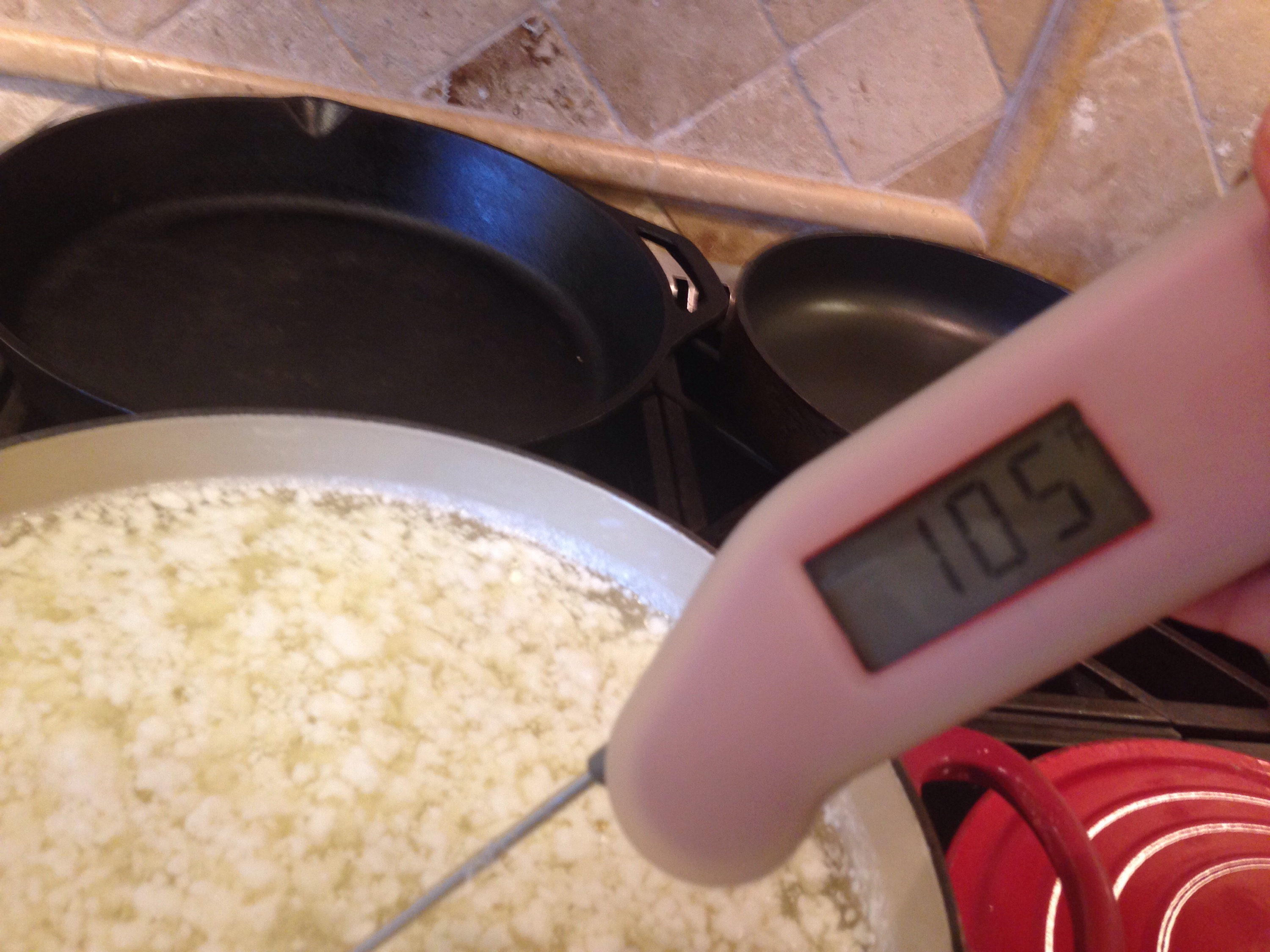
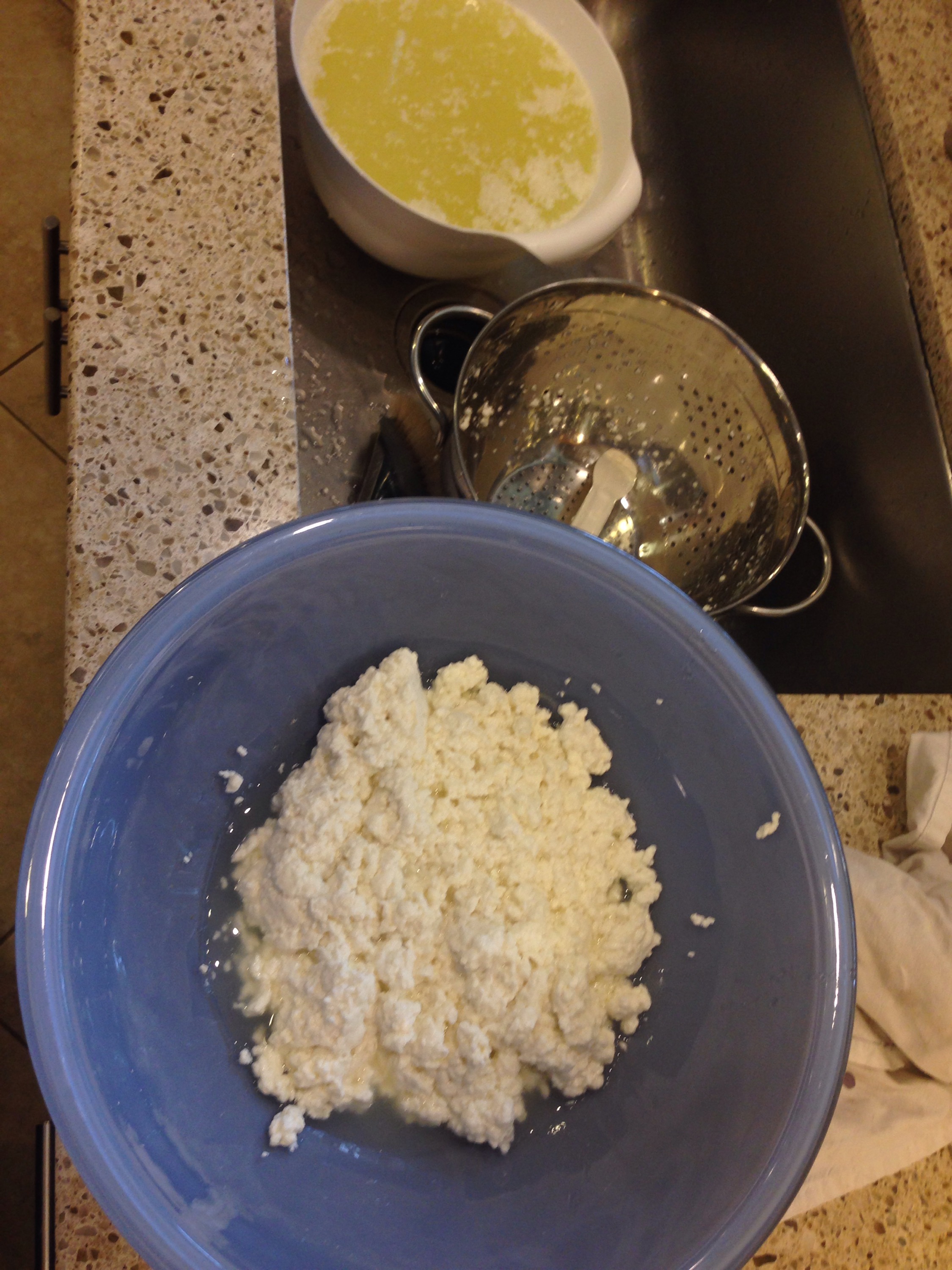
Return to low heat, stirring lightly, until temperature is 105 degrees farenheit.   Remove from heat and continue stirring for another minute or two.   The curds start separating from the liquid whey and will want to begin to clump together. Separate curds from whey.  I used a stainless steel colander on top of a large plastic bowl, and a stainless steel scoop.  The picture below shows the remaining whey at the top, and the glass bowl of almost-mozzarella curds in a microwavable bowl at the bottom – ready for the next step.
  Heat in microwave in small bursts, measuring temperature, and stirring in between bursts, until mixture reaches 135 degrees farenheit.   My microwave is pretty strong, so I used 20 second intervals of heating, and then stirring, until it reached 135 degrees. Strain off remaining whey.  Begin kneading (like dough) and stretching, alternating, until mixture becomes cohesive and stringy.

I forgot to add the kosher salt until after the cheese got to the ball stage.   So, this attempt yielded stringier portions than I had imagined.  But it held together alright.  Next time, I will use less salt than called for in the recipe (I’ll try 1/2 tsp next time).    I formed my first batch into 3 loaf-ish shapes.

And then I put in a container with part whey liquid / part water and covered in the fridge.

  First taste… caprese salad…. delicious!
I’m going to get another gallon of milk proto!  I’m hooked.

The hunter.

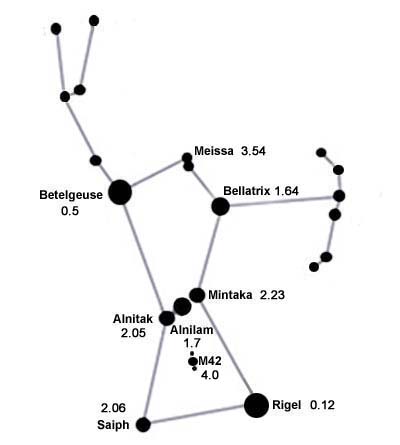
I have some photos from our weekend in Port A that I may sort out and post.  Here’s a shot from one of the pre-dawn firmament beach photo sessions.  The constellation Orion.

IMG_4962

and a cheat sheet:

https://i0.wp.com/www.solarsystemquick.com/universe/orion-constellation-new-2.jpg

Patience wins out.

I packed the tripod for our trip to the coast.  We went to the beach both mornings, while we were in Port Aransas, to once again try to capture a shot of Mercury, Mars, Jupiter and Venus together.

Yesterday clouded up just before Mercury rose.  This morning the clouds threatened again, but danced between the planets.   I took this shot looking above the south jetty on the Port Aransas end of Mustang Island.  The lowest in this shot is Mercury, just above the seeping pink glow of dawn.  Above it is the pair of reddish, smaller Mars just below and to the left of larger Jupiter.  And then above them, and the brightest, Venus.  The other stars above and to the left of the ecliptic are stars in the constellation Leo.

The red and green lights on the horizon are some of the channel markers that guide the ships through the channel between the jetties.

IMG_5017

Sí, es verdad. 

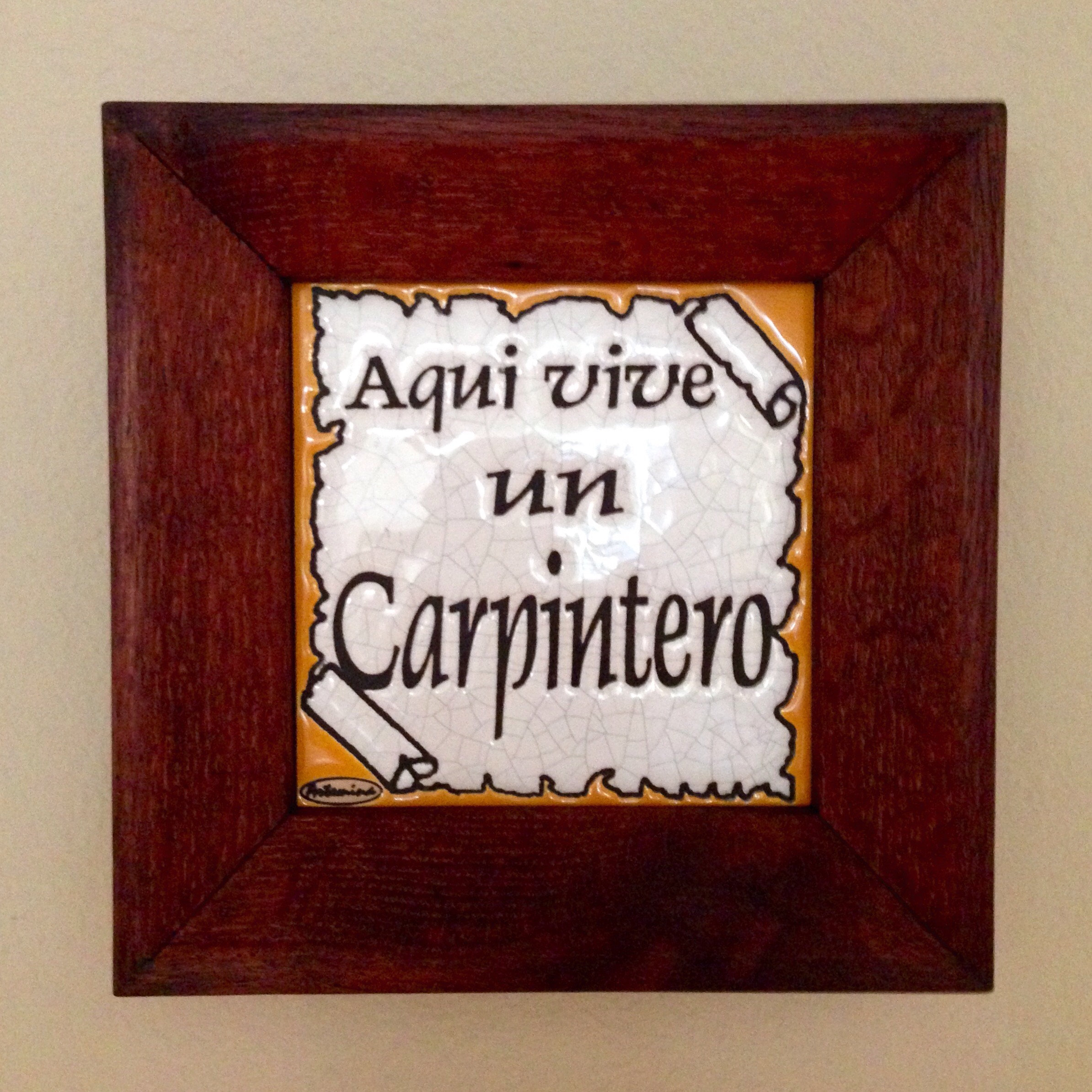
I bought this ceramic tile in Spain on our honeymoon.  Monte is very much a fine carpenter.  It took a while, but it is finally hanging on the wall – in a homemade frame, of course. 


Quiero mejorar mi español.

In addition to my lifelong, ongoing quest to learn how to play the guitar well, I have been nursing my Spanish along for a the last 30 years.  In both cases, though, it just takes practice – which I never seem to be able to sustain for long periods of time.  My Spanish is ok, but I would really like to become fluent.   And that means broadening my vocabulary and hardening my grammar.  And practicing.

I have two Spanish novels on my bookshelf that I have started to read several times over the years, and with my spanish-english dictionary in hand, have made my way through a couple chapters.  It is hard work.  Not just for my brain, but for the manual back-and-forth effort of putting the book down to pick up the dictionary, then putting it down to pick up where I left off in the book.

So, for the umpteenth time, I picked up one of them again last week, a novel called Nada by Carmen Laforet.  I started at the beginning again.  After about 2 pages I paused and experienced a moment of inspiration:  wouldn’t it be great if I could read this book on an e-reader that would look up a word for me on the fly with the mere touch of a finger?  What a great idea, maybe someone has thought of that already!  😉

I have a five year old 1st generation Kindle Fire with a kindle e-reader built in.  So I downloaded a sample of the e-book version of Nada for free from Amazon and tried it out.  But, alas, the device only has an English dictionary built in.  I found a helpful document that explained that, unlike later Kindles, the 1st generation Fire does not support changing the default dictionary.   Strike one.

I also have a Kindle e-reader app on my Mac.  So I tried the same thing with it.  But switching dictionaries was also not possible in that scenario.  Strike two.

I understand the kindle e-reader for iPhone and iPad may support what I want to do, but I’m really not interested in reading a book on my phone – too small.  Nor buying an iPad – too expensive.

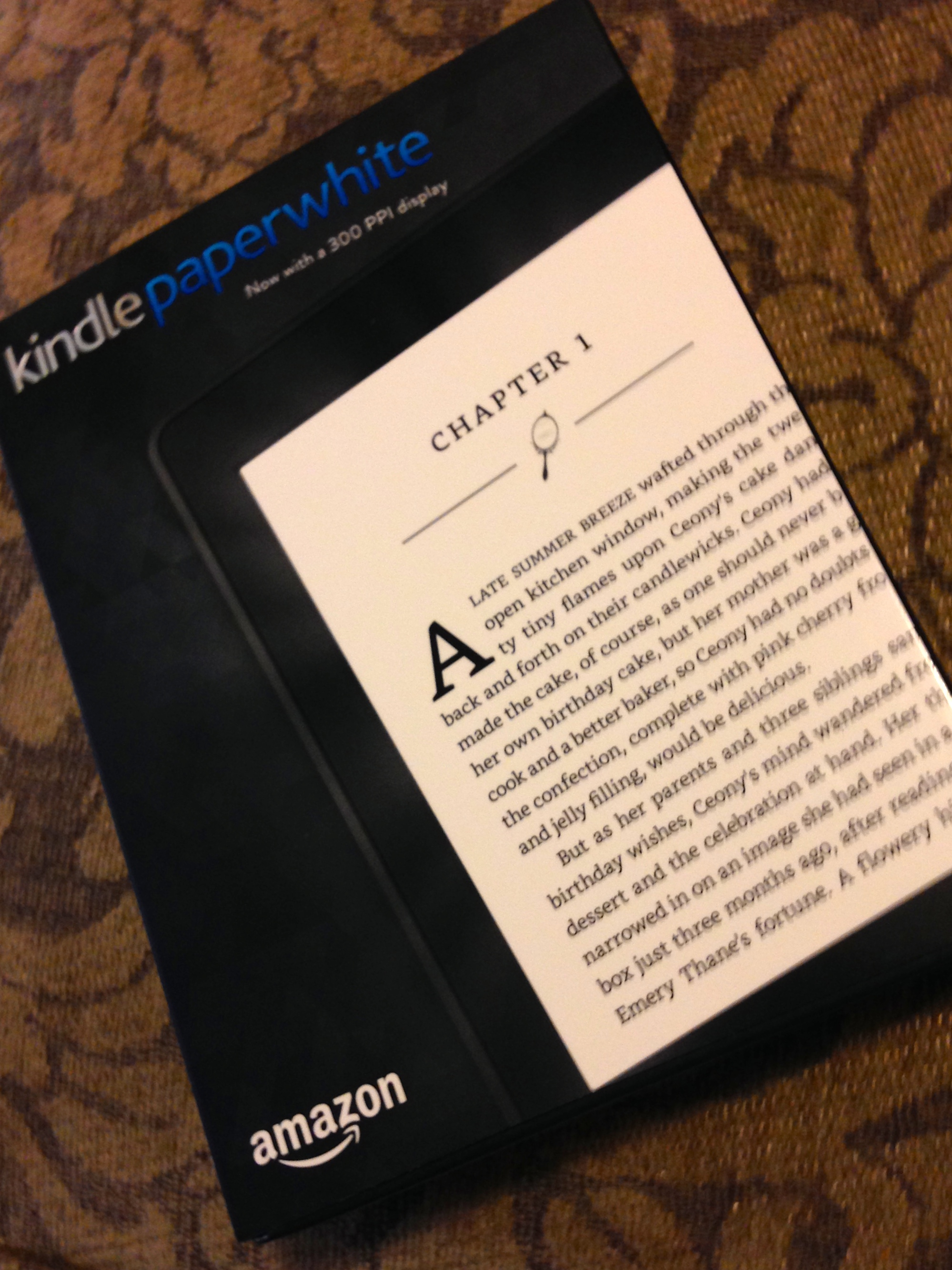
So, then I began to research whether what I wanted to do would even be possible with a new e-reader device, like the Kindle Paperwhite.  And it appeared to be.  There were two ways I could do it.  One requires being connected to wifi to look up each word, by using the built-in “translate” feature, but that was not what I wanted.  I don’t want to have to be online to lookup words.  The other method requires downloading a Spanish-English translation dictionary to the device, and then making it the default dictionary for spanish e-books.   Bingo.  Sounded like a plan.

IMG_9108

I am typically slow to embrace new technology and gadgets.  But when I find a use for them that is important to me, I don’t waste time!  So, I splurged and ordered the Kindle Paperwhite, which arrived yesterday.  And in a matter of minutes I was in business.   As of this morning, I am 10% of the way through the book.  And I can almost feel my brain expanding.  🙂  Home run!

By the way, this is the Spanish-English translation dictionary I’m using.  Seems to work great for what I want to do.  Even better, I downloaded it for free by using the Kindle Owners’ Lending Library perk that comes with my Amazon Prime membership.

I also found a great free app for my iPhone called Duolingo, which seems to be a very decent tool for practicing and learning.  I’ve even started trying to learn French and Irish with that app.   Now THAT’S going to take a looooong time, but what the heck.   Anyway, if you have any interest in learning or polishing your foreign language skills, check it out.

Sugar bombs.

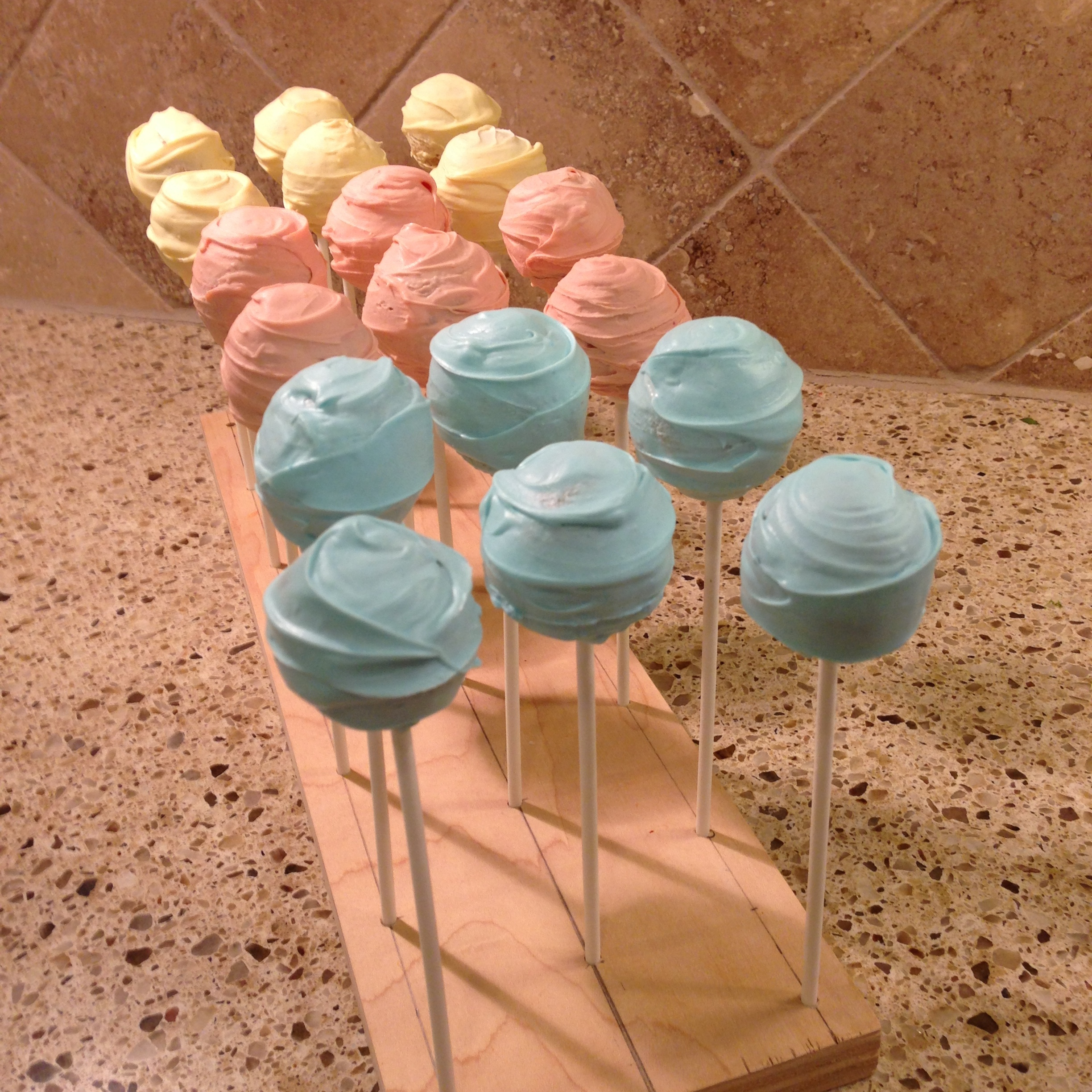
I was introduced to cake pops recently, when a friend brought a dozen to a party.  They are an excellent sweet treat.   This weekend I took a stab at making a batch myself.    Here’s how they turned out:

IMG_8377

I did a little research beforehand, googling a few recipes and how-tos.   This is the one I picked to guide me, and pretty much followed it exactly.   I made one modification – I detest frosting-in-a-can, as its main ingredient is partially hydrogenated fat.   I bought a powder mix instead – which was basically powdered sugar, really.   I just had to add butter and a bit of milk.  And it worked great for the frosting.  I mixed up half a box (i.e., about as much frosting to cover half a cake), on the advice of the how-to that I was following.   And it worked fine.

I bought pure white Wilton candy chips, and added food coloring.  I have to say that the “dipping” phase is still a mystery to me.  No matter what I tried, the candy coating was always the consistency of frosting.  I tried both the microwave method, as well as the double boiler method.   It was still very thick.    So I couldn’t really “dip” the pops.  I spun them through the coating and had to smooth with a knife most of the time.   No matter, though, they turned out fine.

Some people recommend buying floral arrangement foam to use as a stand to hold your cake pops.  I asked Monte to make me a few stands with wood scrap he had laying around in the shop.  They worked great.

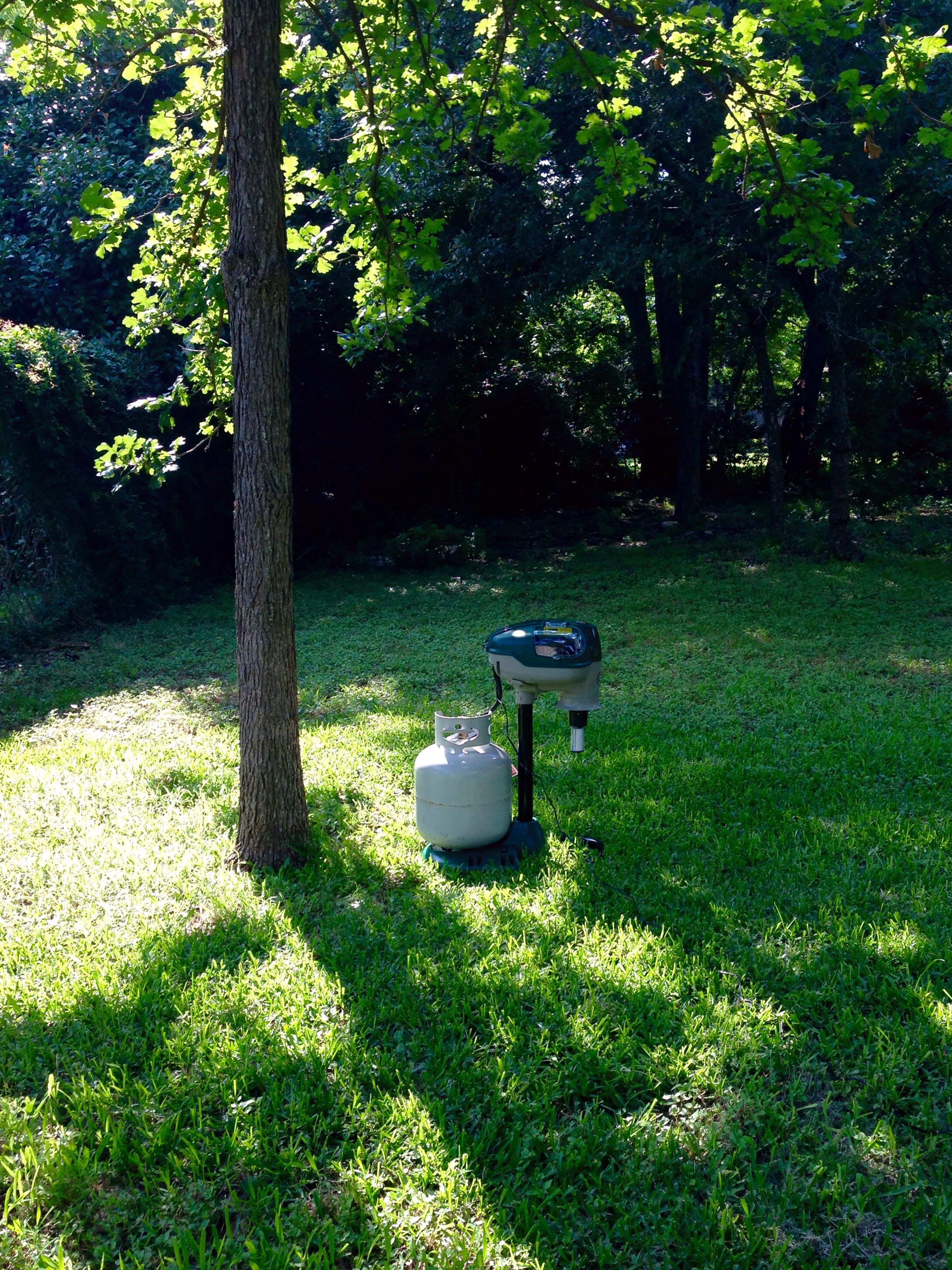
Mosquito warfare. 

Stay tuned.  


Bed time. 

I got a bit of a late start, but I finally tended to my fenceline flowerbed.   Plumbago, liriope, red salvia, autumn sage, gaillardia, may night salvia, tickseed, geranium, flowering sage,  and a couple white annuals. 

I’m looking forward to some color!  

Jazz it up.

One of my unofficial new year’s resolutions was to dedicate some time to learning.  Have you heard of MOOCs – massive open online classes?  Well, there are MANY online courses on every subject imaginable, hosted from many different institutions and web portals.   They are free – if audited, and are taken online from the comfort of your couch.  Ten weeks ago I enrolled in a MOOC on Jazz Appreciation on edx.org, along with 11,000(!) other students.  I love all kinds of music, but I really didn’t know much about Jazz, and I thought if I learned a bit more about it, its eras and artists, that I might enjoy it even more.

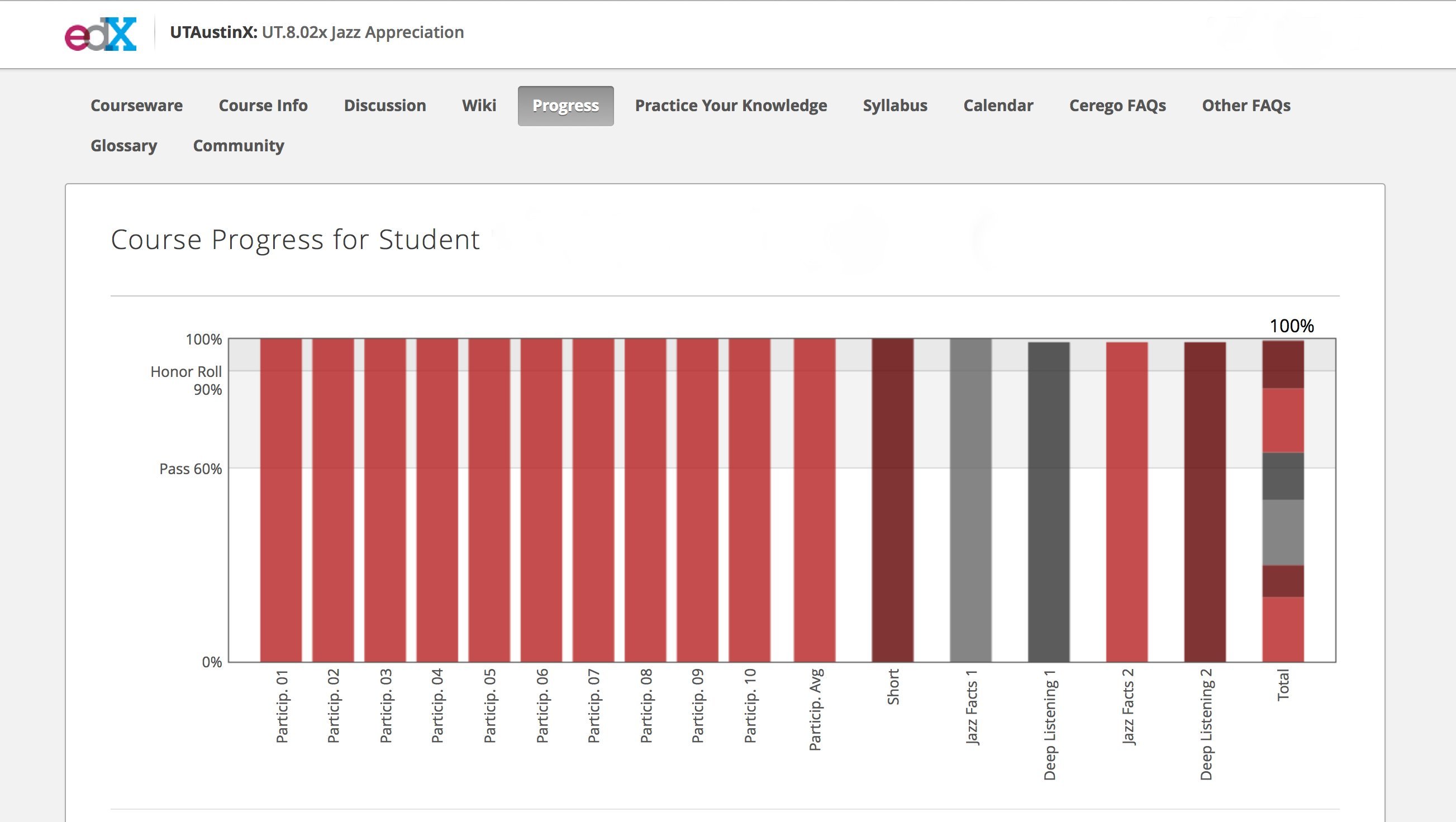
Today I finished the course.   I highly recommend it.   I now know a bit more about early jazz, swing, bebop, cool, hard bop, modal, free jazz, fusion, and neo-classical eras.  I know that Coltrane was THE MAN on tenor sax.  I know that Miles varied his music on trumpet to influence many eras.  I found out that I really like the pianist Bill Evans and will seek out some of his albums.  I understand why Charles Mingus and Thelonius Monk transcend a specific Jazz era.  I decided that I don’t care as much for bebop – no offense to Dizzy and the Bird.  I enjoy early jazz and modal and hard bop and cool.   I can distinguish blues form from AABA form.   I can listen for the bass and drums to try to pick out swing from even-8th rhythm.   I heard many snippets of a variety of performances from artists that I was already aware of, whetting my interest to hear more by them.  And I learned about some of the newest artists to appear on the Jazz stage.  Professor Hellmer was great.

All and all, a great class!  Aaaaaand, I got an A.  🙂

150321

openculture.com maintains a list of over a thousand MOOCs here.  Take a look, pick one out that sounds interesting, and enroll!