Ships and history.

Portsmouth Harbour lies on the northeast shore of The Solent, on the southern coast of England. We actually sailed by it before dawn as the Queen Mary 2 navigated up into Southampton. It is an important port, naval base, and home to many historic Royal Navy ships – which is the reason for our visit. I’ll share some of our highlights.

The gate to the Dockyard
The signal flags on the Portsmouth Historic Dockyard sign spell out D-I-S-C-O-V-E-R. And so we did!

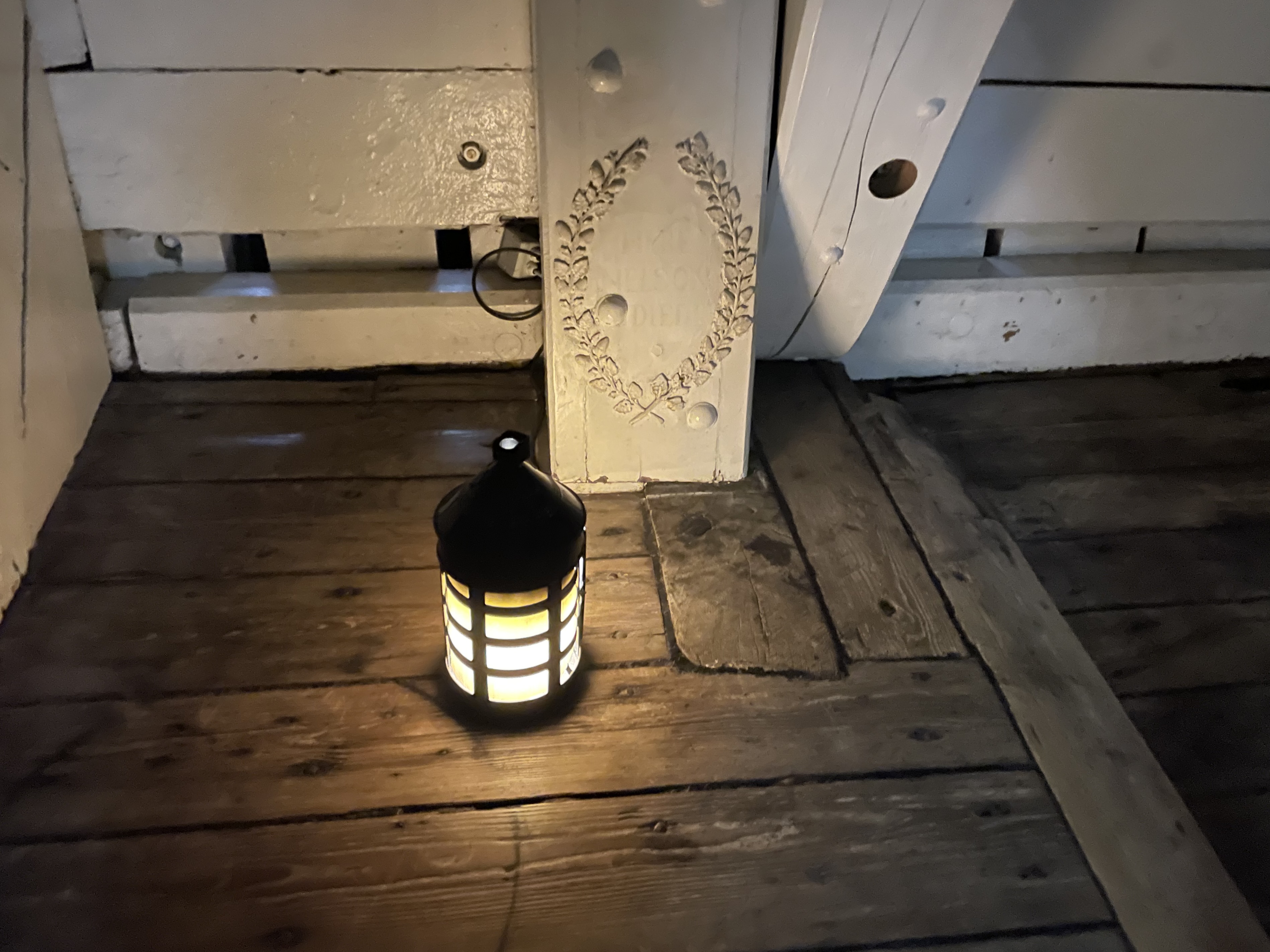
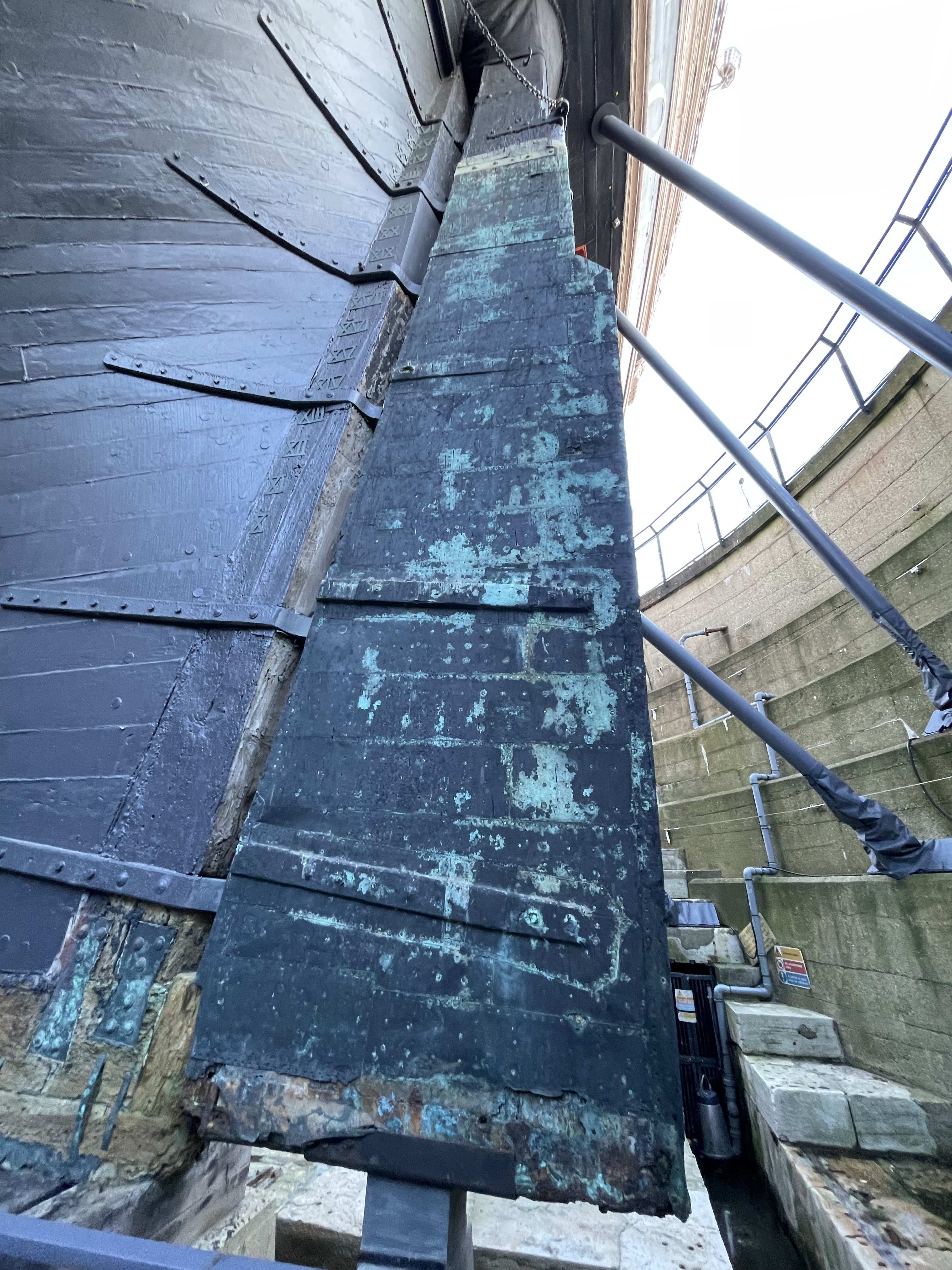
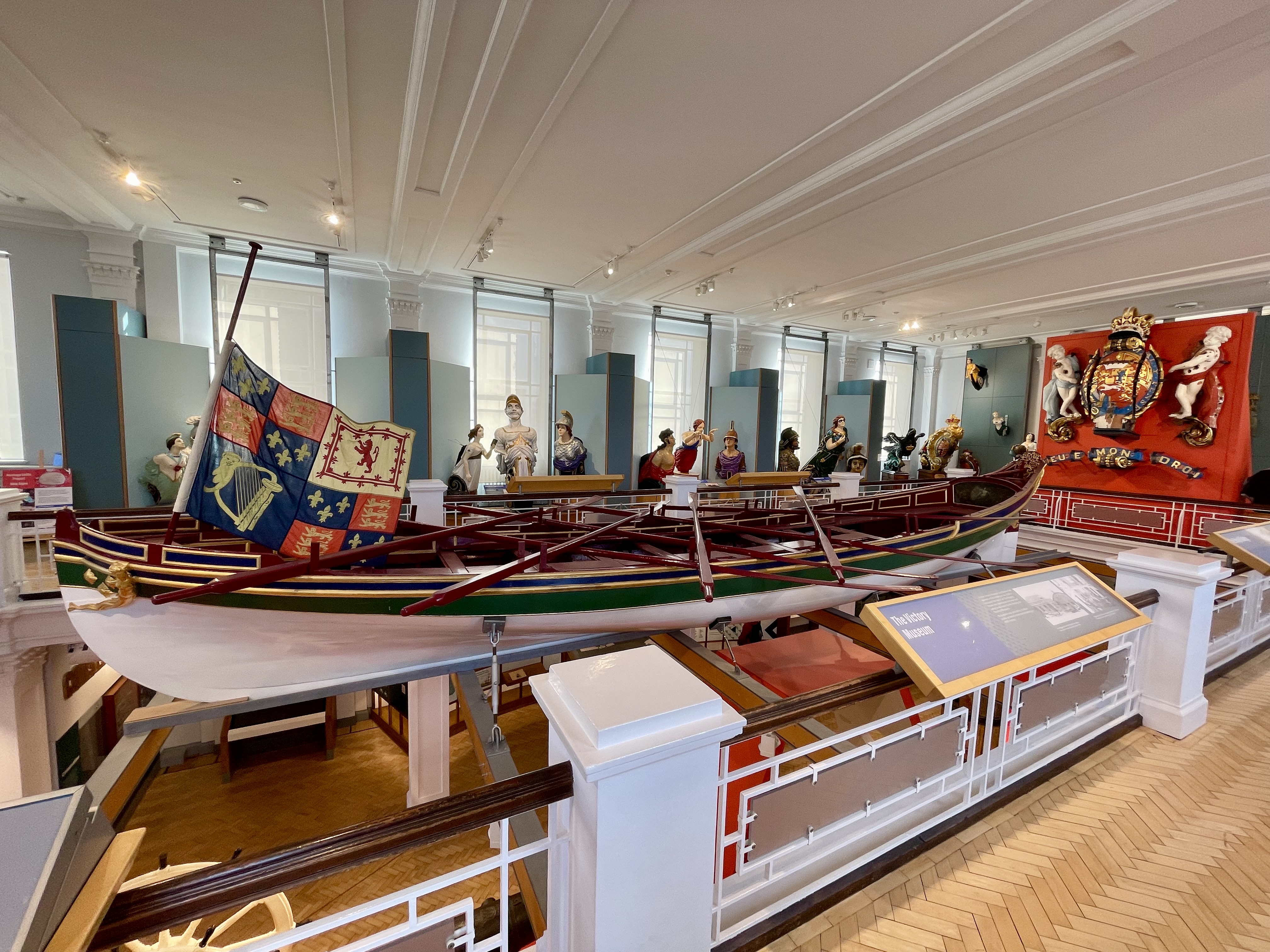
Monte has read novels about real British maritime battles and victories, and so is familiar with the history here. Me, not so much. But after our visits to the fantastic exhibits in the Portsmouth Historic Dockyard, I am now up to date on quite a few details. 🙂 The HMS Victory is probably one of the most well-known ships, and it is in Portsmouth in a drydock at the Historic Dockyard.
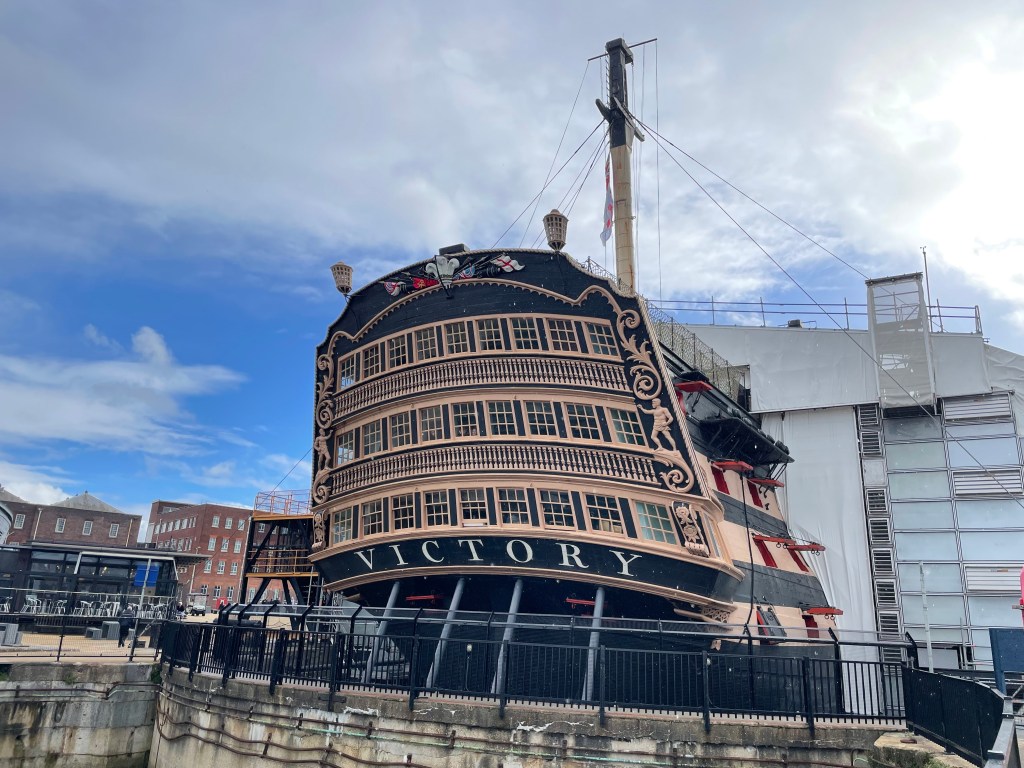
The view of the stern of the HMS Victory

The HMS Victory was launched in 1765, and was the flagship for Admiral Horatio Nelson in the Battle of Trafalgar in October 1805 (when it was already 40 years old!) Trafalgar was the location of the British Navy’s greatest victory. The British fleet decisively defeated the combined fleets of Spain and France in the waters off of Cape Trafalgar, on the southwest coast of Spain. The Battle of Trafalgar was significant not just because it was a victory, but because Admiral Nelson was shot in that battle, died on the ship, and was transported back to England after the battle for a hero’s burial. He was, and still is, England’s most beloved sailor.

The Victory is midway through a 20 year restoration. The repair work is actually one of the exhibits – Victory Live. It doesn’t hinder seeing and touring the rest of the Victory as the work proceeds.
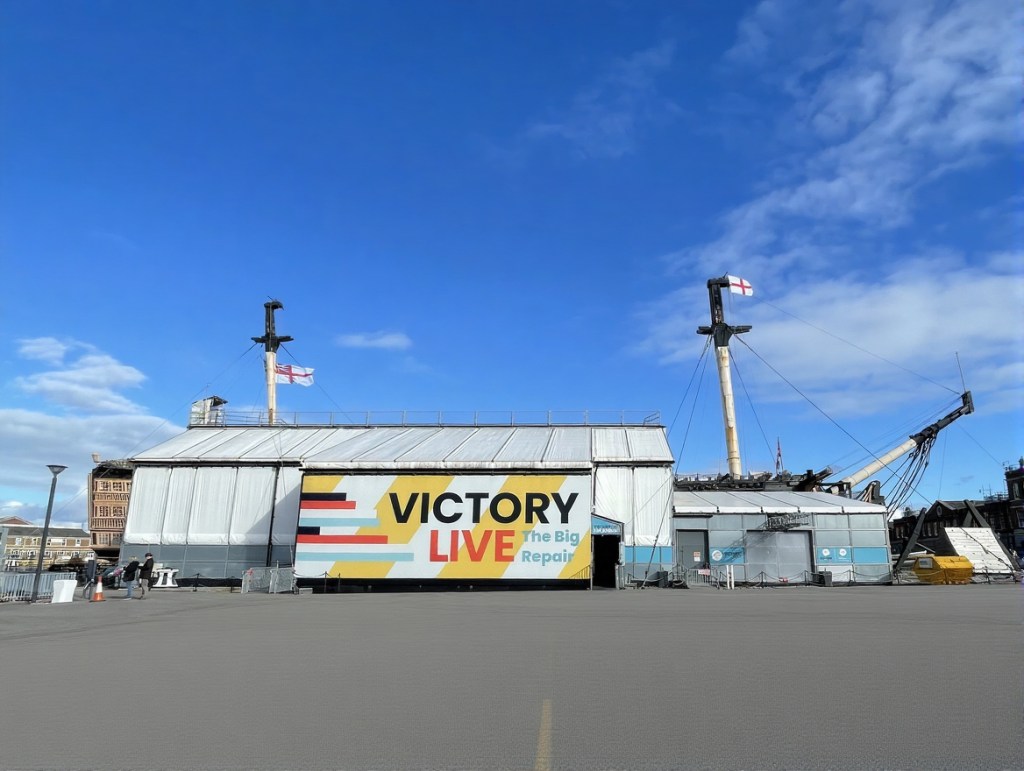
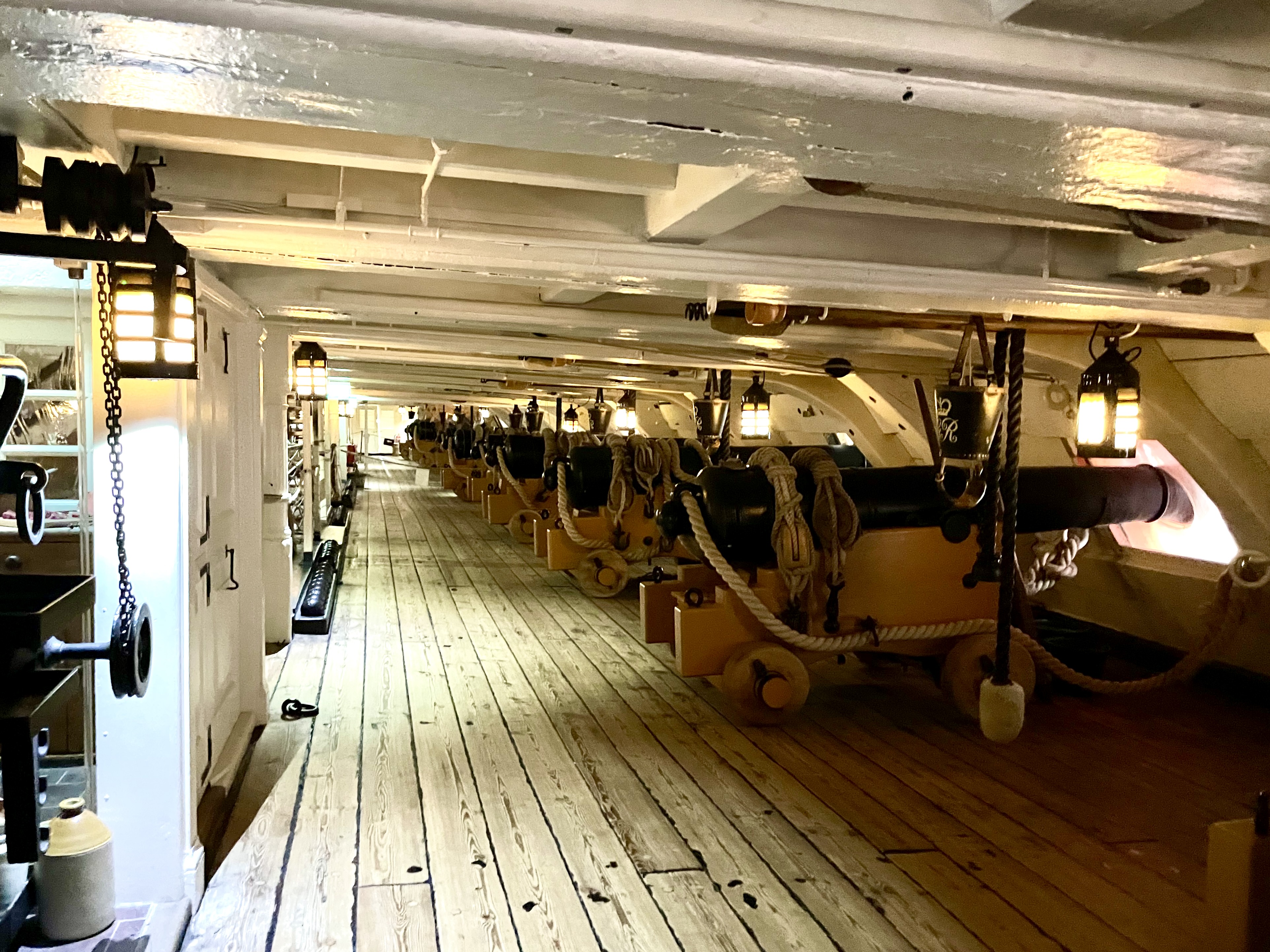
Most of the HMS Victory is under a tent, and the mast tops have been removed, but that didn’t detract from being able to explore the ship.

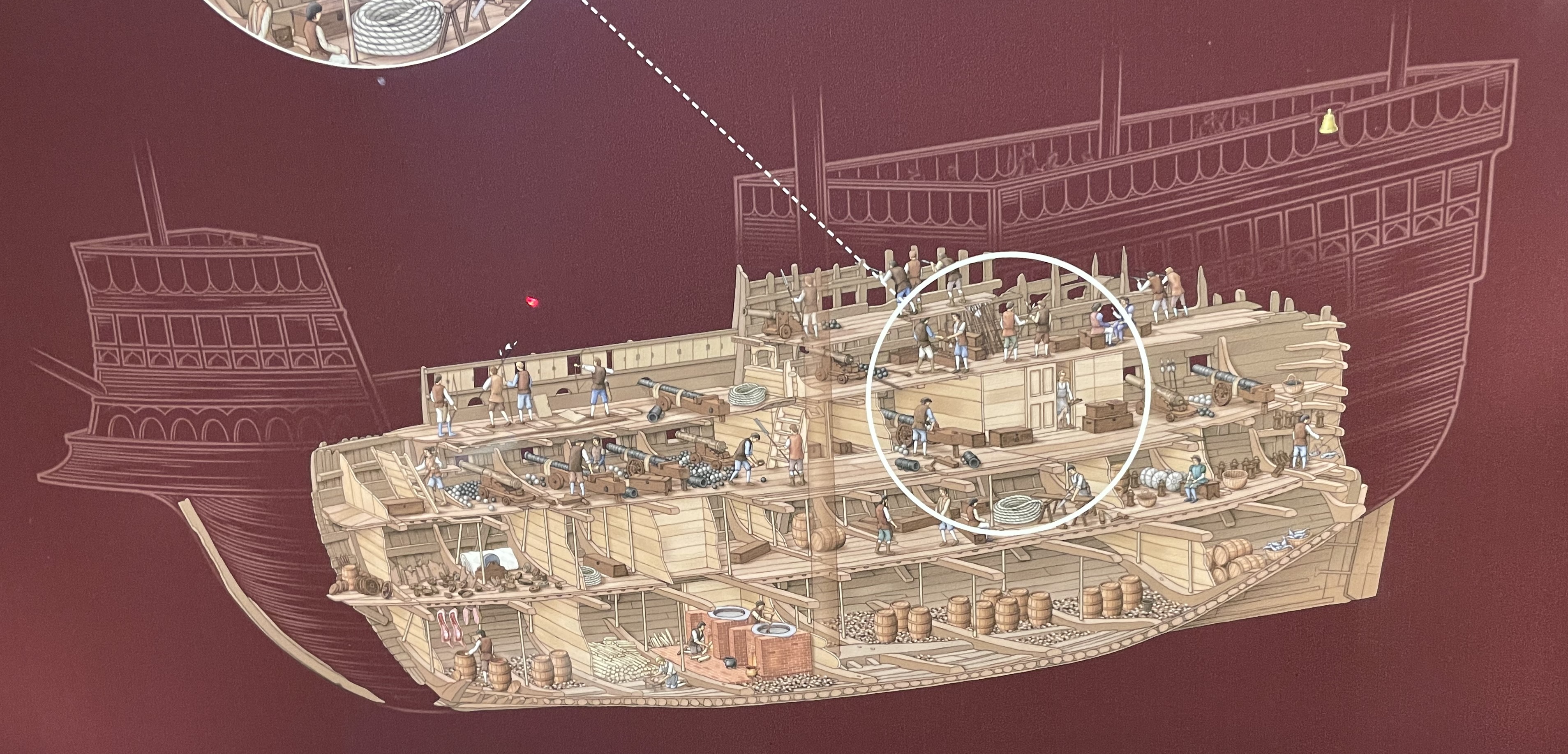
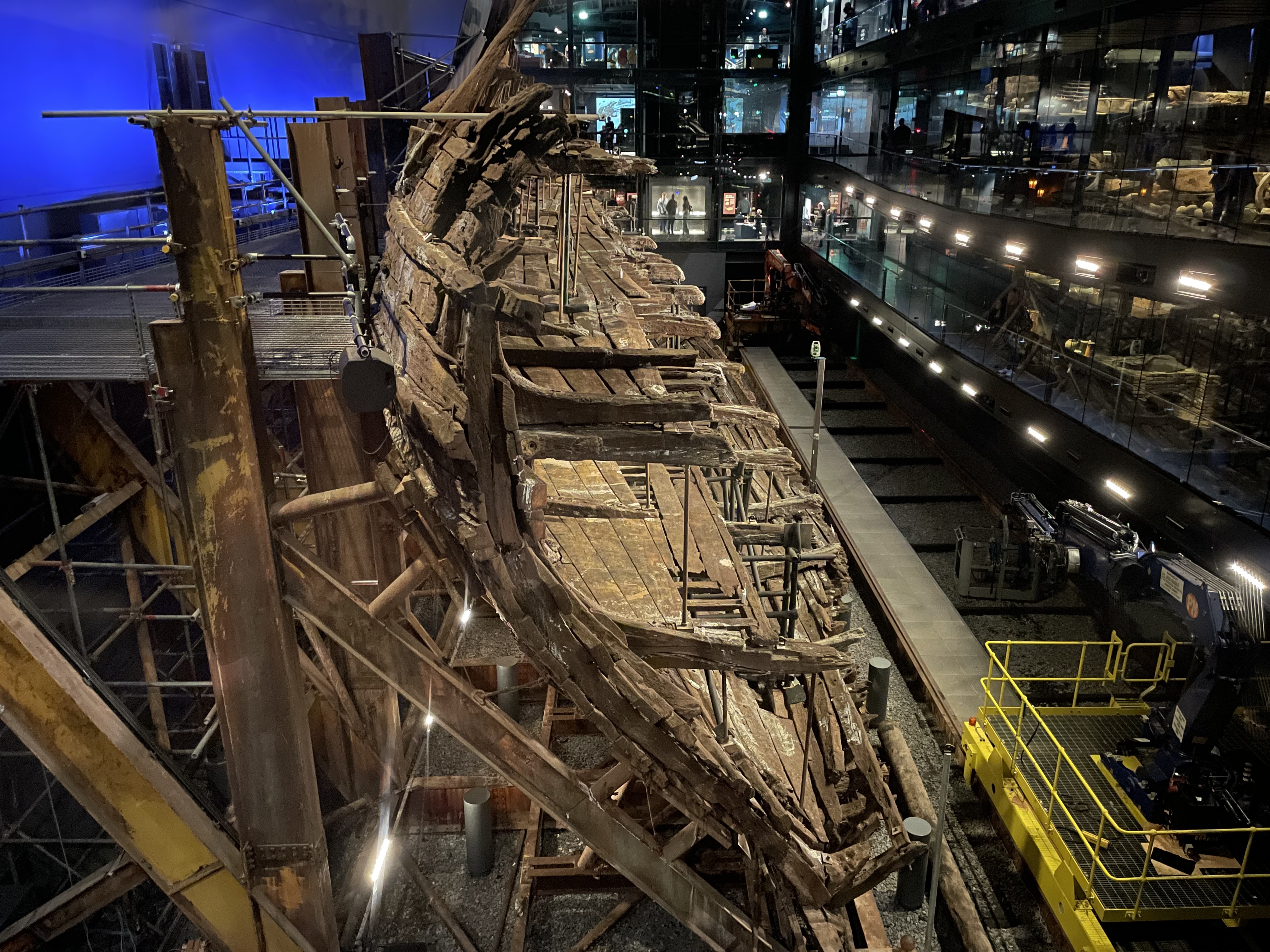
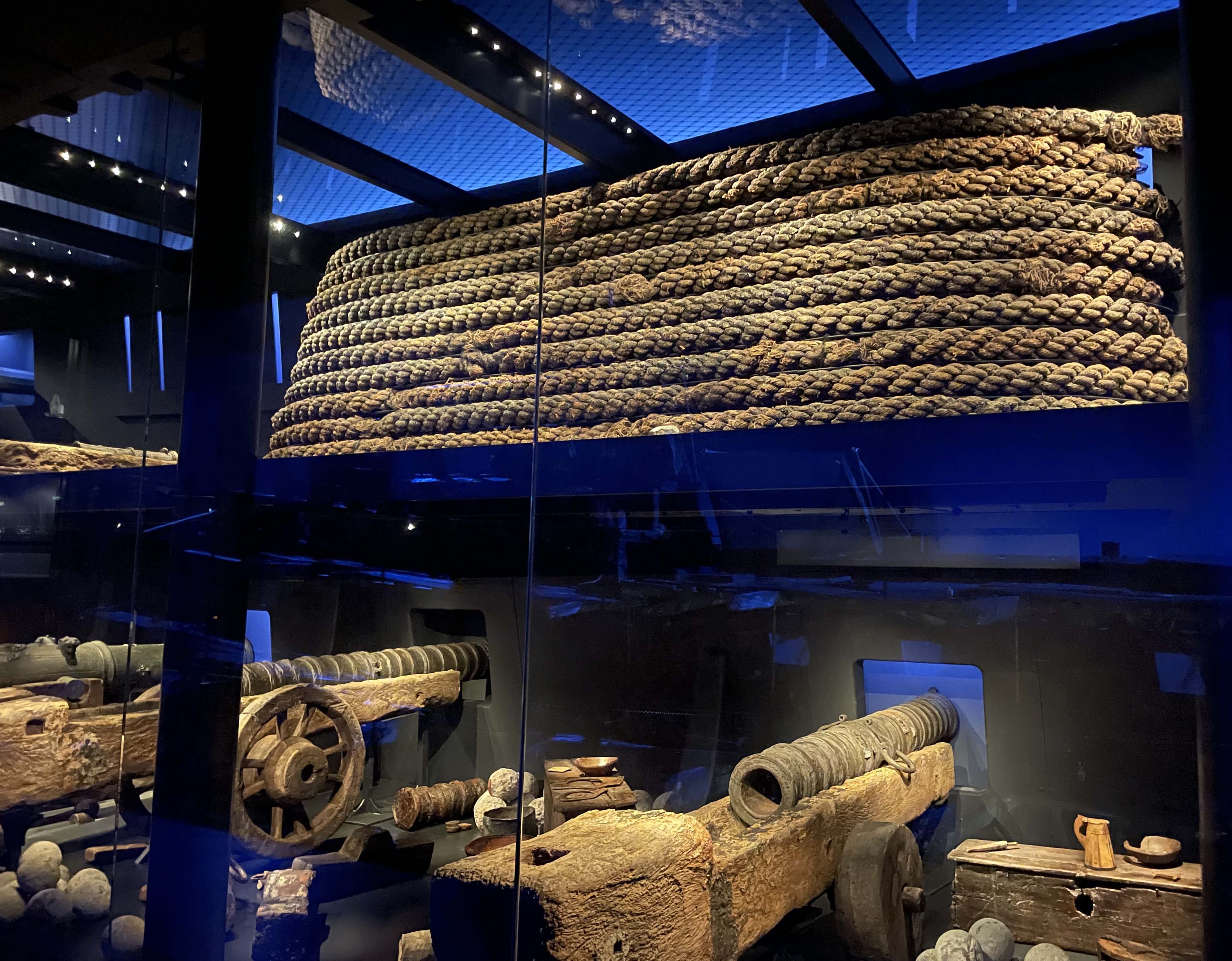
Another fascinating exhibit was of the Mary Rose, commissioned by King Henry VIII in 1510 as a flagship. It sank in 1545 during the Battle of the Solent by the French, just a mile offshore of Portsmouth, in 40 feet of water. It sat on the seabed, half buried in silt until it was discovered and eventually raised in 1982.
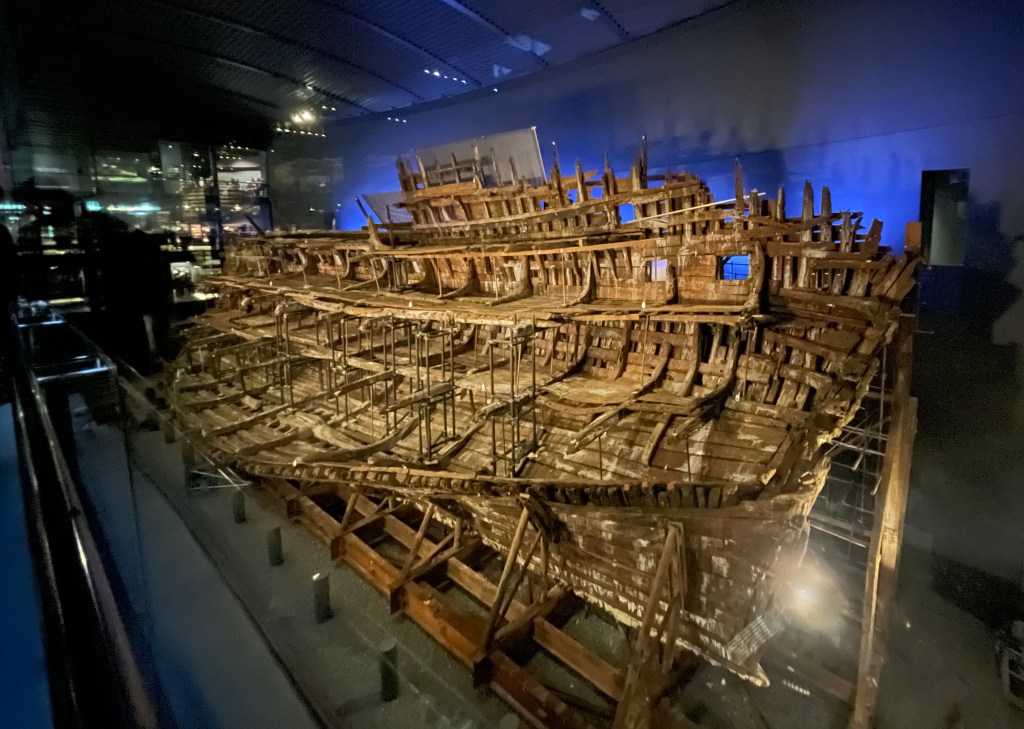
The exhibit does a great job of showing just how much of the ship is still intact, and an astounding amount of items that survive.
The HMS Warrier is a battleship built for Queen Victoria’s Navy, launched in 1860. We toured her as well.
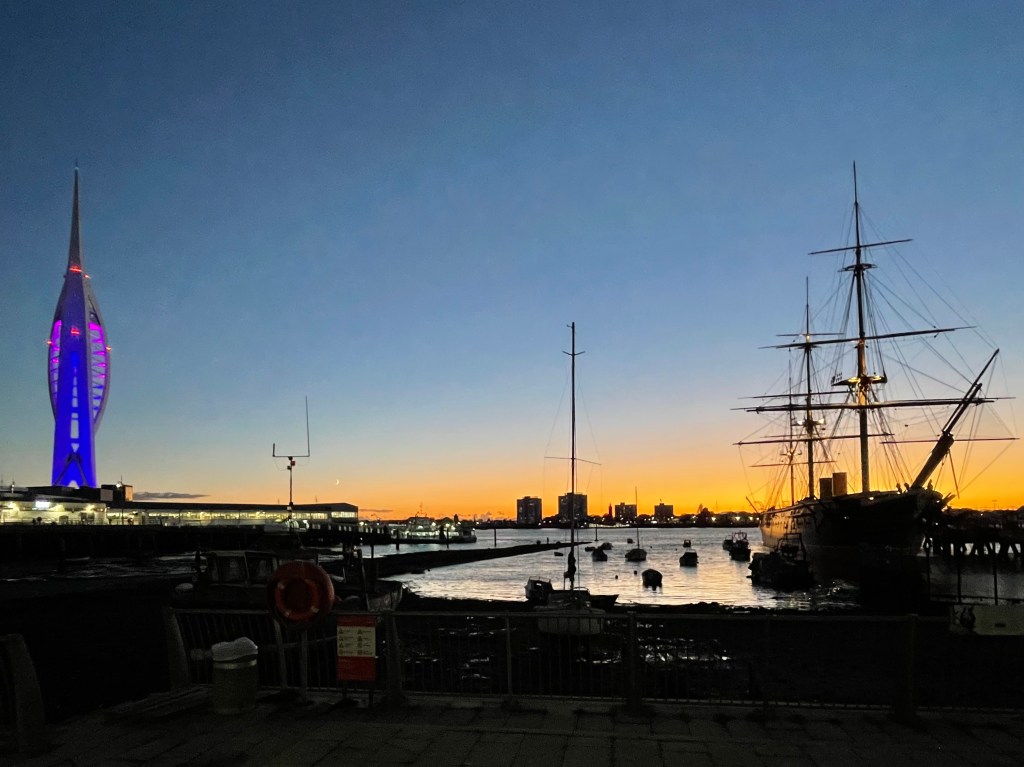
Sunset over Portsmouth Harbour – HMS Warrior on the right, Spinnaker Tower on the left.

We spent two whole days exploring all the things to see at the Dockyard. We took a harbor tour, water taxi over to Gosport to tour a WWI submarine (Holland 1) and a WWII submarine (HMS Alliance), toured Boathouse 4, a working shop that restores small craft. We walked through the multiple other museums that are there. The weekend we were there it was “half-term” for the school kids, so the dockyard was teeming with British families as well.

We took a city bus down to see Southsea, and Henry the VIII’s castle there, from which he watched the sinking of the Mary Rose. There is also a D-Day Museum there, but we arrived after closing time.

By the time we checked out of our hotel and hopped a train to our next destination, I felt we had spent just the right amount of time in Portsmouth to soak up all the history there.


Links for the curious:

Portsmouth Historic Dockyard visitor info and tickets. They have so much to experience there. The Ultimate Explorer pass includes entry to 13 attractions. We visited 11 of them, and it was well worth it for us.

Where to stay? There are lots of choices nearby. We stayed at the Ship Leopard, which was a great location. Our room overlooked the harbor and had a view of Spinnaker Tower and the HMS Warrior. It is across the street from the Portsmouth Harbour Rail station, and the Isle of Wight Ferries, a block away from Gunwarf Quays, and a block away from the Historic Dockyard gate.

Ashore.

We disembarked the Queen Mary 2 at the Mayflower Cruise Terminal in Southampton on a sunny, brisk day. Our travel plans typically include train travel, which we prefer to rental cars. So we waved goodbye to the grand ship and grabbed a cab to Southampton Central Rail Station. We headed out on a day trip to Winchester.

We stowed our bags at a business near the rail station to explore the 10th-century, medieval capital of England on foot.

Our goal was to visit beautiful Winchester Cathedral, whose construction began in 1079 and was completed in 1532. When we arrived, we learned it was closed because it was hosting back-to-back graduation ceremonies for the various colleges of the University of Winchester. Doh!

The West entrance of Winchester Cathedral

I did try to breach their defenses several times, but the Cathedral is still well-defended. So we admired it from outside and decided to make another visit later in our trip to see its grand medieval architecture from the inside.

East end of Winchester Cathedral

North transept of Winchester Cathedral.
The flying buttresses along Winchester Cathedral’s southern wall of the nave

After our consolation lap around the Cathedral grounds, we toured the City Museum, which tells the history of Winchester from its Iron Age, Roman, and Anglo-Saxon origins to the present day.

Winchester’s City Museum

We then headed off to find what remains of the ancient Winchester Castle. Its Great Hall still stands, adjacent to the modern-day Crown Court. Inside is the Round Table of the legendary King Arthur’s Knights. The massive oak table is thought to be one that the real King Alfred had built for a wedding celebration in the 13th century, but King Henry VIII in the 16th century had it painted with the Tudor rose, the names of 24 knights, and the character of King Arthur said to be in his own image to link him to the legend. Or so one story goes.

The Round Table of the Great Hall of Winchester Castle

Stained glass just loves a sunny day!

Stained glass inside the Great Hall.

Nearby stands the West Gate of the former Castle. Modern-day traffic just zips by.

The West Gate of Winchester Castle

We grabbed lunch in a nearby pub and then caught a train headed to Portsmouth Harbour Rail Station. Portsmouth is home to the Royal Navy’s Historic Dockyard, and our base for the next 3 days.

View of the HMS Warrior from our hotel room in Portsmouth

More historic ships and ancient architecture to come!


Links for the curious:

British National Rail website. Install their app on your phone for easy access to timetables, real-time train status, and online tickets. I used it every day. There are multiple local railways (South Western Railway, Great Western Railway, etc) that have their own websites, but the National Rail app integrates them all.

British National Rail’s Railcard information. This is a railcard that you purchase for a one-time fee, valid for a year. In return, it gives you 1/3 off train fares in off-peak times. We bought the “Two Together” railcard for 35£ and it paid for itself several times over. It’s a digital card, so you should install the Railcard app on your phone to show at ticket offices and to ticket inspectors on the trains.

Radical Storage website for luggage drop/pickup locations. They also have an app, but I just purchased via their website on my phone. This worked great for us. Their location in Winchester that we used was a vape shop 🙂 But it was very convenient to get to from the train station. The system is easy to navigate and use, and I felt our bags were very secure both times we used it. They have locations worldwide! I’d definitely use them again.

Winchester Cathedral visitor info. Make sure to check for scheduled closures 🙂

The Explorer Pass to visit Winchester’s City Museum, the Great Hall, and Westgate.

Portsmouth & Norfolk.

After taking care of the boat yesterday, Lori and I walked around historic Portsmouth. This place is rich with history, homes dating back to the 1700s.

I haven’t talked much about the heat here, but it has been brutally hot and humid for the last two weeks. The east coast is covered with heat advisories. So, while we walked around town, the streets were deserted. The only other folks we ran into were cruisers from another sailboat we passed yesterday. No matter, it was fun to get out and walk around. And last night a front blew through, bringing cooler temps (and rain).
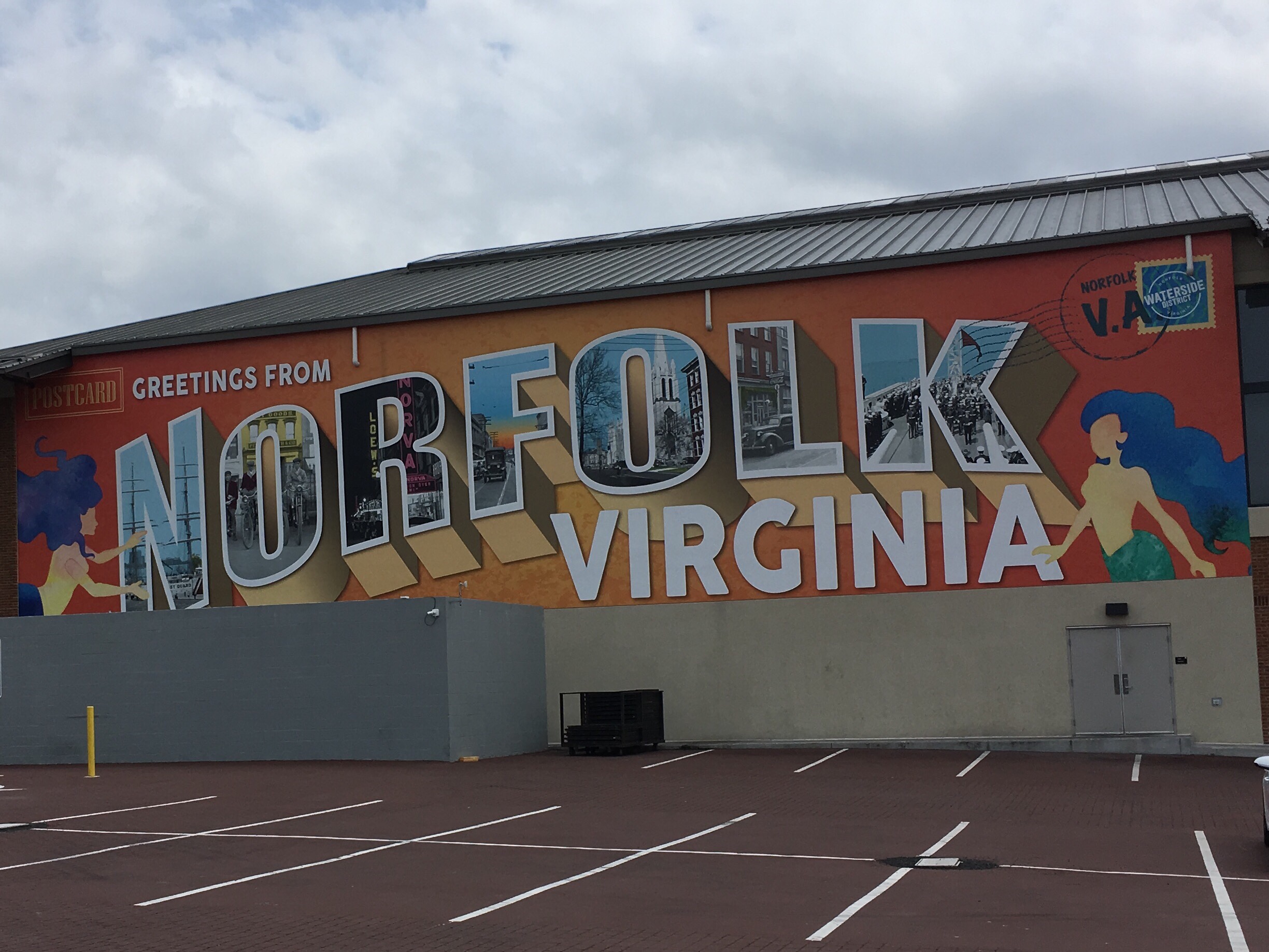
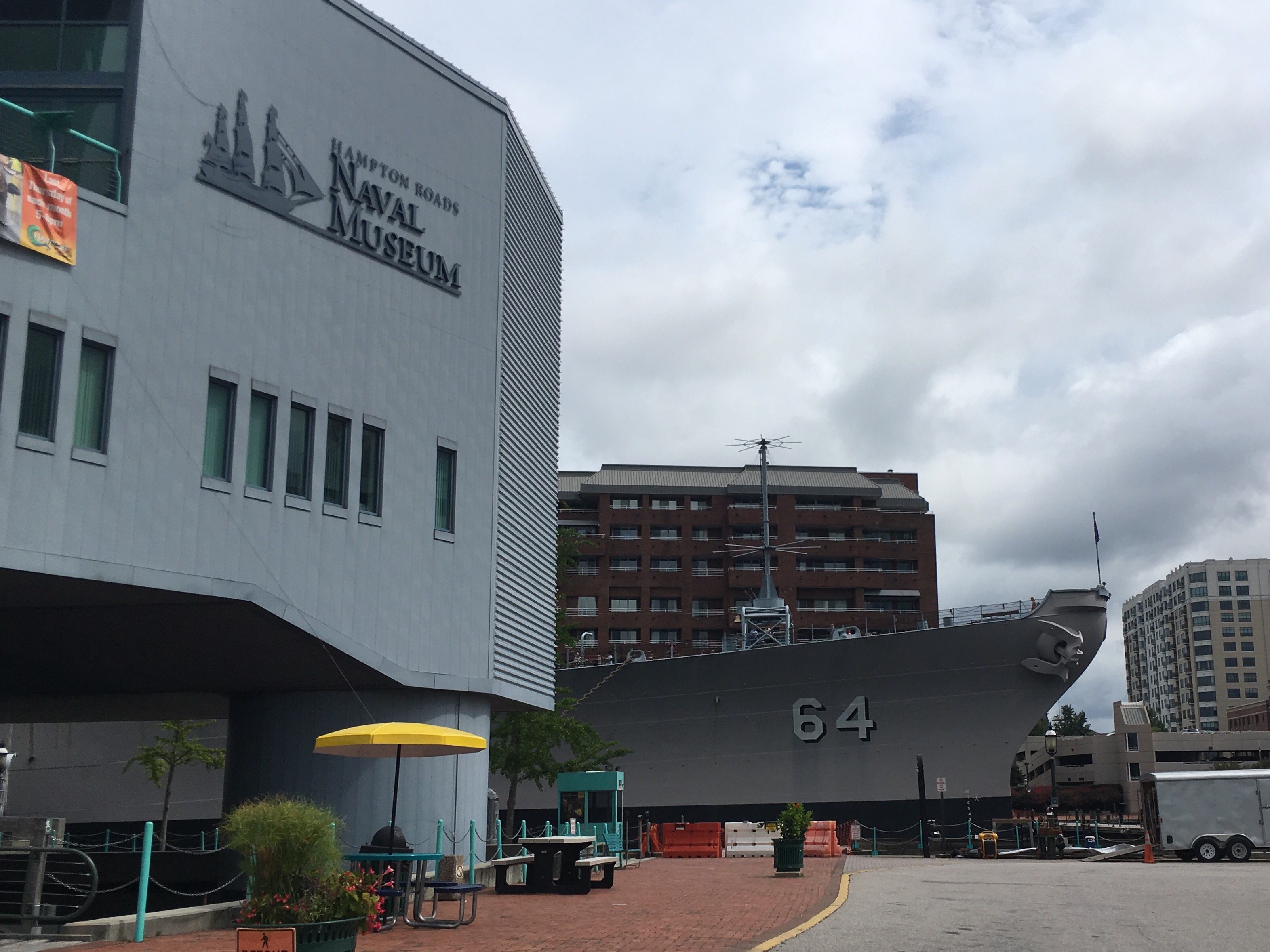
Today we took a foot ferry across the Elizabeth River to Norfolk.

We toured the Nauticus Museum and the USS Wisconsin that is on display there.

This ship played important roles in WWII, the Korean War, and Desert Storm. Amazing; six decades of service.

I am headed back home today.  Thanks for the adventure, Lori!


(Note:  If you’d like to read the entire 2 week adventure from the beginning, THIS LINK will take you to the first post in the series.)

MM0!

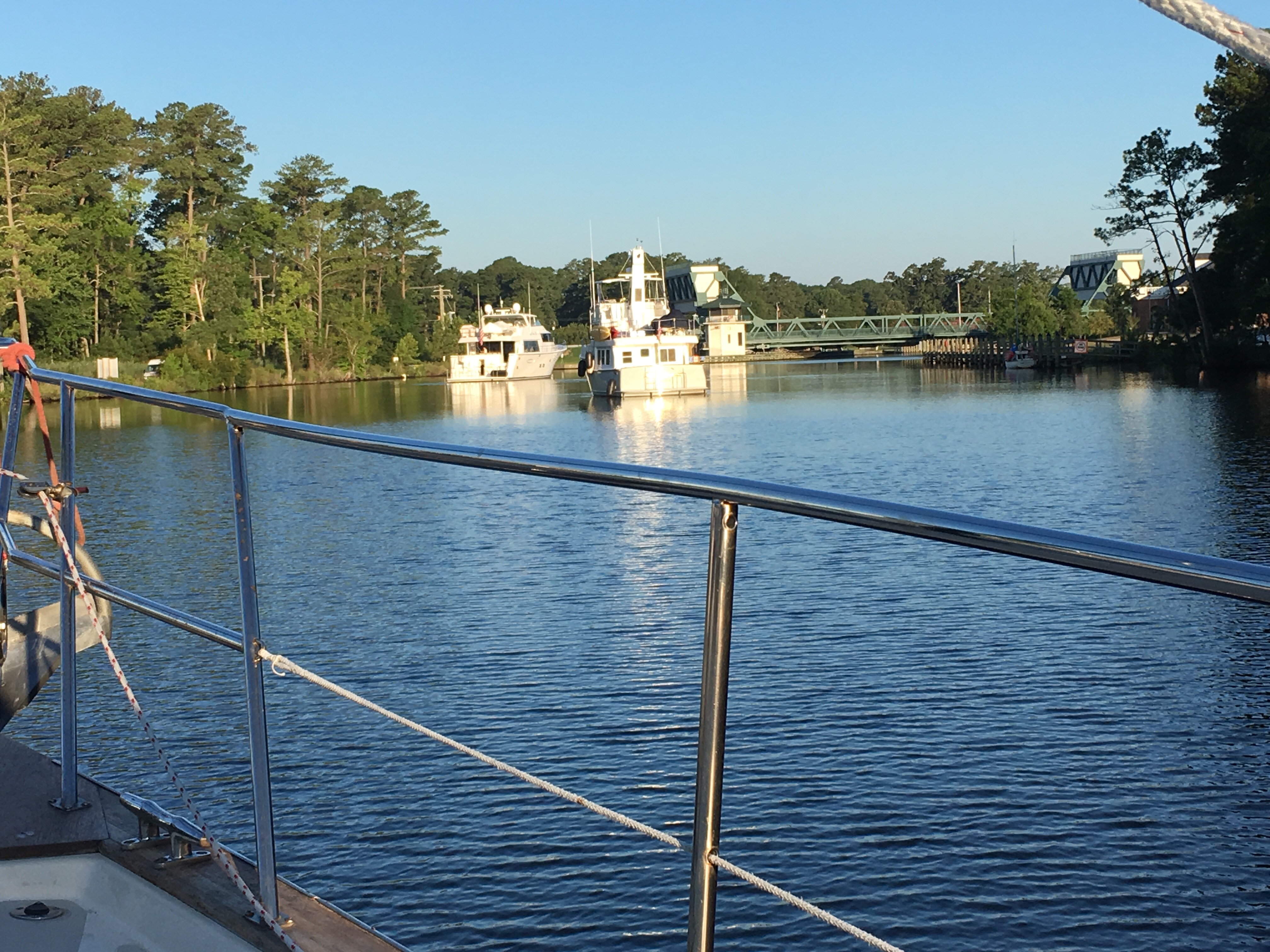
Day 14 – 8 bridges. 1 lock. 12 miles. On the road, again! We left the dock right before the 7AM opening of the Battlefield Bridge.

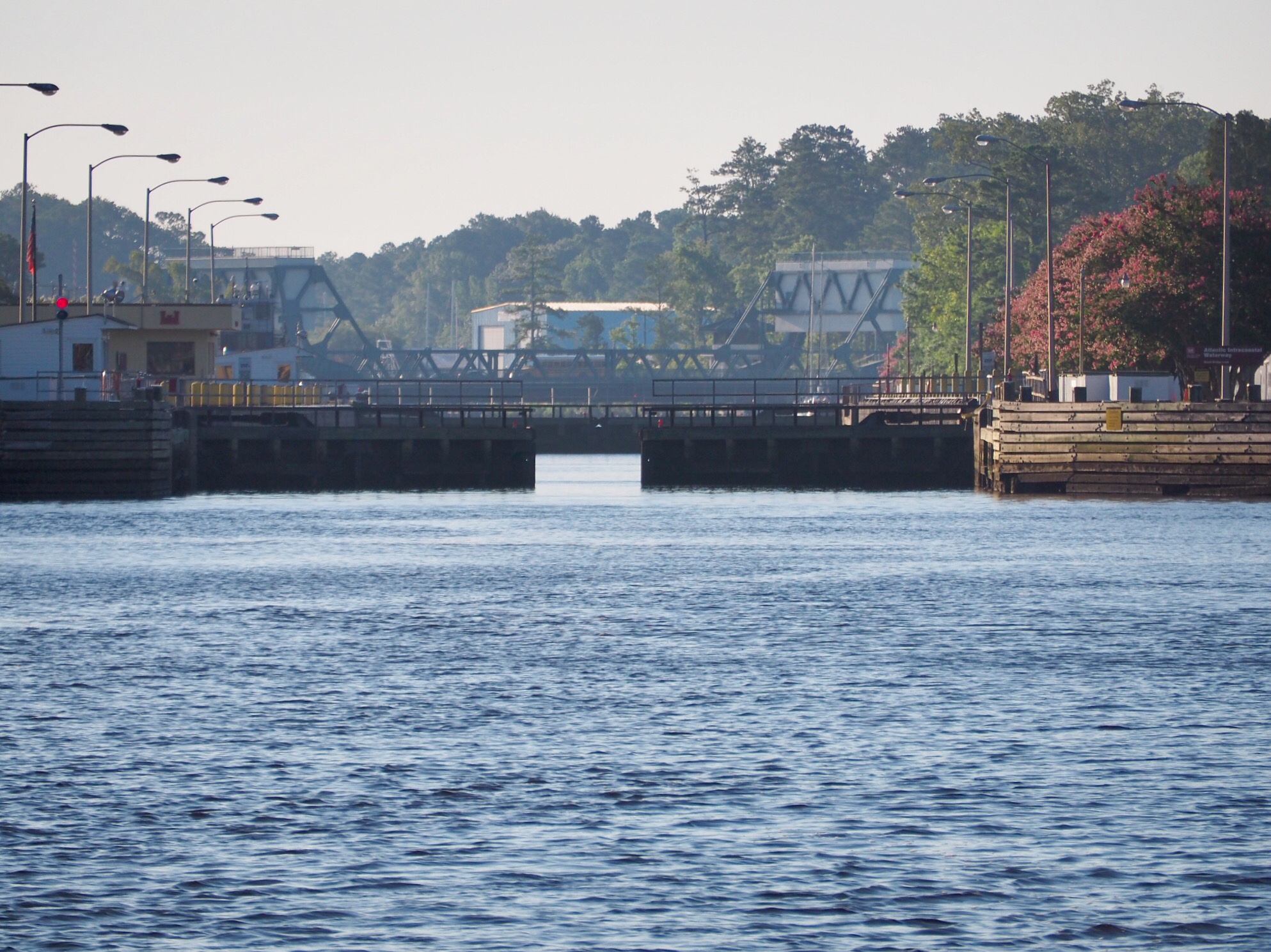
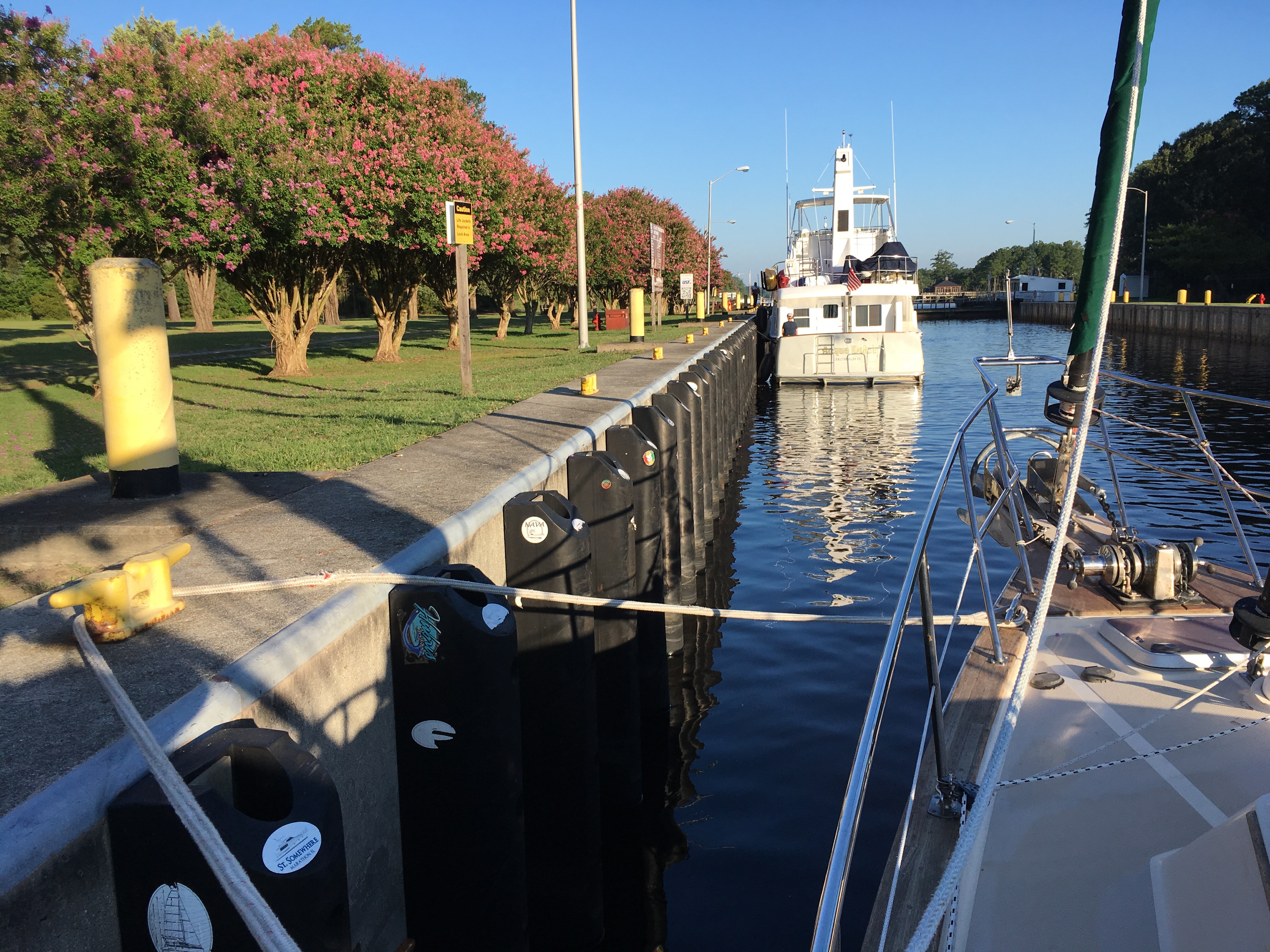
Immediately after the bridge is Great Bridge Lock connecting the freshwater Albemarle & Chesapeake Canal to the south, and the saltwater Elizabeth River to the north, lowering us one foot as we traveled north.

After this, there was only one more bridge for which we had to time our arrival, as it doesn’t open during morning rush hour.

All the other bridges are either fixed or are usually in the open position; even the bridge that delayed our arrival.  Below, you can see Norfolk beyond the formerly broken bridge.

We got an up-close view of Norfolk Naval Shipyard (Est. 1767!) as we motored past.

It felt really good to pull into Trident’s new home slip. Mission accomplished!

The next post in our ICW journey:  https://sheila365.com/2019/07/23/portsmouth-norfolk/

(Note:  If you’d like to read the entire 2-week adventure from the beginning, THIS LINK will take you to the first post in the series.)