
Portsmouth Harbour lies on the northeast shore of The Solent, on the southern coast of England. We actually sailed by it before dawn as the Queen Mary 2 navigated up into Southampton. It is an important port, naval base, and home to many historic Royal Navy ships – which is the reason for our visit. I’ll share some of our highlights.


Monte has read novels about real British maritime battles and victories, and so is familiar with the history here. Me, not so much. But after our visits to the fantastic exhibits in the Portsmouth Historic Dockyard, I am now up to date on quite a few details. 🙂 The HMS Victory is probably one of the most well-known ships, and it is in Portsmouth in a drydock at the Historic Dockyard.
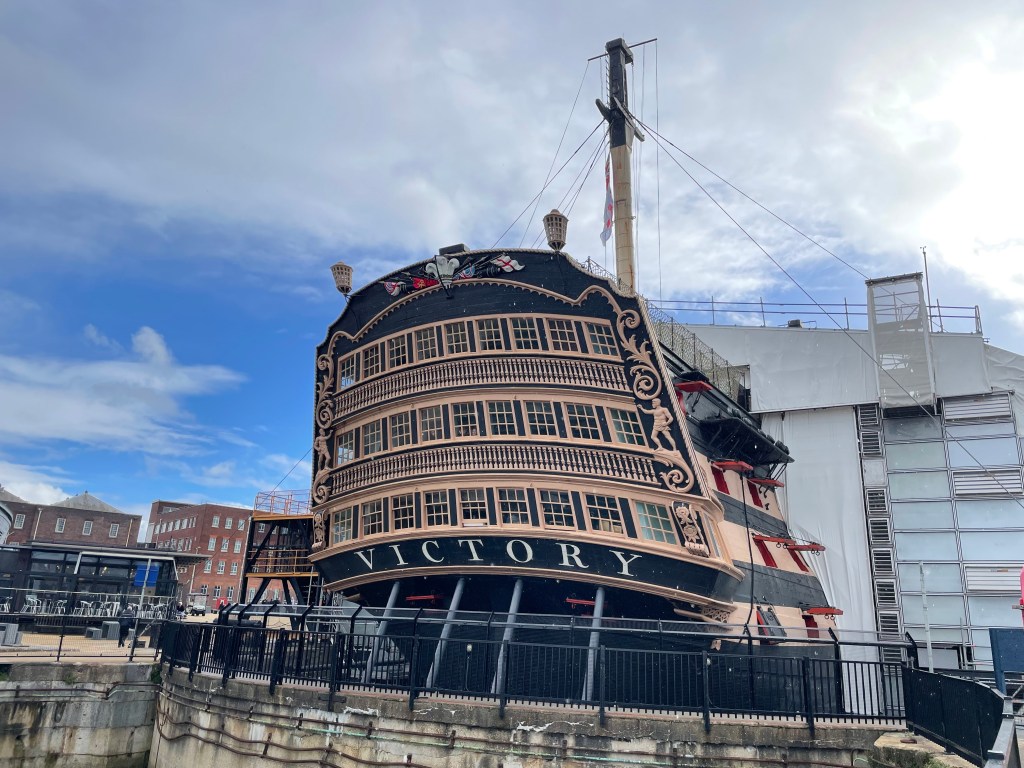
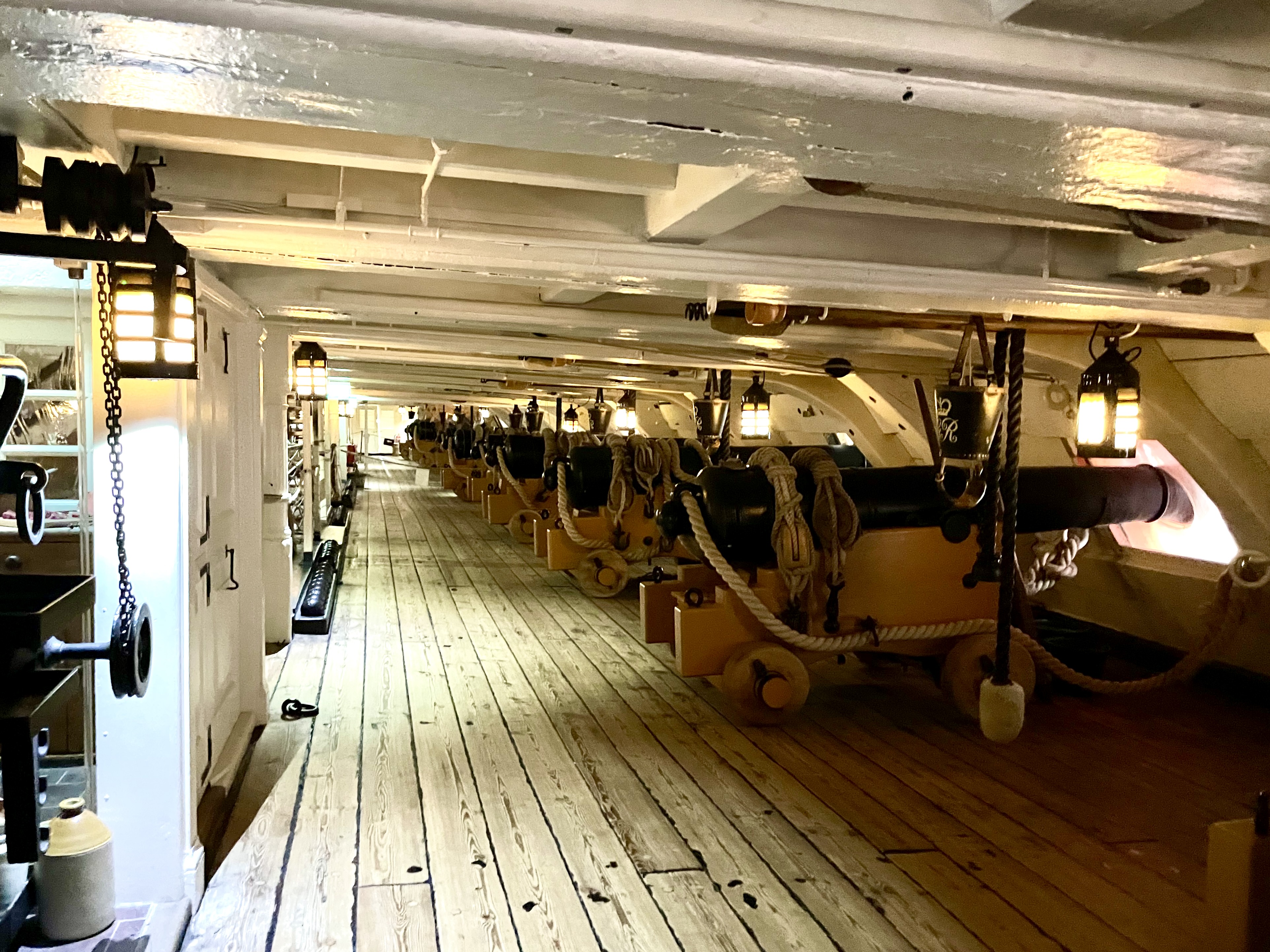
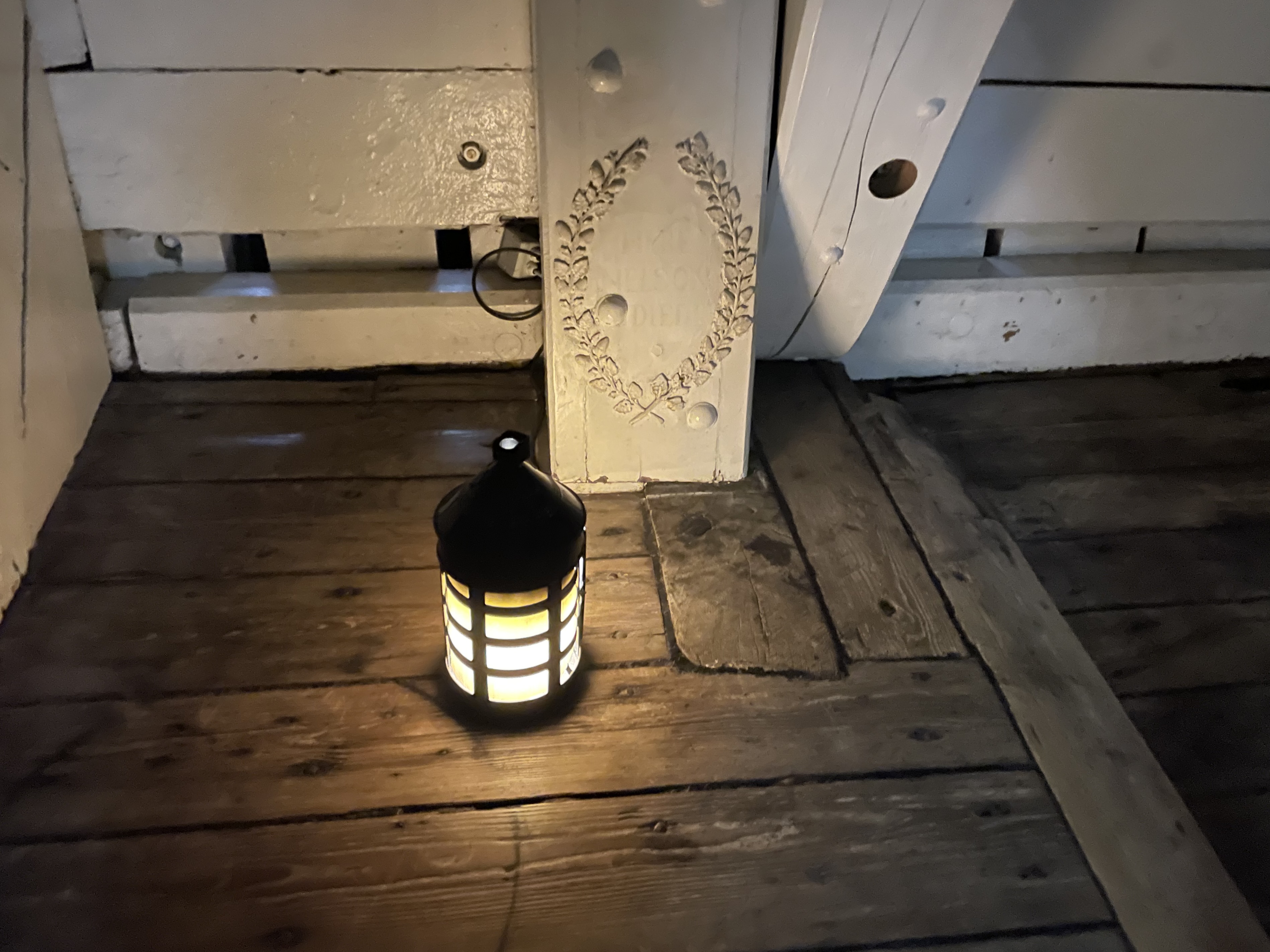
The HMS Victory was launched in 1765, and was the flagship for Admiral Horatio Nelson in the Battle of Trafalgar in October 1805 (when it was already 40 years old!) Trafalgar was the location of the British Navy’s greatest victory. The British fleet decisively defeated the combined fleets of Spain and France in the waters off of Cape Trafalgar, on the southwest coast of Spain. The Battle of Trafalgar was significant not just because it was a victory, but because Admiral Nelson was shot in that battle, died on the ship, and was transported back to England after the battle for a hero’s burial. He was, and still is, England’s most beloved sailor.

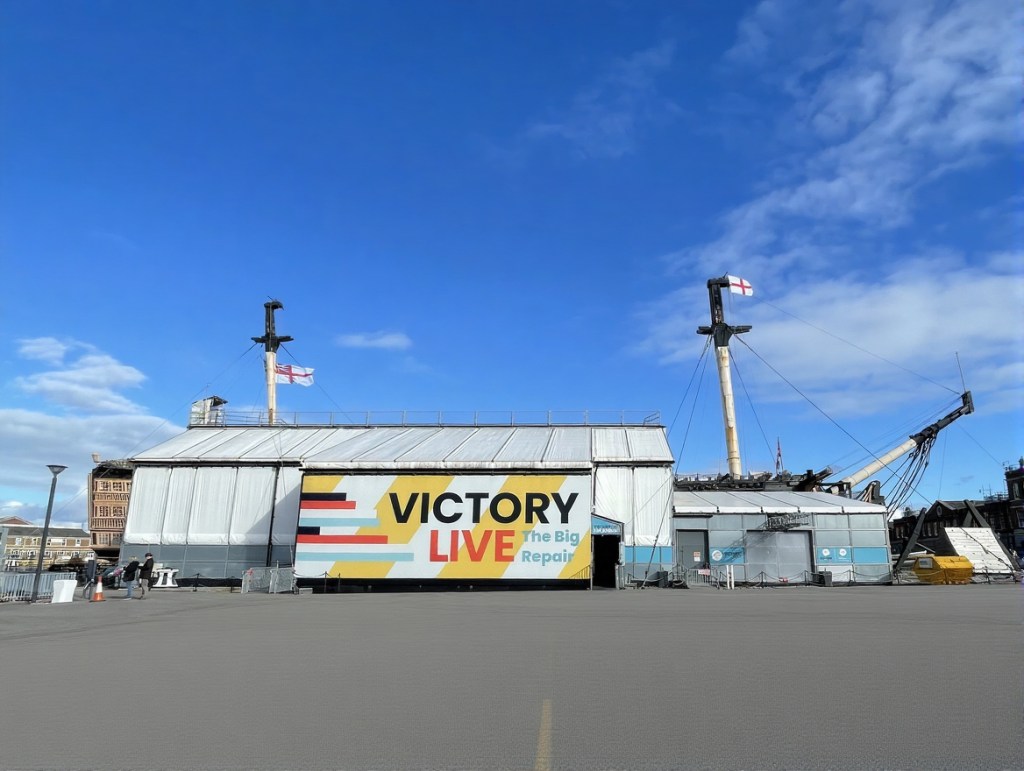
The Victory is midway through a 20 year restoration. The repair work is actually one of the exhibits – Victory Live. It doesn’t hinder seeing and touring the rest of the Victory as the work proceeds.


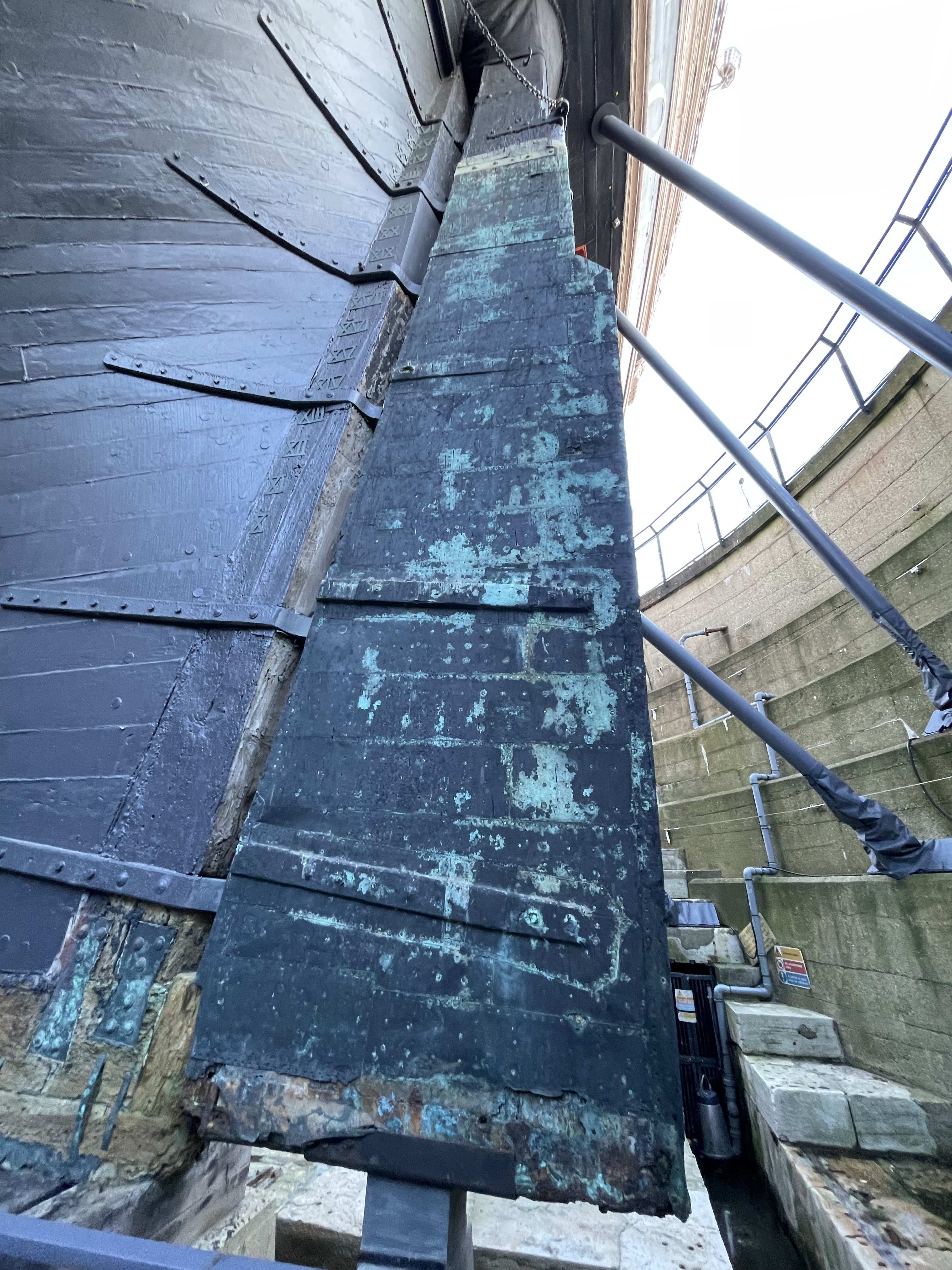
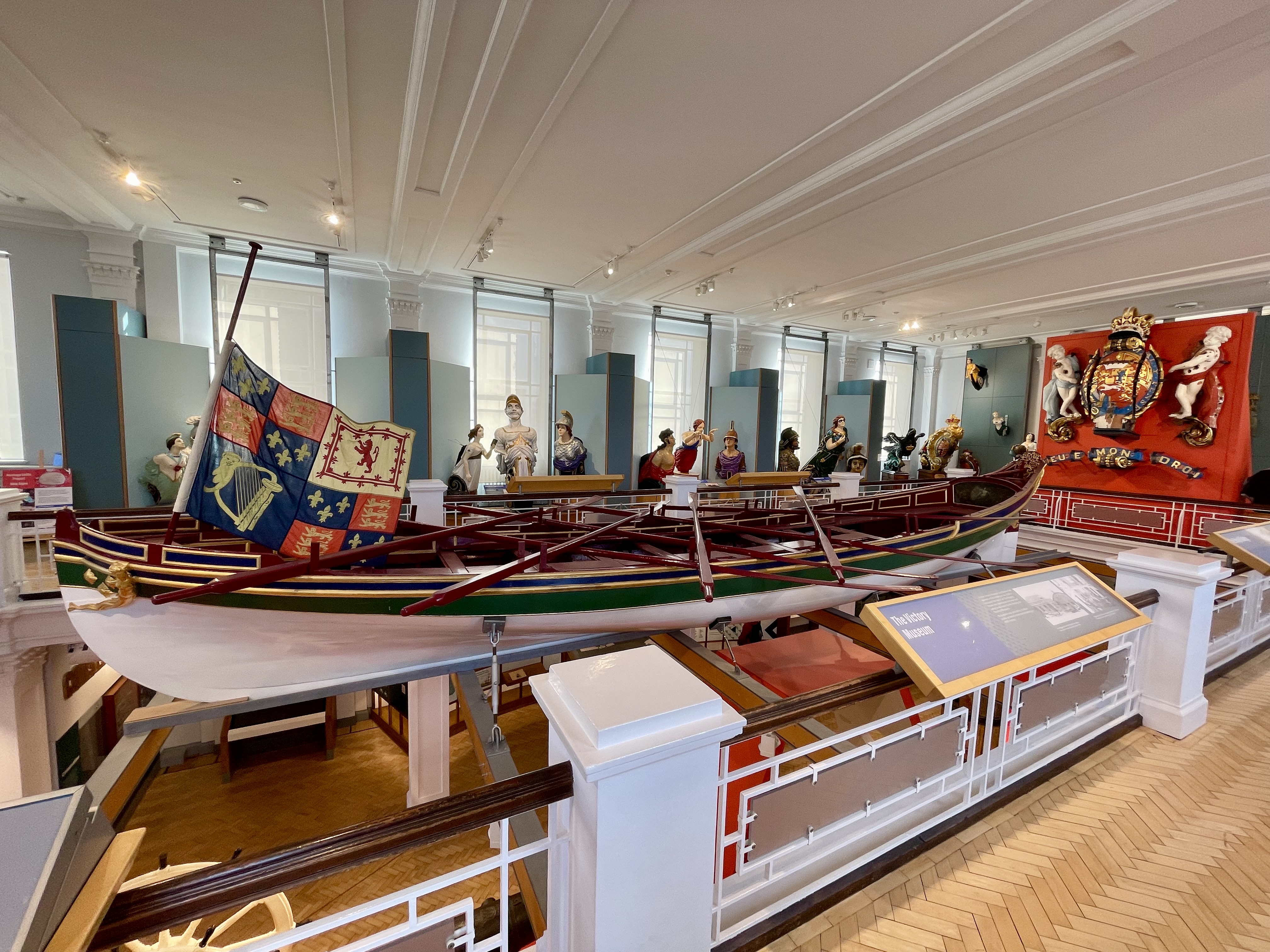
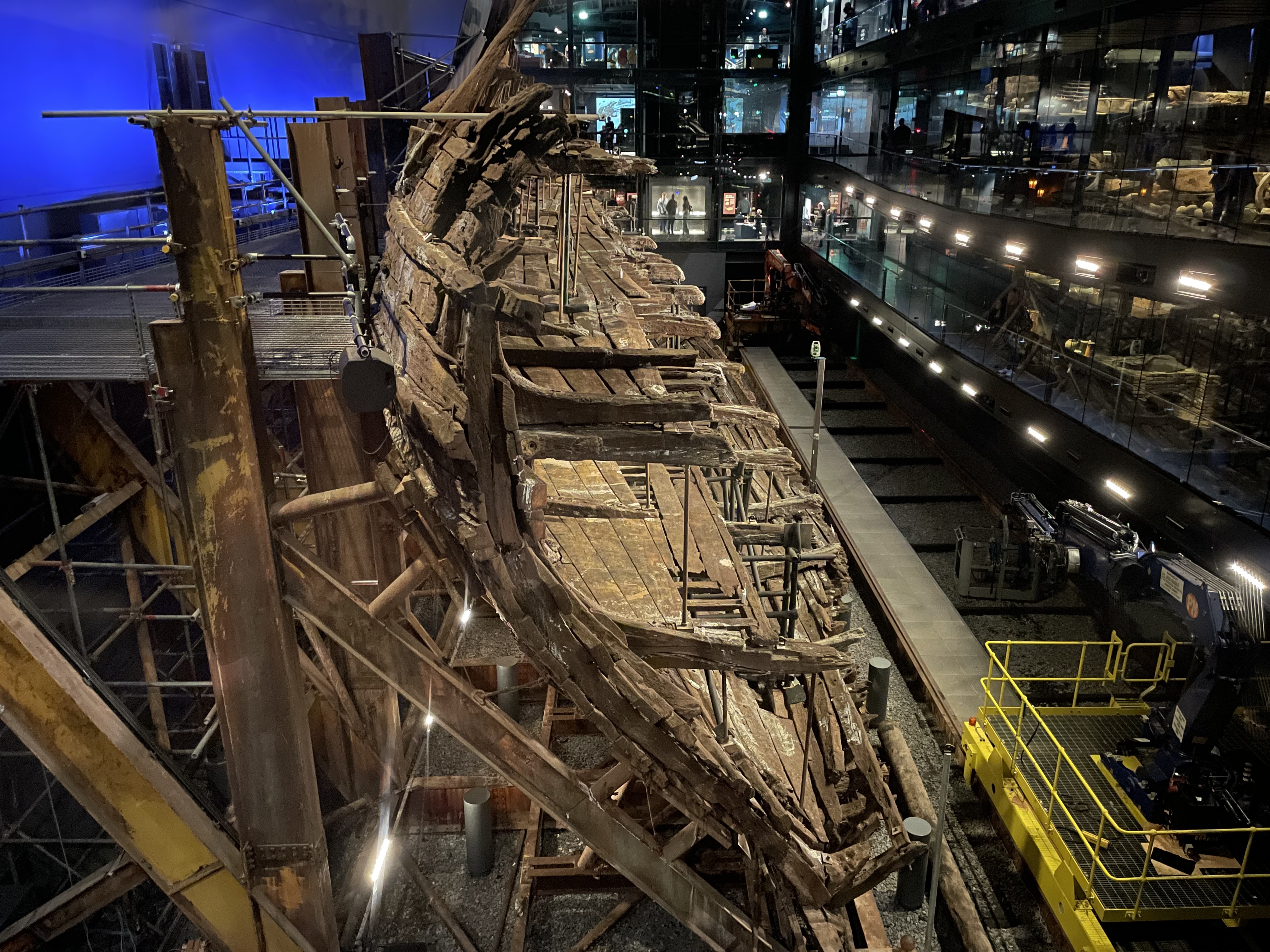
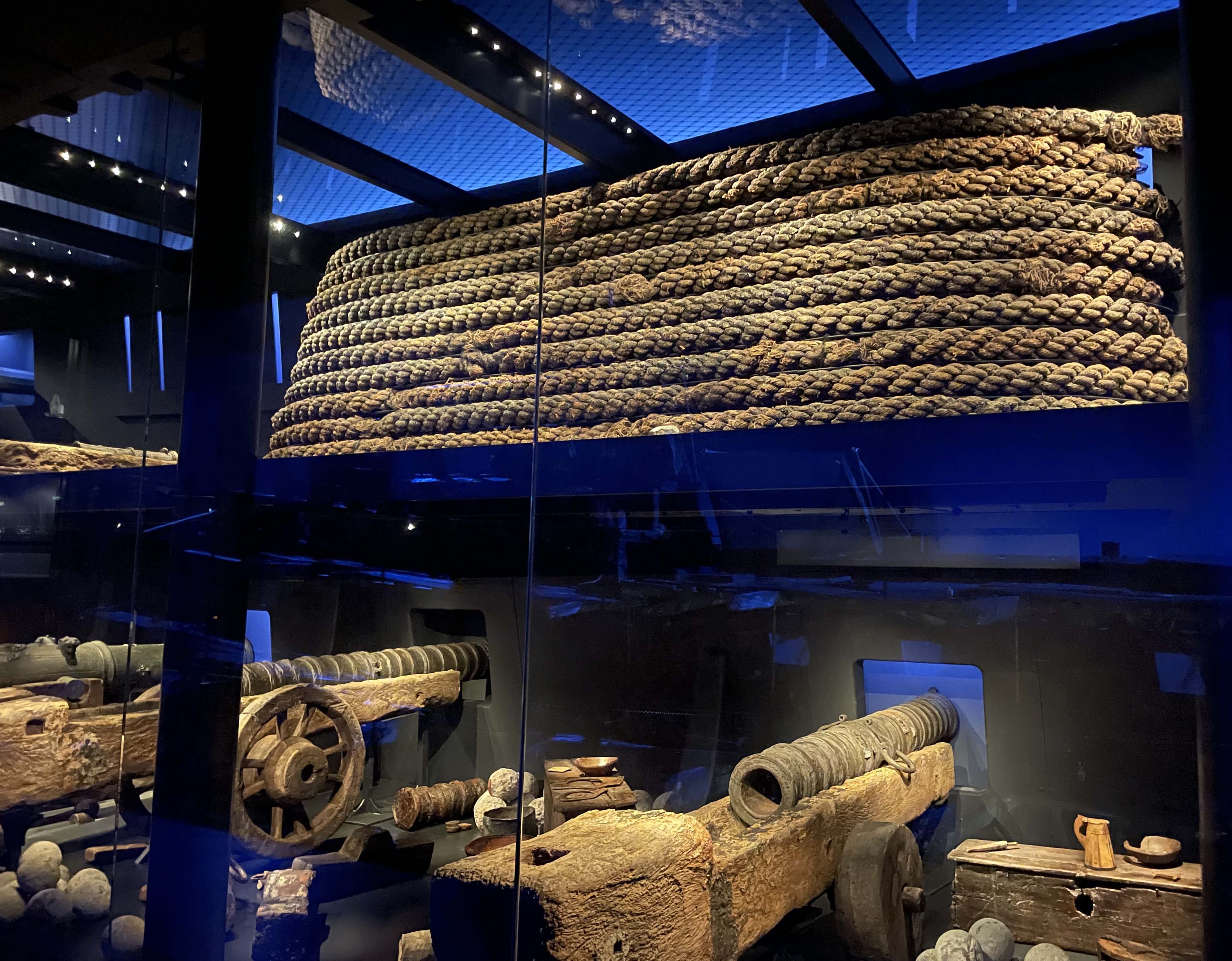
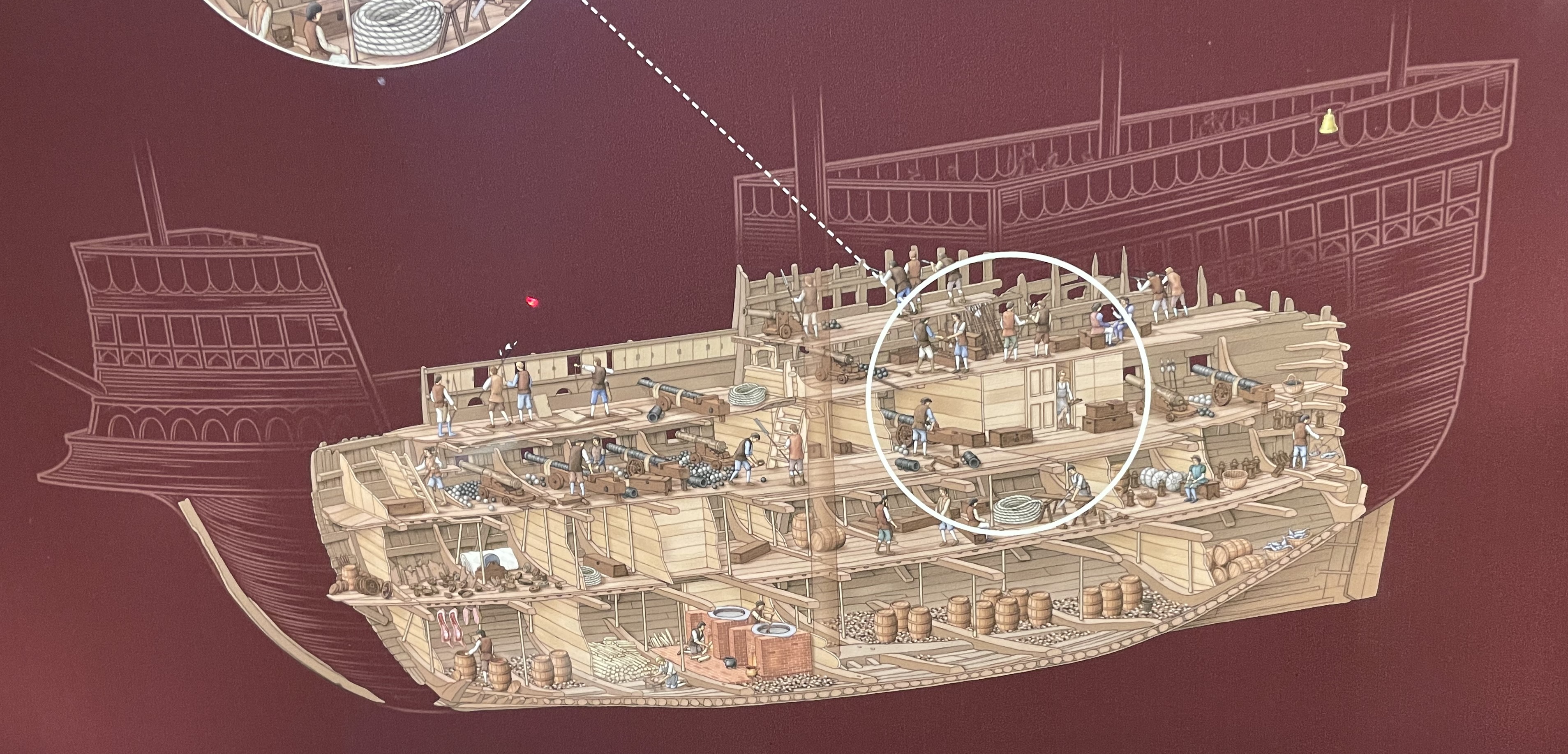
Another fascinating exhibit was of the Mary Rose, commissioned by King Henry VIII in 1510 as a flagship. It sank in 1545 during the Battle of the Solent by the French, just a mile offshore of Portsmouth, in 40 feet of water. It sat on the seabed, half buried in silt until it was discovered and eventually raised in 1982.
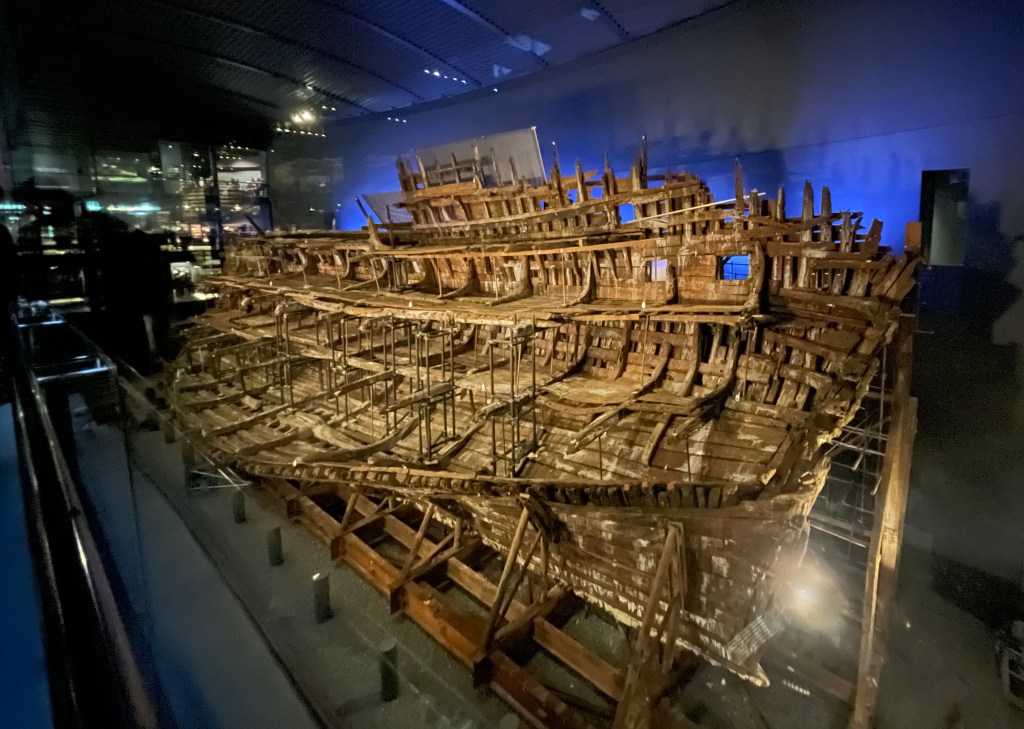
The exhibit does a great job of showing just how much of the ship is still intact, and an astounding amount of items that survive.

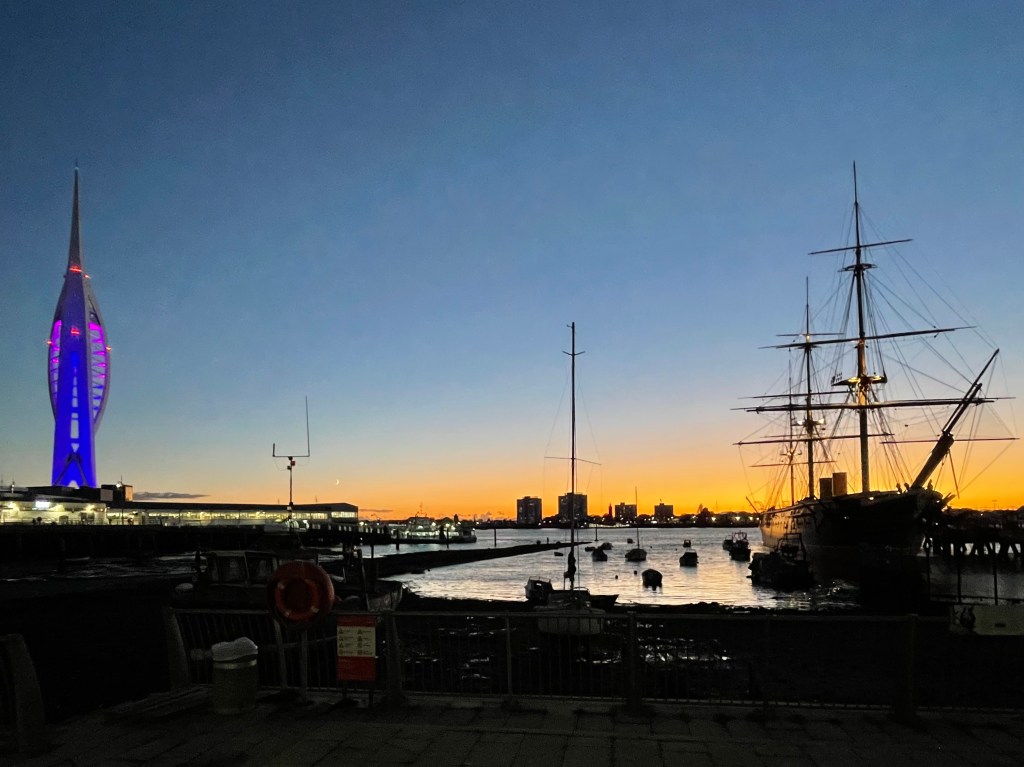
The HMS Warrier is a battleship built for Queen Victoria’s Navy, launched in 1860. We toured her as well.
We spent two whole days exploring all the things to see at the Dockyard. We took a harbor tour, water taxi over to Gosport to tour a WWI submarine (Holland 1) and a WWII submarine (HMS Alliance), toured Boathouse 4, a working shop that restores small craft. We walked through the multiple other museums that are there. The weekend we were there it was “half-term” for the school kids, so the dockyard was teeming with British families as well.
We took a city bus down to see Southsea, and Henry the VIII’s castle there, from which he watched the sinking of the Mary Rose. There is also a D-Day Museum there, but we arrived after closing time.

By the time we checked out of our hotel and hopped a train to our next destination, I felt we had spent just the right amount of time in Portsmouth to soak up all the history there.
Links for the curious:
Portsmouth Historic Dockyard visitor info and tickets. They have so much to experience there. The Ultimate Explorer pass includes entry to 13 attractions. We visited 11 of them, and it was well worth it for us.
Where to stay? There are lots of choices nearby. We stayed at the Ship Leopard, which was a great location. Our room overlooked the harbor and had a view of Spinnaker Tower and the HMS Warrior. It is across the street from the Portsmouth Harbour Rail station, and the Isle of Wight Ferries, a block away from Gunwarf Quays, and a block away from the Historic Dockyard gate.
 Sheila365