
After Portsmouth, we will stay in Salisbury for a couple of nights. But we decided to make another attempt to see the inside of Winchester Cathedral. So we boarded the train to Winchester again. This time, the Cathedral was open and glorious.

Inside the Cathedral, we were able to view the 12th-century Winchester Bible. We also took a guided tour and soaked up the history of the place. The Cathedral’s construction began under William the Conqueror in 1079 and was completed in 1532. During that period, architectural techniques evolved. The Cathedral’s construction began with Norman features (rounded arches, thick walls) on the central tower and transepts, later adopting Gothic features (pointed arches and flying buttresses) in its wide open nave.


Jane Austen is buried here, though the tribute on her gravestone omits any mention of her literary achievements.

The Cathedral was not damaged during World War II. But it experienced destruction from the British themselves during the English Reformation in the 1500s, when Henry VIII broke with the Roman Catholic Church and created the Church of England. The patron saint of Winchester Cathedral was St. Swithen. During the Reformation, a shrine to St. Swithin in the Cathedral that had become a destination for many religious pilgrims was destroyed and removed. The “Holy Hole” still remains, marking the entrance to his former shrine. I think it would be a great place for a geocache. 😮

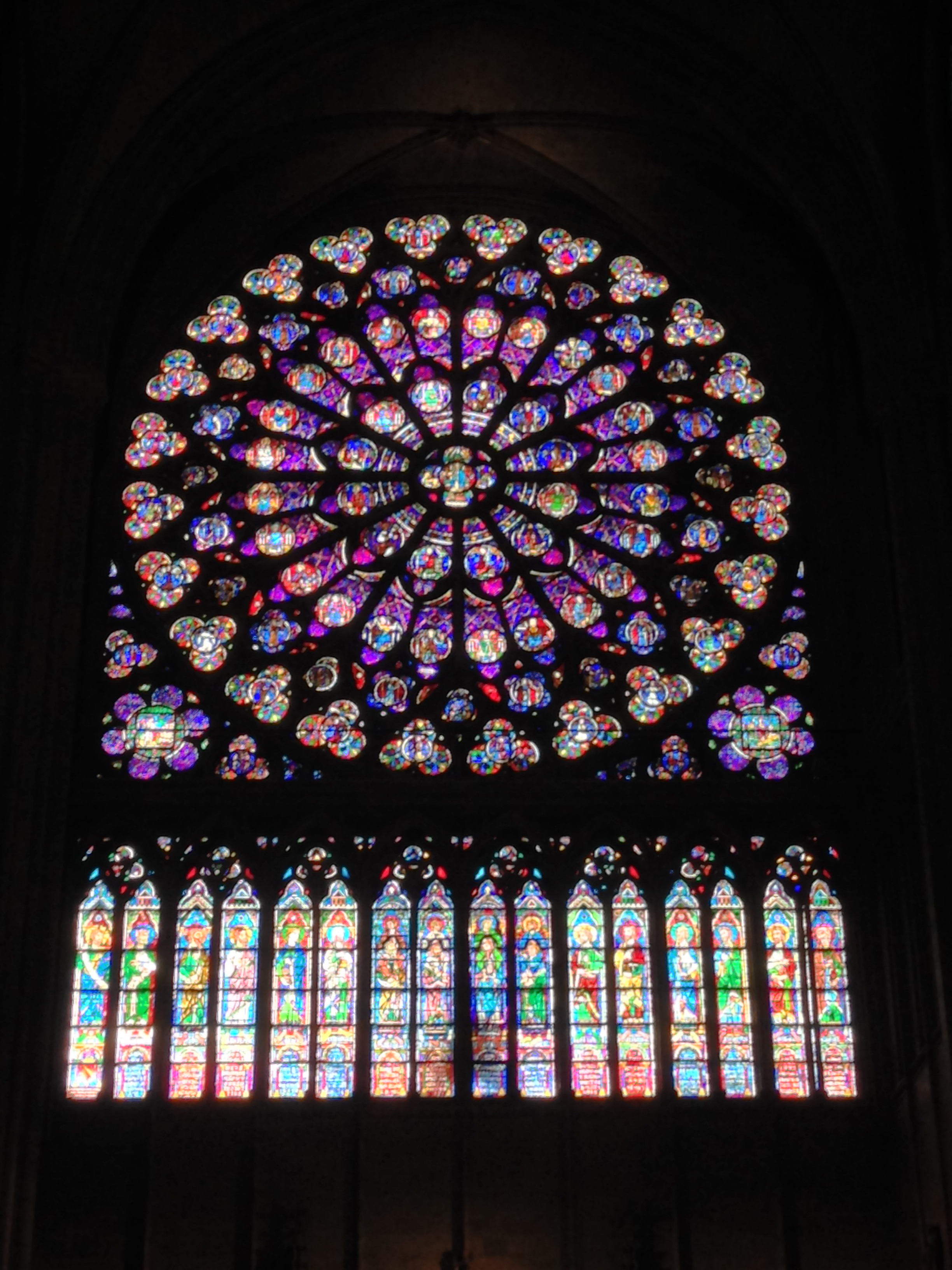
And more destruction followed in the mid-1600s, after the Parliamentarians defeated the Royalists in the English Civil War. Not only did they execute King Charles I, but they also trashed most religious icons in churches across the country. In Winchester Cathedral, they broke statues and mortuary chests, smashed just about all the stained glass, and used the Cathedral as a stable for the army’s horses. A few years later, Charles II took his father’s throne, restoring the monarchy and a bit of order. In 1660, the current wall of stained glass at the Cathedral’s west entrance was constructed using shards of the broken, original stained glass windows.

That’s the end of the history lesson, and enough of all the death and destruction, already!
Oh, one other thing I found interesting…. At the beginning of the 20th century, the southern and eastern walls of the Cathedral were found to be sinking under their own weight. This was due to the high water table in the area and being built on peat. Since the water table couldn’t be lowered, someone would have to do the work underwater. A Navy diver named William Walker came to the rescue. From 1906 to 1911, he single-handedly dove down in water up to 20′ deep, to shore up the foundations with bags of cement, concrete blocks, and bricks. He’s remembered as “The diver who with his own hands saved Winchester Cathedral.”
At the end of the tour, we went down into the Crypt under the Cathedral floor. Unlike most other churches, this crypt is virtually empty, due to nearly constant flooding. In the 1980’s a sculpture by Anthony Gormley was installed. The statue is, more often than not, standing in water.

Ok, that is all for Winchester. Since we are bound for Salisbury by nightfall, we headed back to the train station and got back on board. More to follow on our visit to Salisbury.
Links for the curious:
Winchester Cathedral’s website to plan your visit.


 Sheila365