
We arrived in Salisbury by train late in the afternoon, so we headed right to the hotel, the Red Lion Inn. Salisbury has a Cathedral, too (shocker). In the 13th century, the Red Lion was built to house stonemasons who were working on the Cathedral.
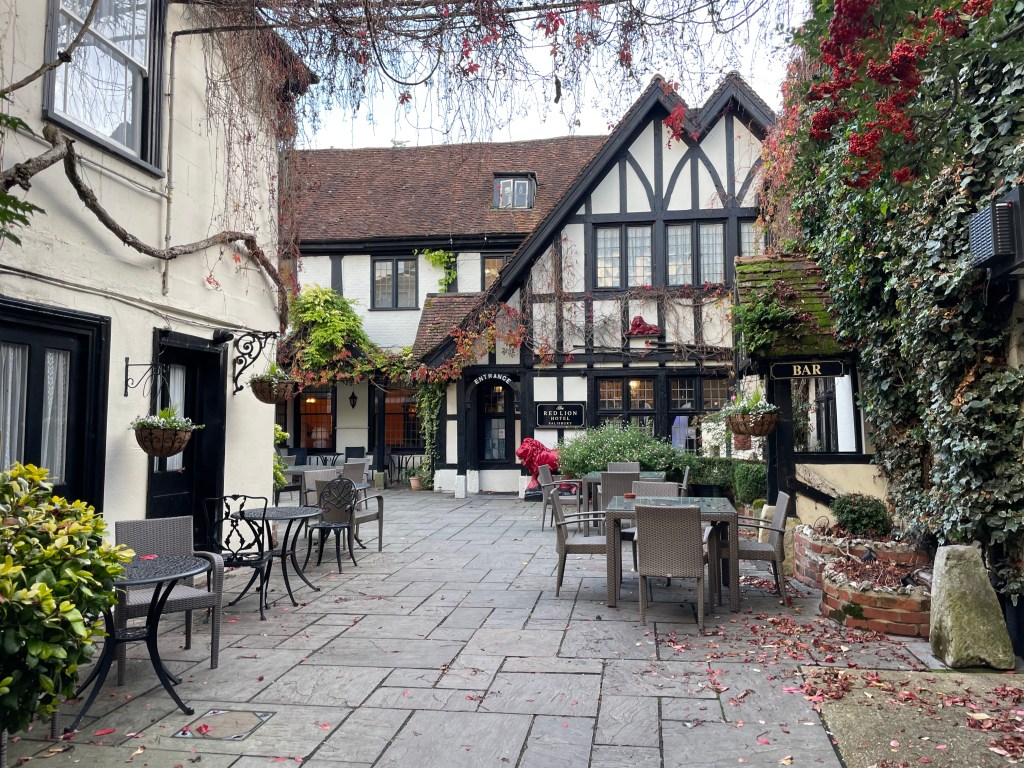
Salisbury is very walkable, too. We were a block away from the busy market square, which was full of cafes, restaurants, and stores. On Tuesdays and Saturdays, market stalls fill the square. Luckily, our stay included a Tuesday, so we were treated to a stroll around the market.
Salisbury’s River Avon and its tributaries run through the town.
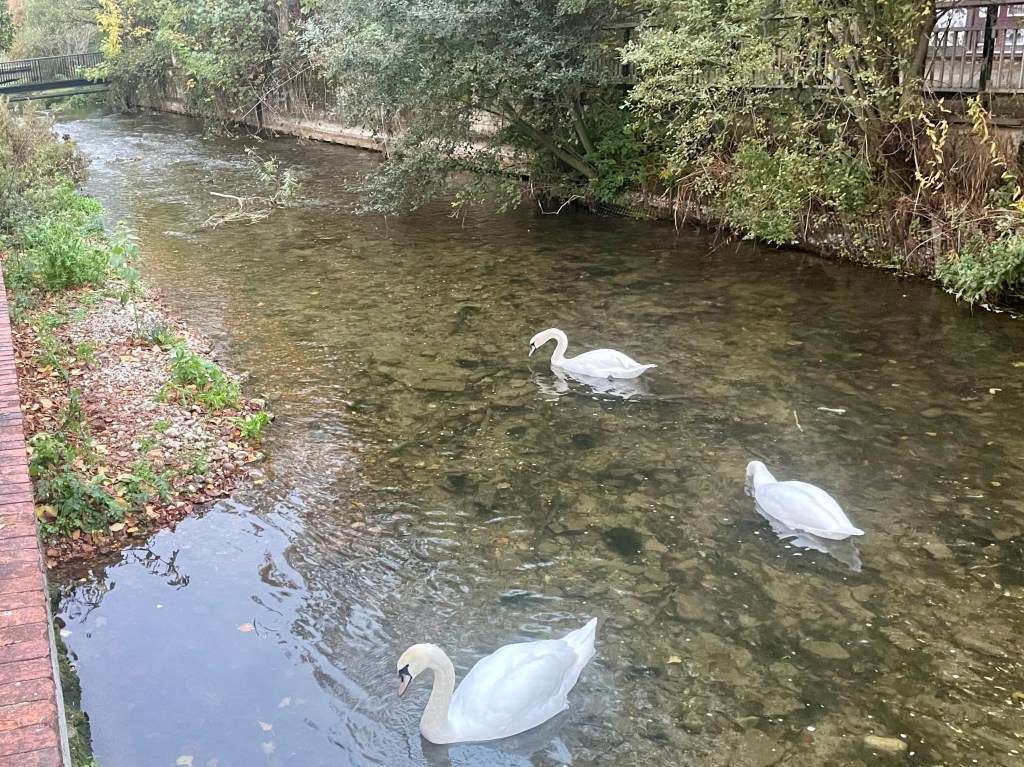
After enjoying a walk around town, we stopped in for a drink in the pub and enjoyed dinner at a nearby Italian restaurant.
Monte says that we went to Portsmouth to see the Ships. Well, we came to Salisbury to see the Stones. So, the next morning, we got up and caught the bus to Stonehenge, which stops a block from our hotel.
It was very windy, and therefore quite chilly. But we were treated to another sunny day in England.
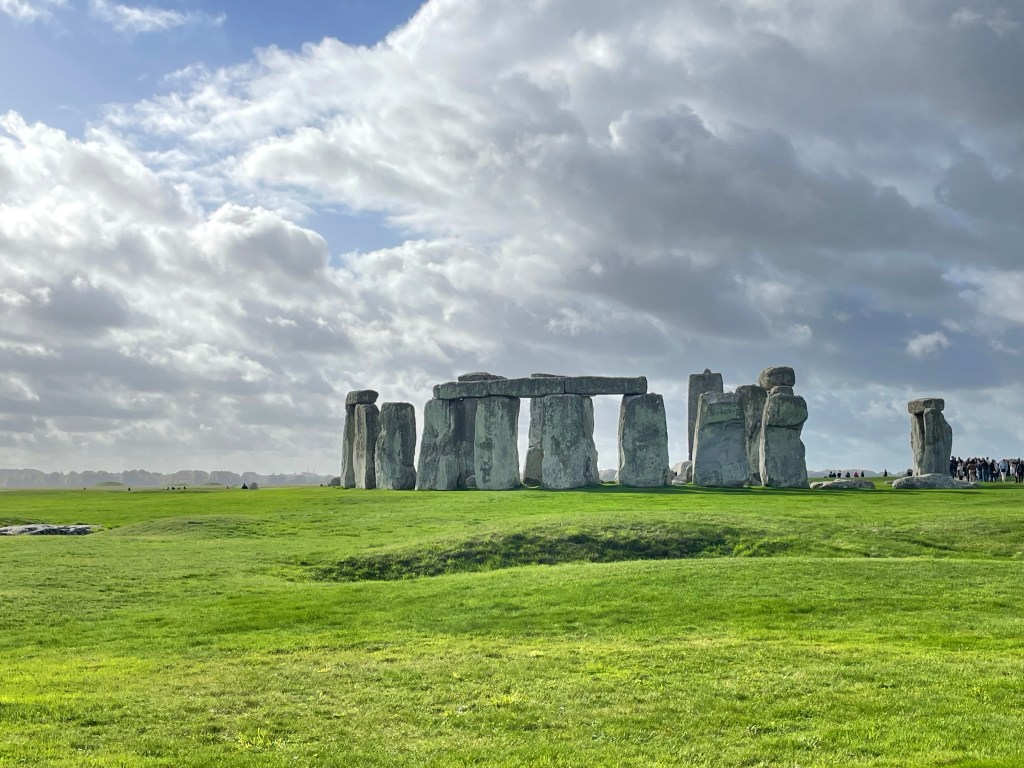
Stonehenge is the current monument at this location, estimated to have been erected around 2500 BC. As early as 3000 BC, other monuments were built here, beginning with a circular earthen ditch, and then a circle made with smaller stones. Eventually, the current stone arrangement was erected and aligned with the sun on the spring and summer solstices.
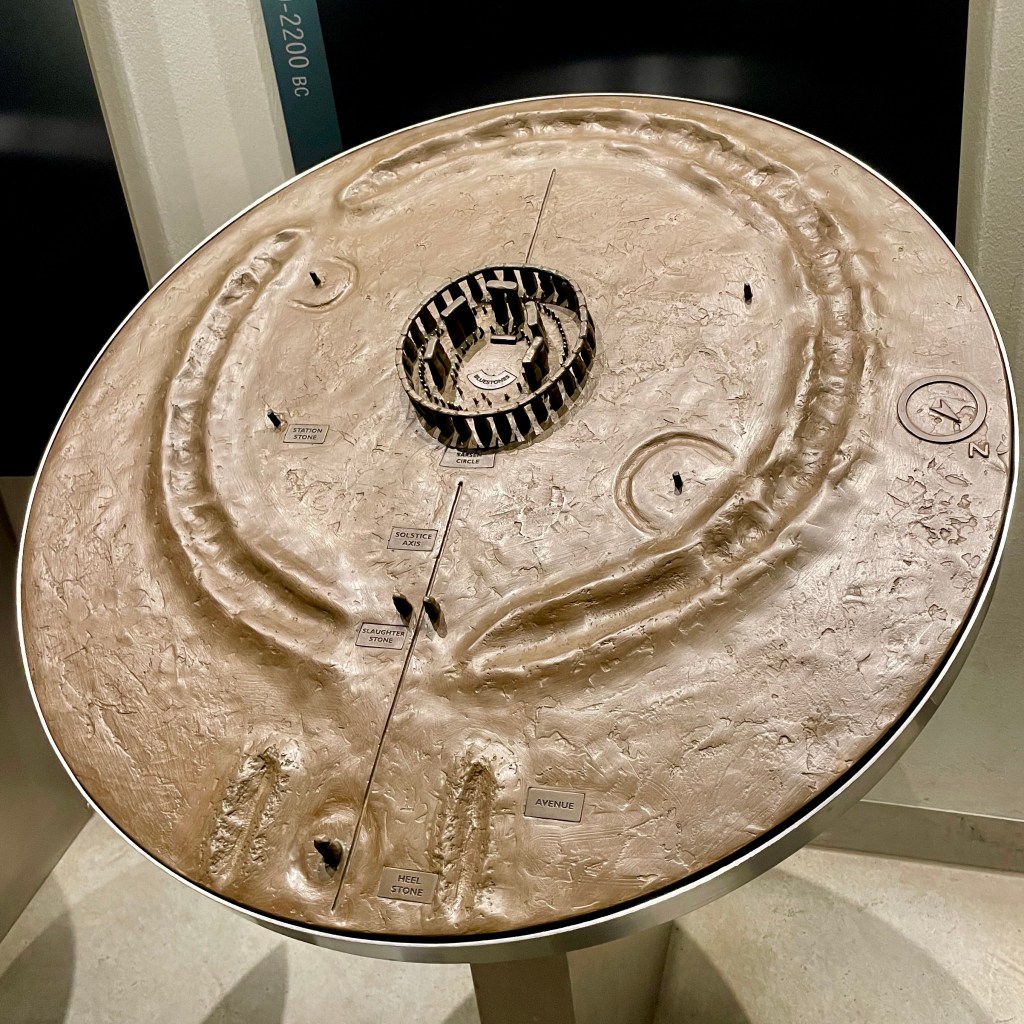
The purpose of the stones is a mystery. The leading theories include being a burial site or an astronomical calendar. It is also thought to have been an ancient pilgrimage destination, as evidence of an “avenue” can be seen that extends from the site to the River Avon. If that is true, the river may have carried visitors to the site, as well as the stones used to construct it. Many other burial sites have been discovered in the immediate area. Whatever the reason, it is truly something to walk near them (walking through the stones is no longer allowed due to preservation efforts). If it had been a warmer day, we would have walked along one of the field paths from the visitor center to the monument. But it was just too windy and chilly, and the shuttle bus was a better option.
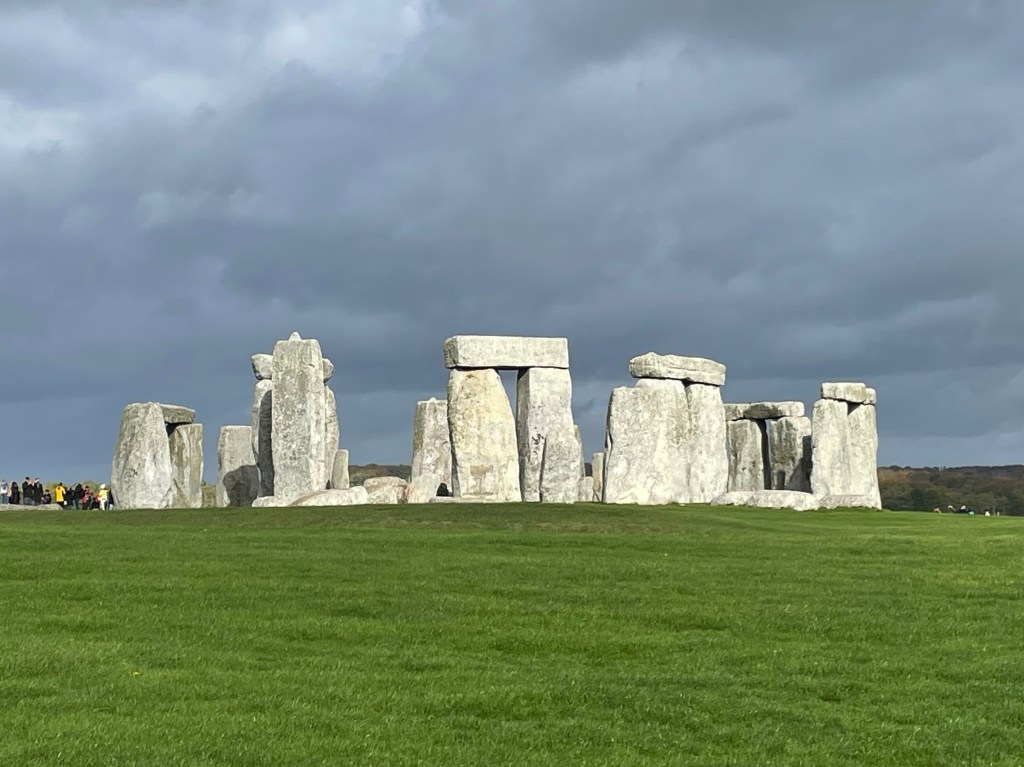
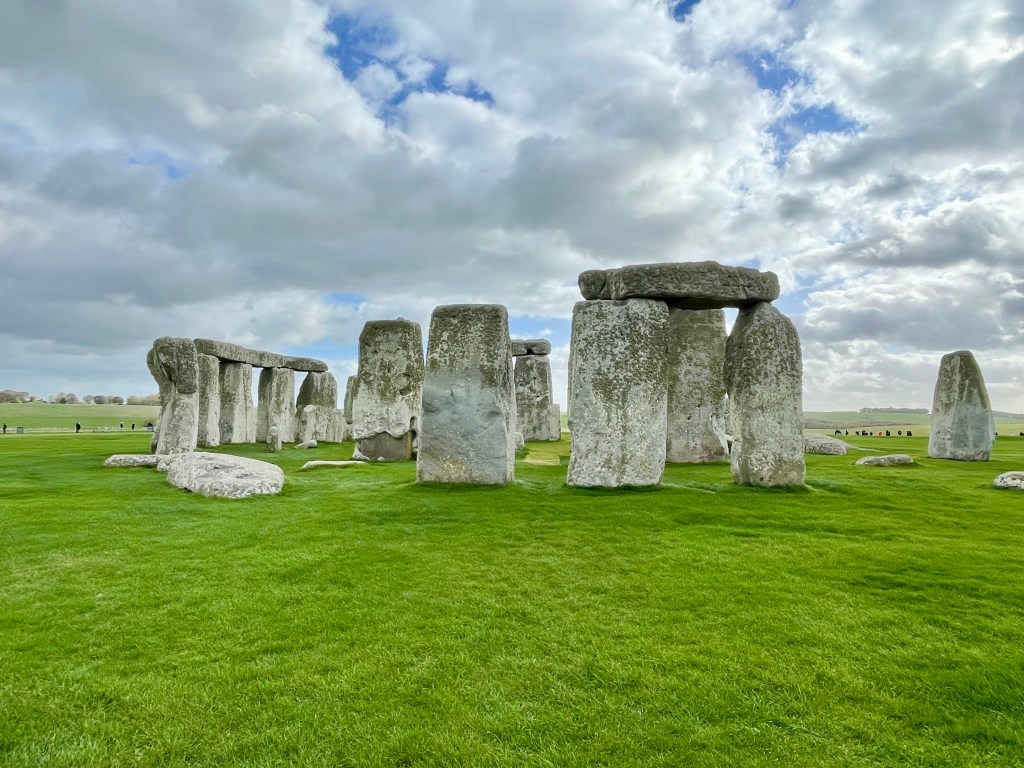
At the site, there is a circular path that goes all the way around the stones. There is an audio walking tour that you can download (ahead of time!) and listen to descriptions of the site as you walk around the monument.
After admiring the stones, we spent time in the visitor center to take in even more history of the site.

On the way back to Salisbury from Stonehenge, the bus goes by Old Sarum, which was the original name and location of the town now called Salisbury. There are ruins of an old Iron Age castle and fortifications there, along with the footings of the original Norman cathedral that stood at that site. The legend goes that the monks at Old Sarum, who lived in the cathedral, had ongoing conflicts with the soldiers who lived in the castle. They fought over water, which was in short supply. So they petitioned the Pope to move the cathedral (and the town). So they shot an arrow into the air, and where it landed would be the location for the new cathedral. The arrow allegedly struck a deer and was carried some distance. Where it eventually fell, construction on the new cathedral began in 1220. More on the Salisbury Cathedral in another post.
Links for the curious:
The English Heritage web site with information on Stonehenge history and information to plan a visit. And the English Heritage’s Stonehenge audio tour app. Download the audio before you set out for the stones.
Where to stay? We stayed at the Red Lion. Great location, great room.
 Sheila365